


- On Centering Transdisciplinary Experiences
- Transdisciplinary Experiences in Practice
- Planning and Reflection Documents
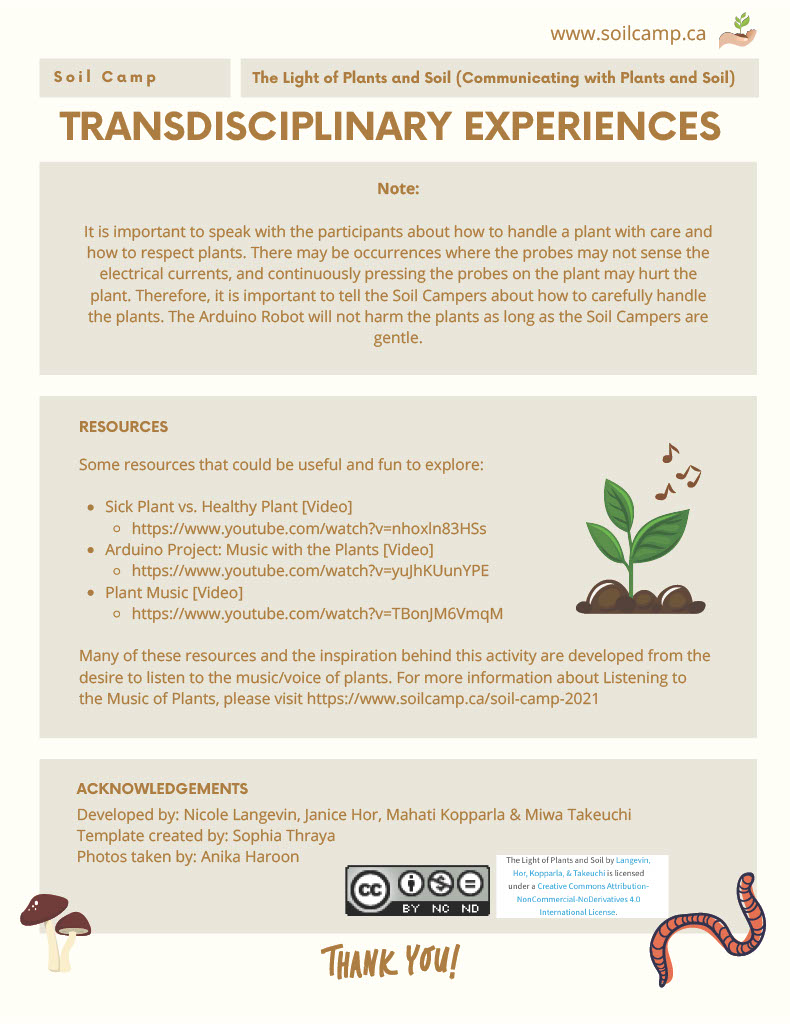
- The Light Of Plants And Soil
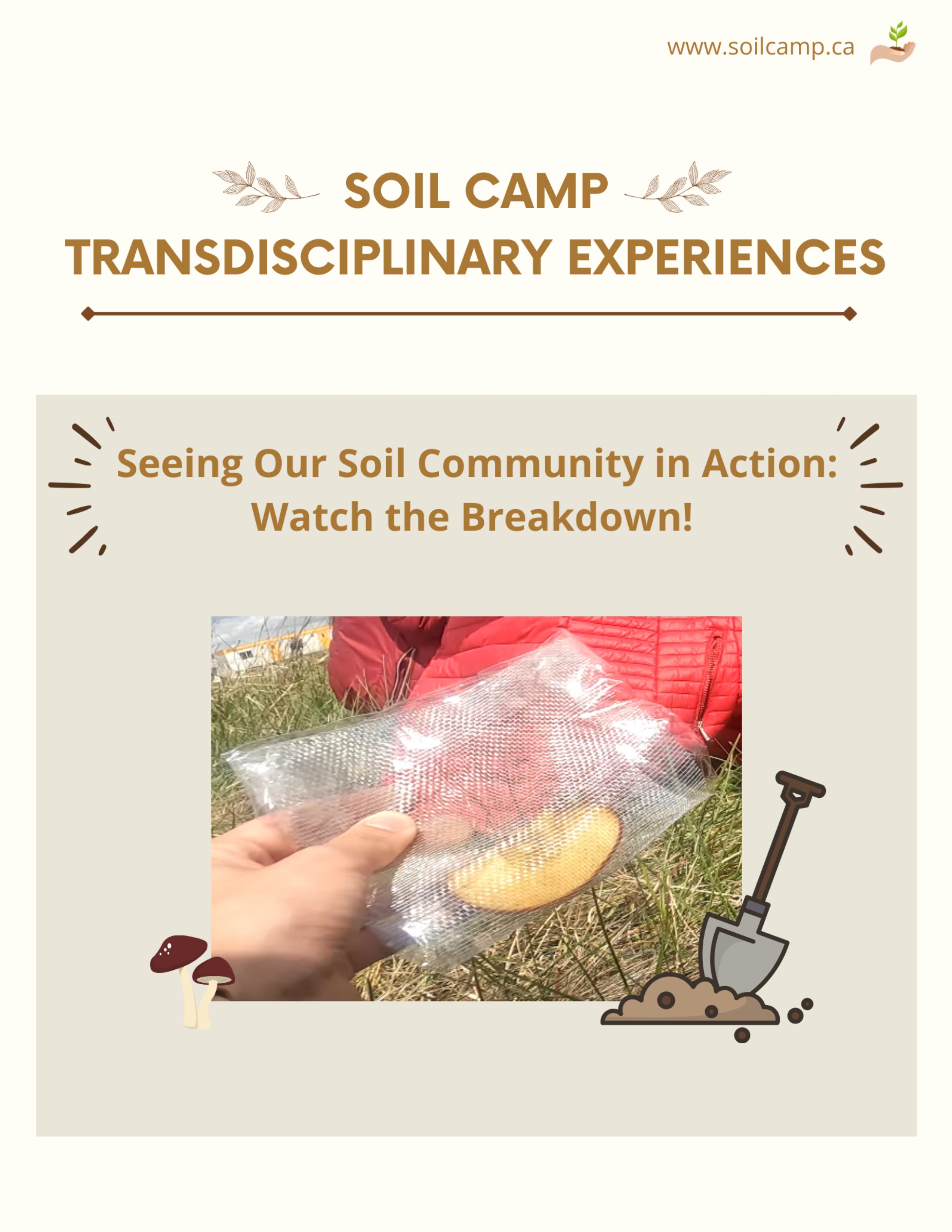
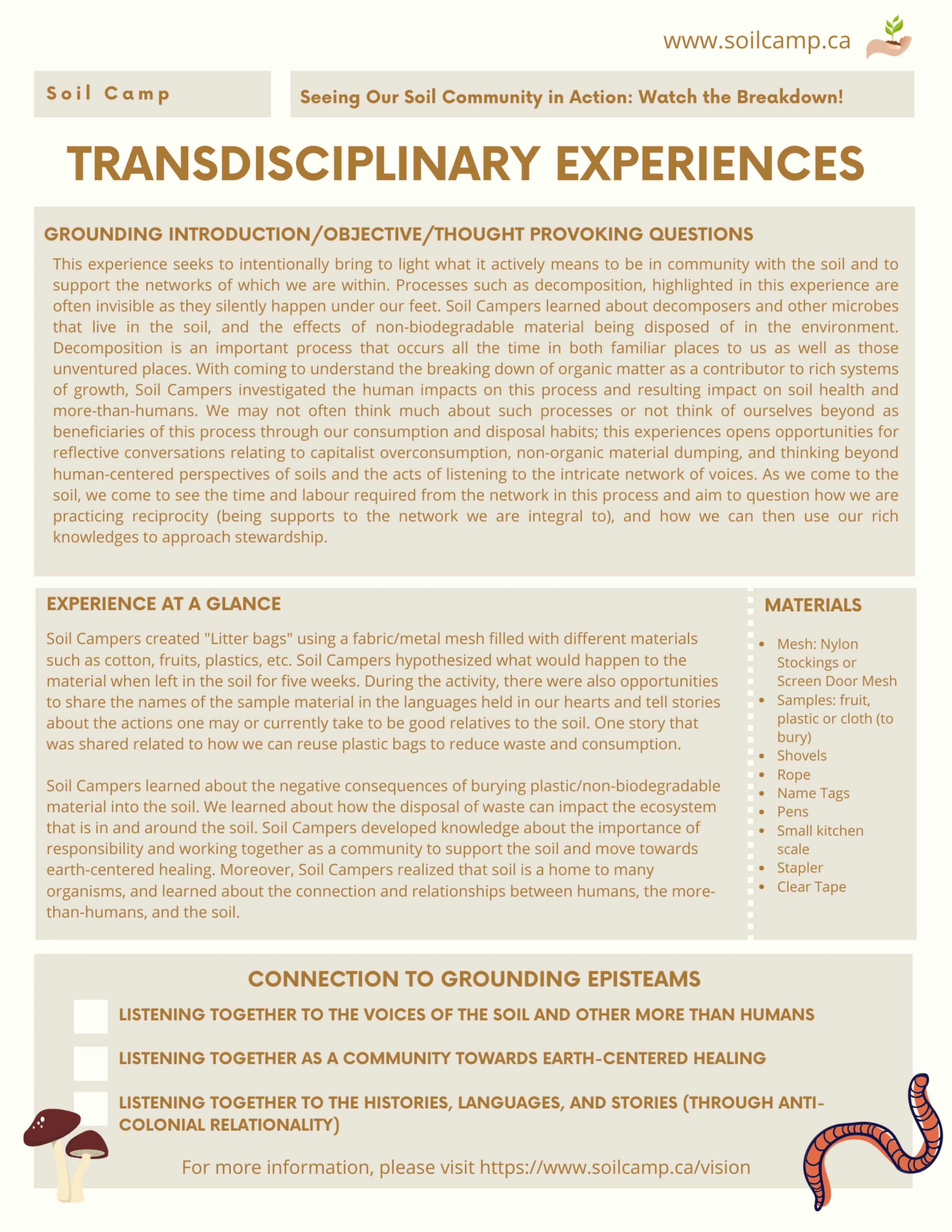
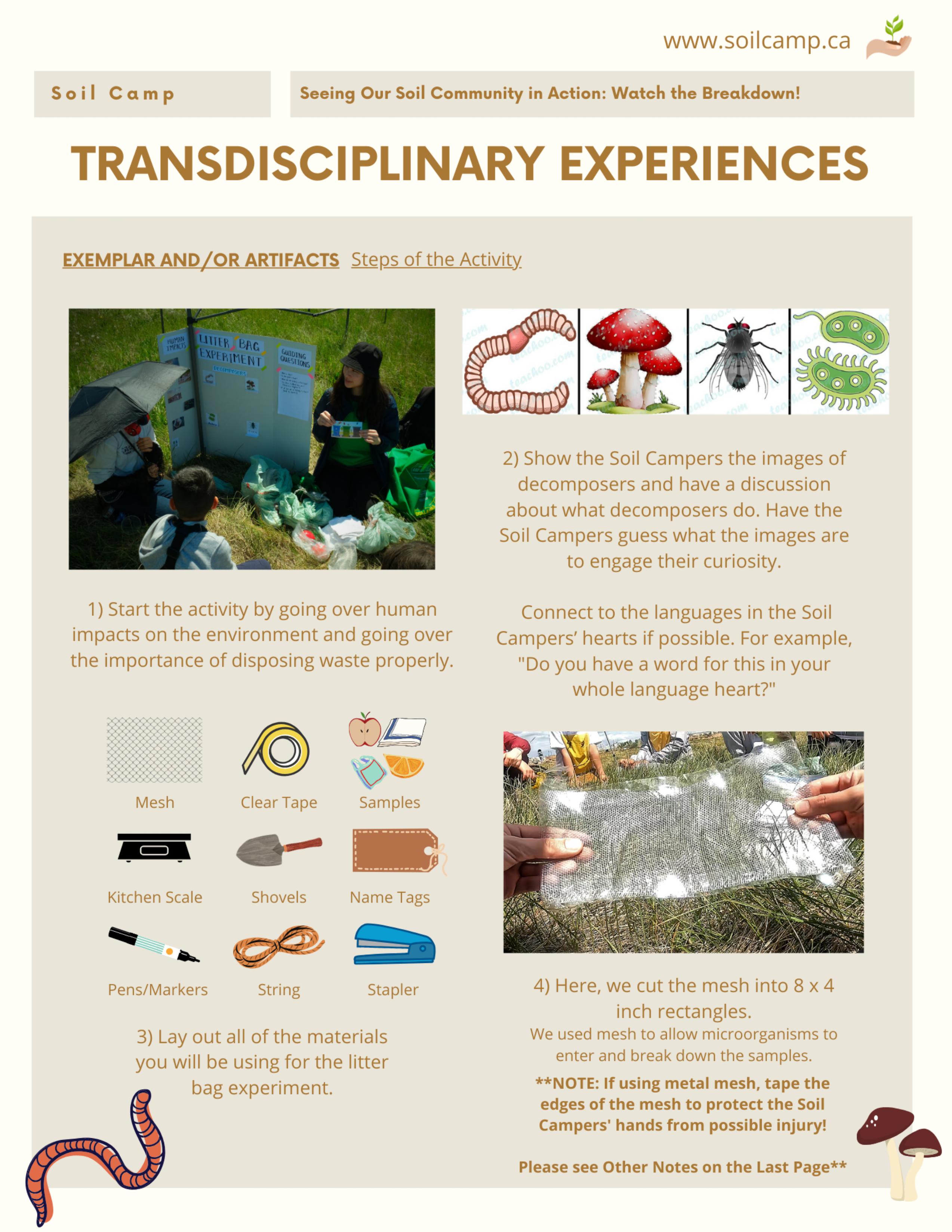
- Seeing Our Soil Community In Action
- Historicizing The Number Line
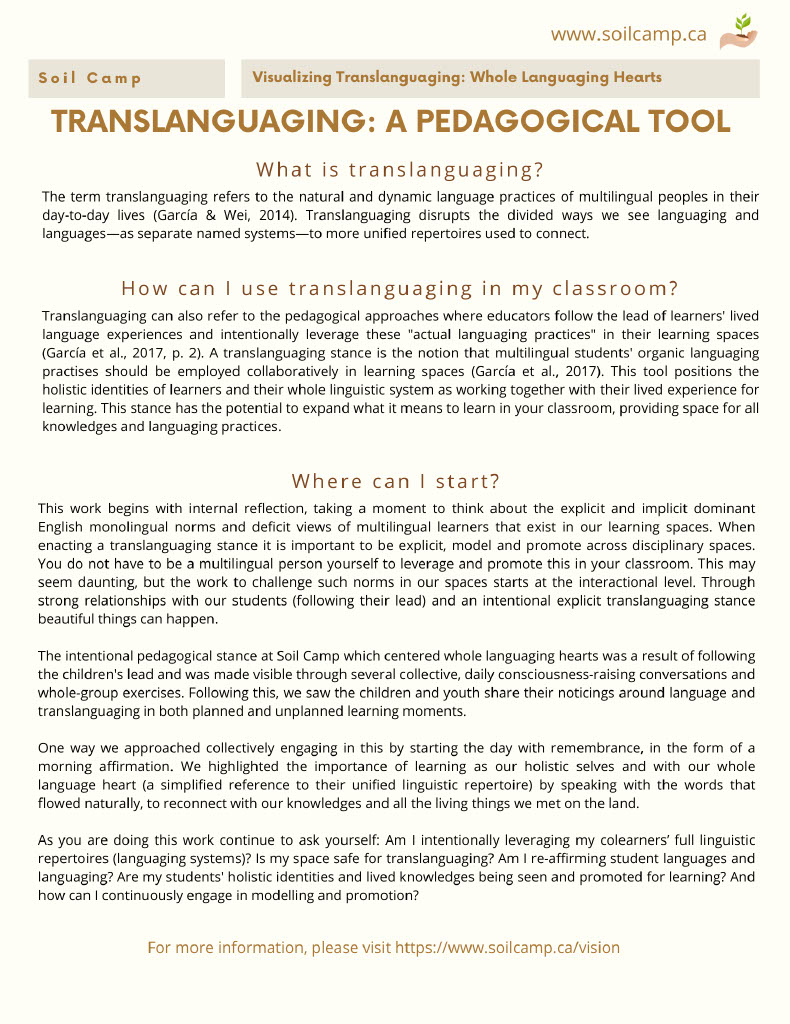
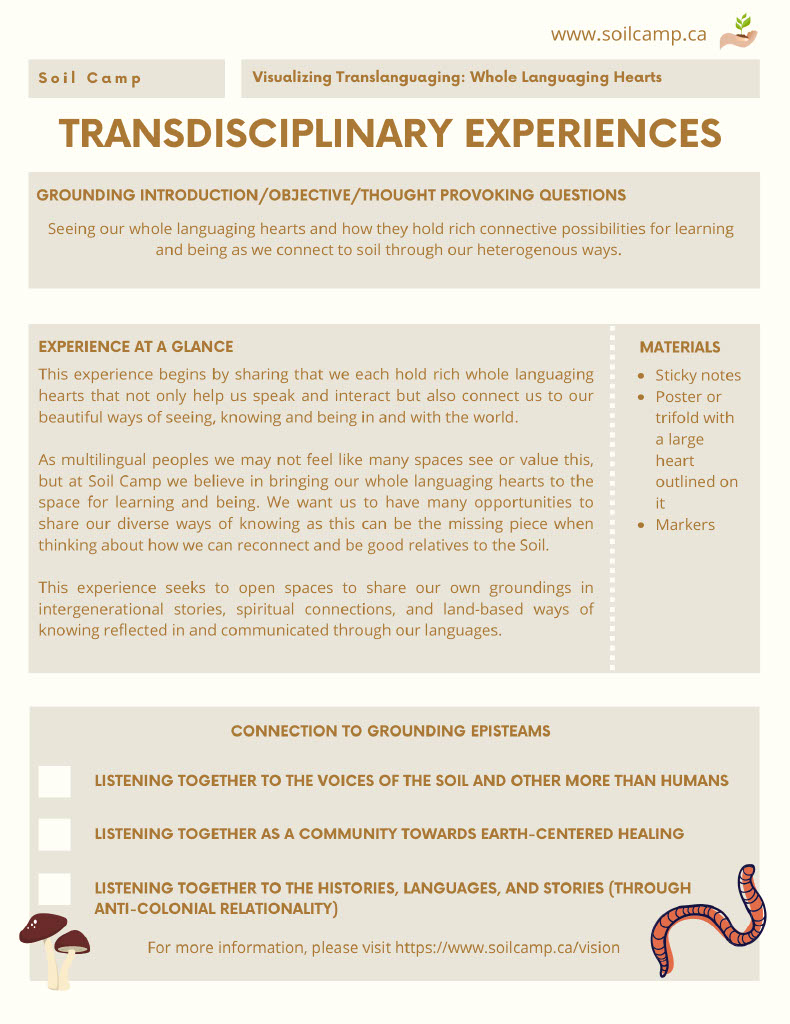
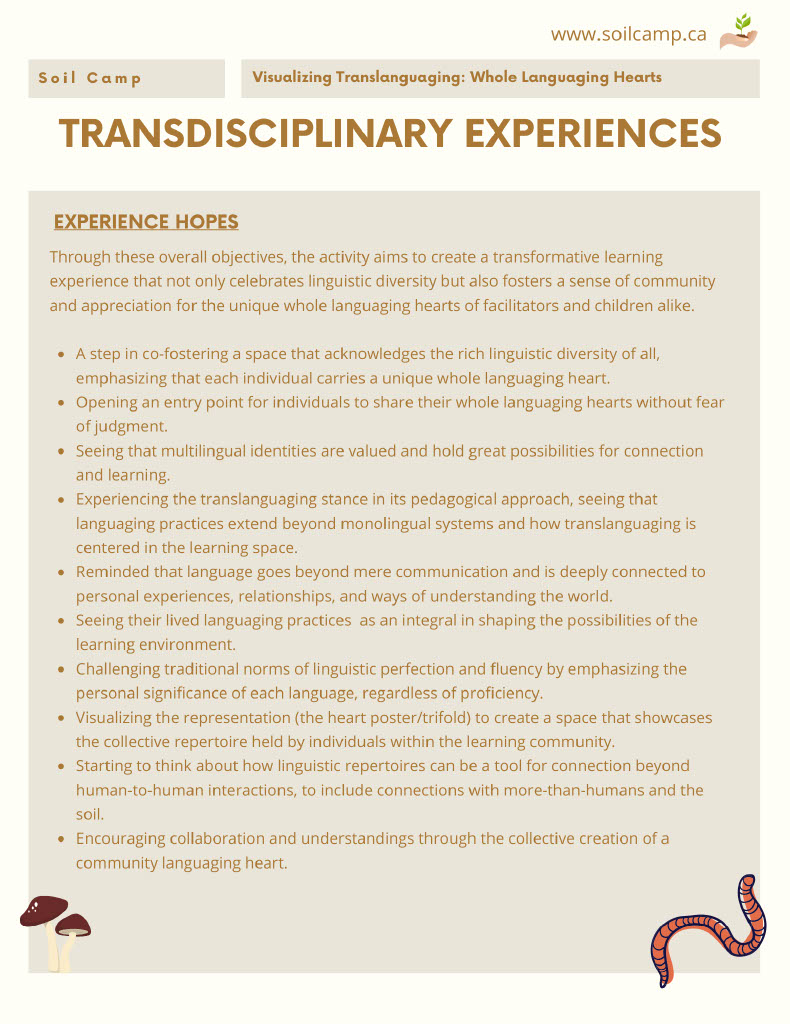
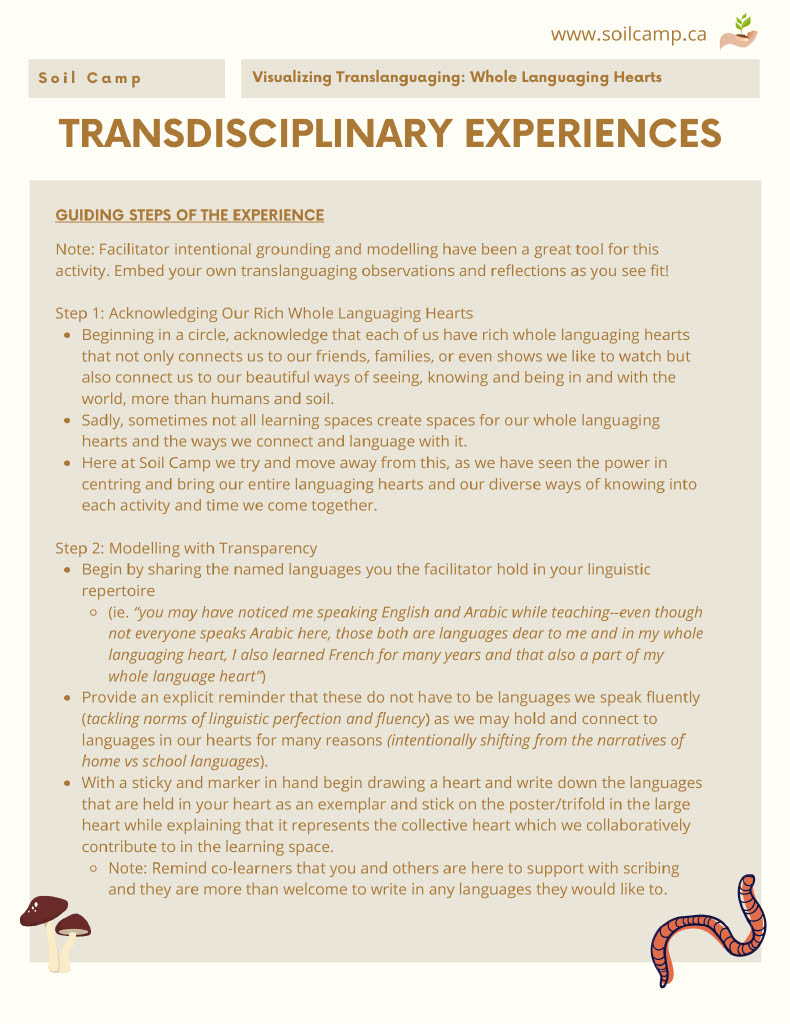
- Visualizing Translanguaging
- Spark Medicine Garden Activities
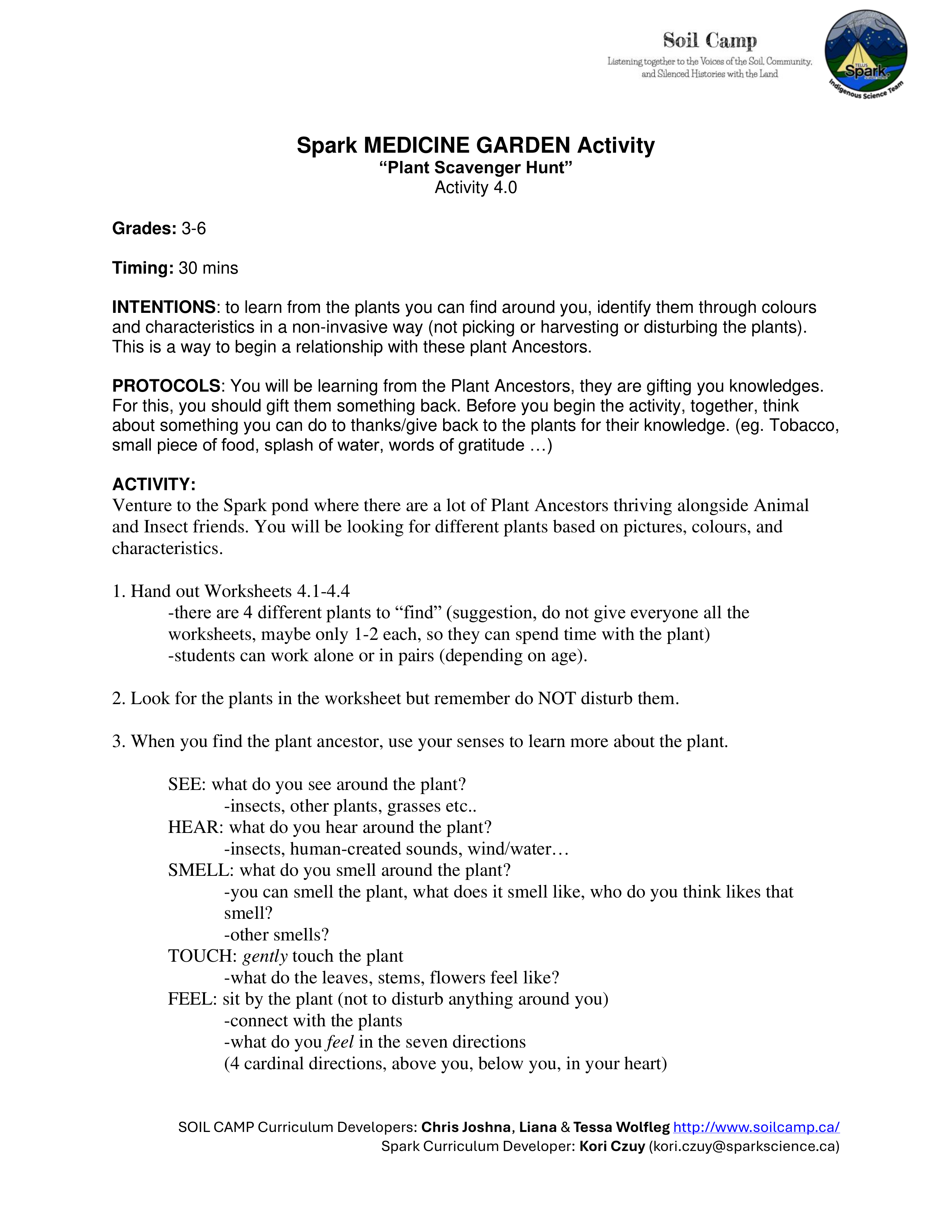
- I. Plant Scavenger Hunt
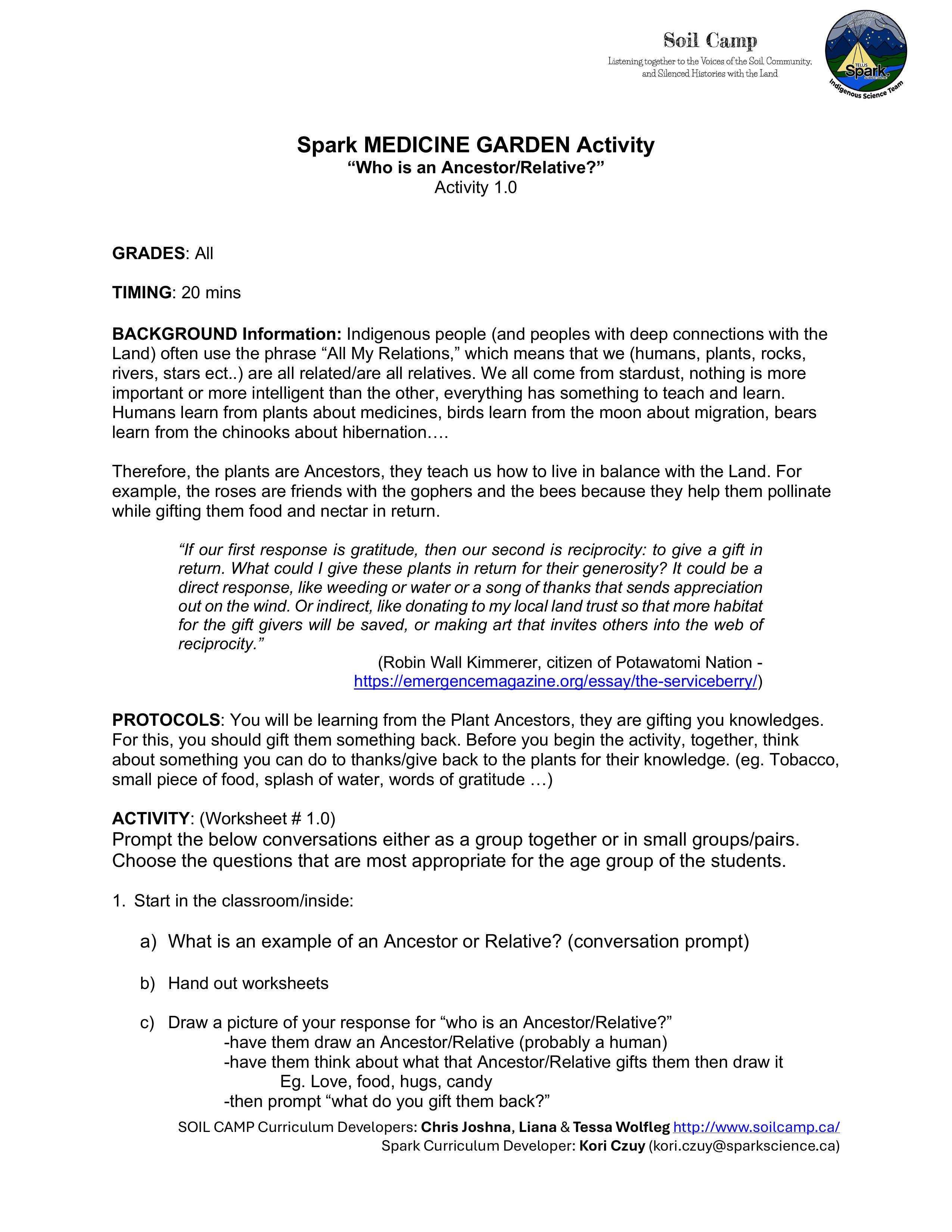
- II. Who Is An Ancestor?
- III. Plant Personality Test
- IV. Trickster Says…
- Professional Learning Documents
- Indigenous Science Night Workshops
On Centering Transdisciplinary Experiences
We are a group of people from versatile disciplinary backgrounds (sciences, mathematics, arts, history, sociology….) who collaborate together to understand the soil, the land, and our relationships with them from diverse perspectives and lenses. We honor and welcome our differences and are committed to working through tensions that arise from our differences while lifting up historically silenced voices and overlooked lived experiences in our learning.
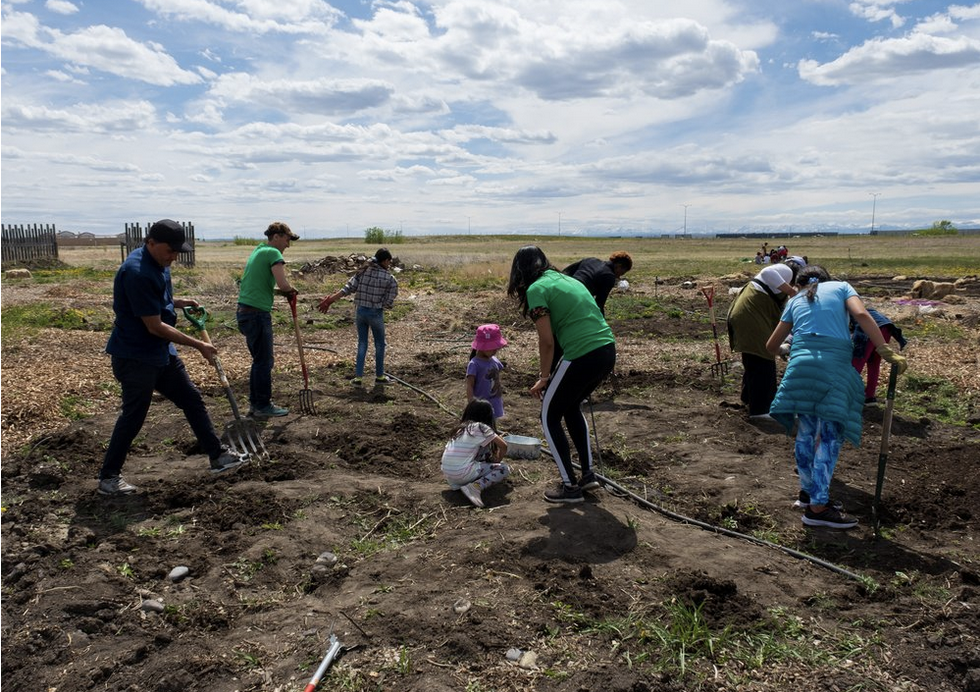
Traditionally, the disciplines of sciences and mathematics have excluded racialized, gendered, and queer bodies, and voices — and in some cases, contributed to the global colonial projects (for review: Takeuchi & Marin, 2022). We aim to collectively change this picture through on-going conversations and reflections on how to transform learning as an anti-colonial and liberating experience for us all.
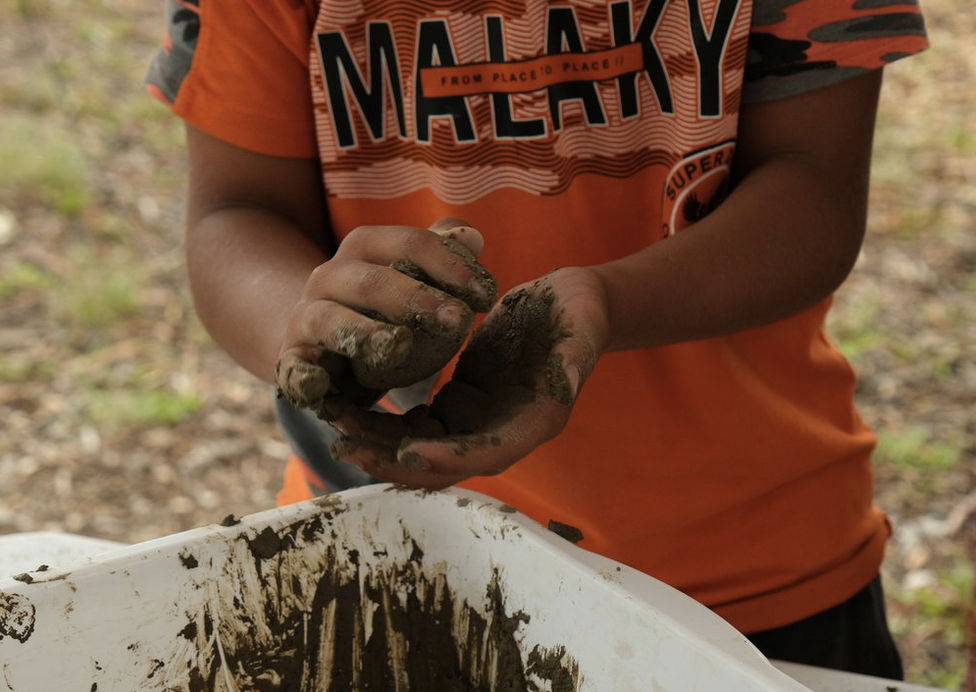
In our Soil Camp, youth and children take the role of researchers to understand more about the soil, the land, and each other, alongside teachers, educational researchers, and scientists. Land is our teacher and land is our pedagogy (Betasamosake Simpson, 2014). We believe we forge a deep connection with each other in the emerging process of learning about the soil and the land. For example, during the soil painting activity, children shared the color of the soil they used in their art as a symbol of their displacement — red soil, a color that is not often seen in Calgary, was a familiar color to many. Such observations and sharing invited not only disciplinary conversations on mineral composition, element concentration, organic matter, moisture content, and the climate, but also drew attention to children’s lived histories of refuge and migration.
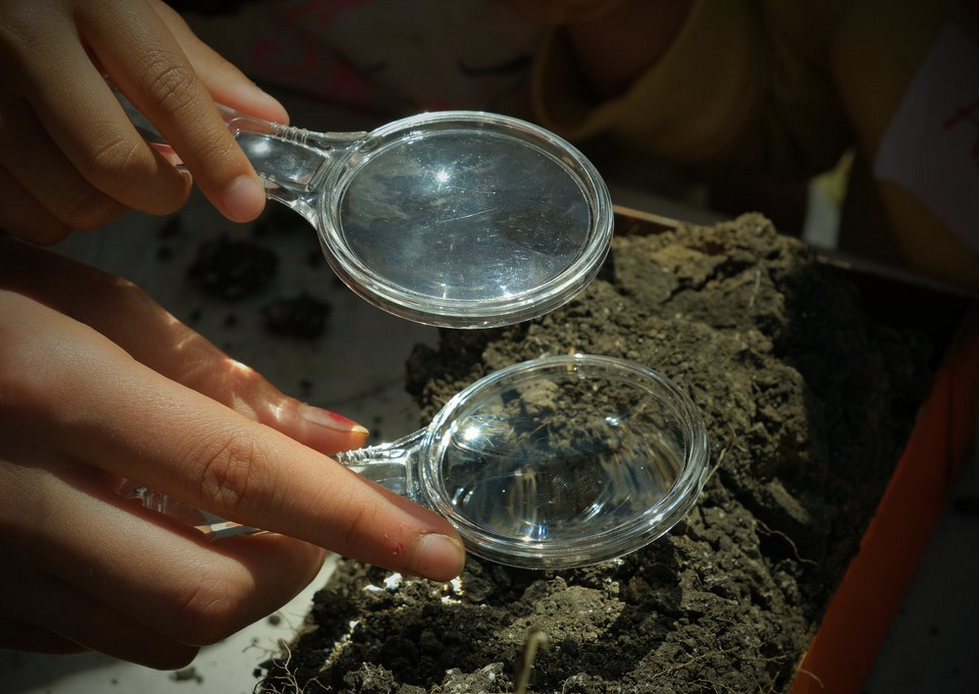
We honour and centre the knowledge of farmers at our Soil Camp, who engage in traditional and intergenerational ways of living with the soil while also giving back to the land. Many family members gathering at Soil Camp used to live by the Indigenous knowledge from growing plants and wisdom of the soil. We respect and value their ways of living, knowing, and most importantly, position them as an influential source of our learning experience, which is the core of our transdisciplinary learning approach. You can access our detailed planning and reflecting documents of transdisciplinary experiences here.
References
Czuy, K., & Eagle Speaker, C. (2019). Critical braiding approach to ethno[mathematics]. In Encyclopedia of Educational Philosophy and Theory. Springer. http://doi-org-443.webvpn.fjmu.edu.cn/10.1007/978-981-287-532-7_648-2

Betasamosake Simpson, L. (2014). Land as pedagogy: Nishnaabeg intelligence and rebellious transformation. Decolonization: Indigeneity, Education & Society, 3(3). https://jps.library.utoronto.ca/index.php/des/article/view/22170

Takeuchi, M.A. & Marin, A. (2022). “Globalization,” coloniality, and decolonial love in STEM education. Oxford Research Encyclopedia of Education. https://doi.org/10.1093/acrefore/9780190264093.013.1655

Takeuchi, M.A., Sengupta, P., Shanahan, M-C., Adams, J.D., & Hachem, M. (2020). Transdisciplinarity in STEM education: A critical review. Studies in Science Education, 56(2), 213–253. https://doi.org/10.1080/03057267.2020.1755802
Transdisciplinary Experiences in Practice
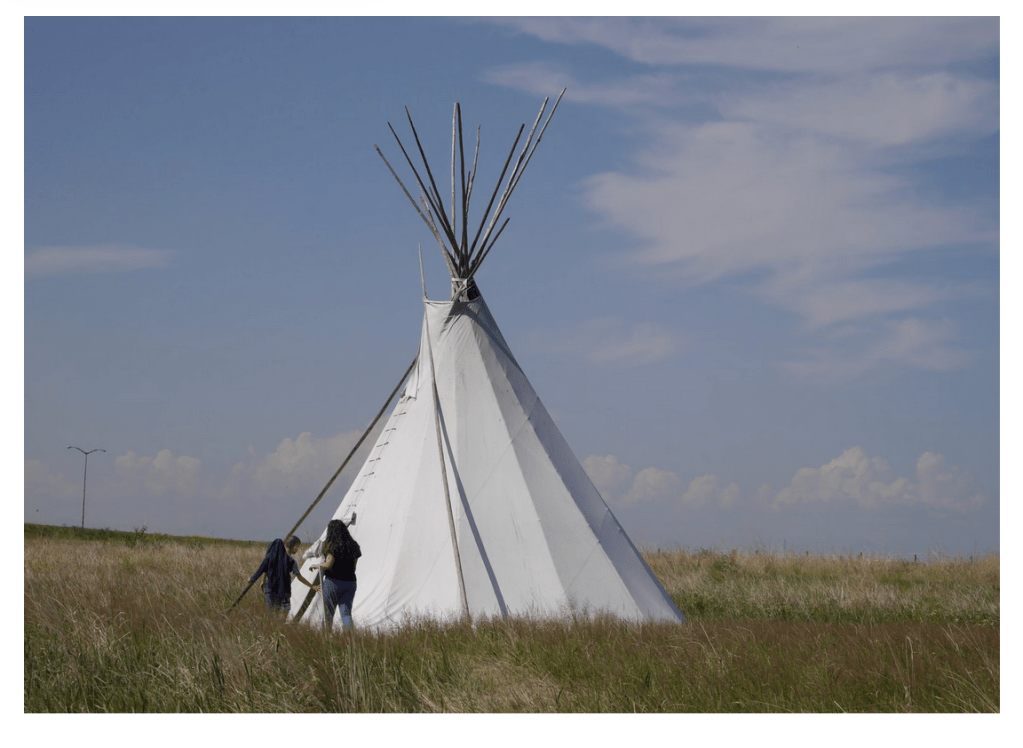

Understanding the Tipi Building and A Number Line of Land Stewardship
Storying Sustainability and Diversity
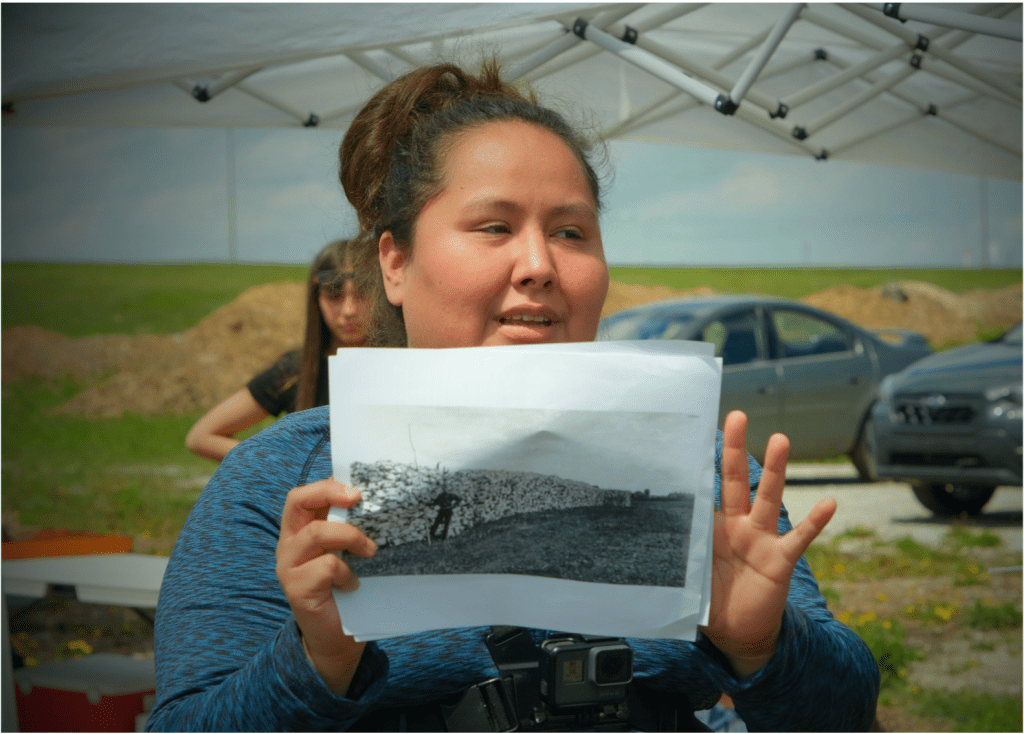
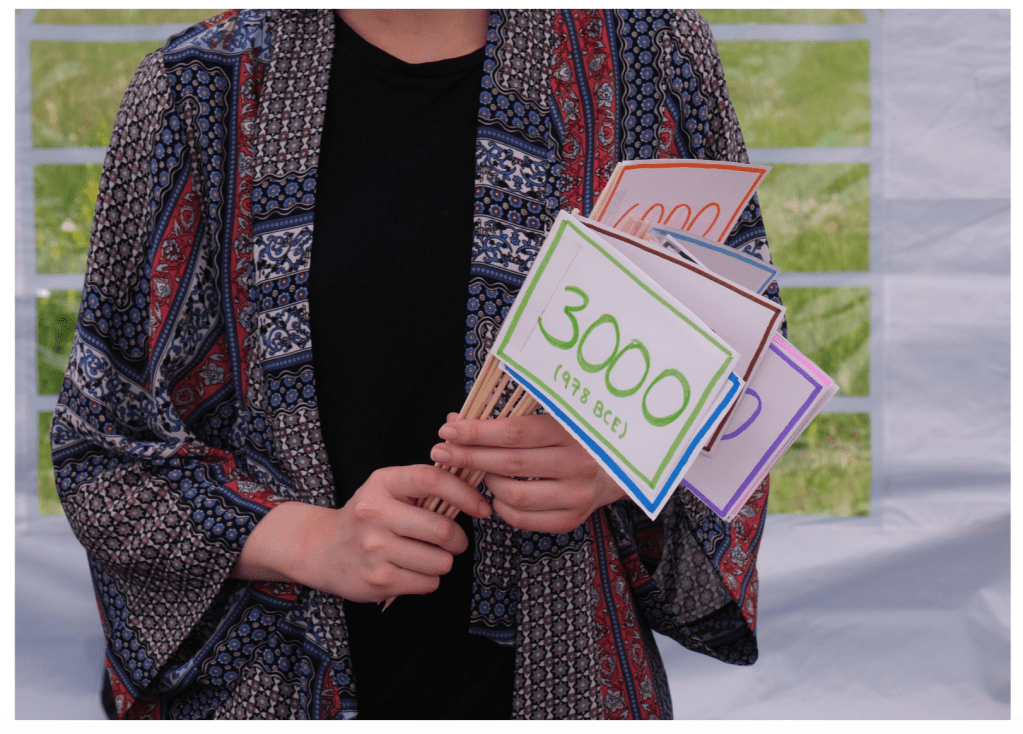
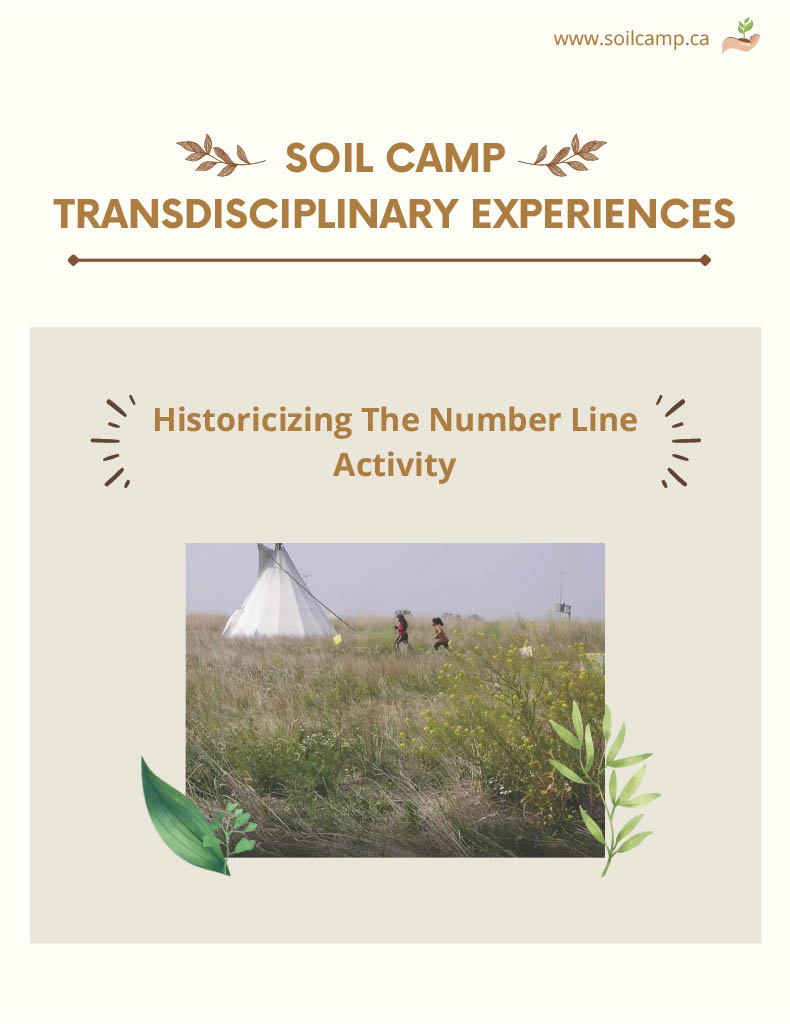
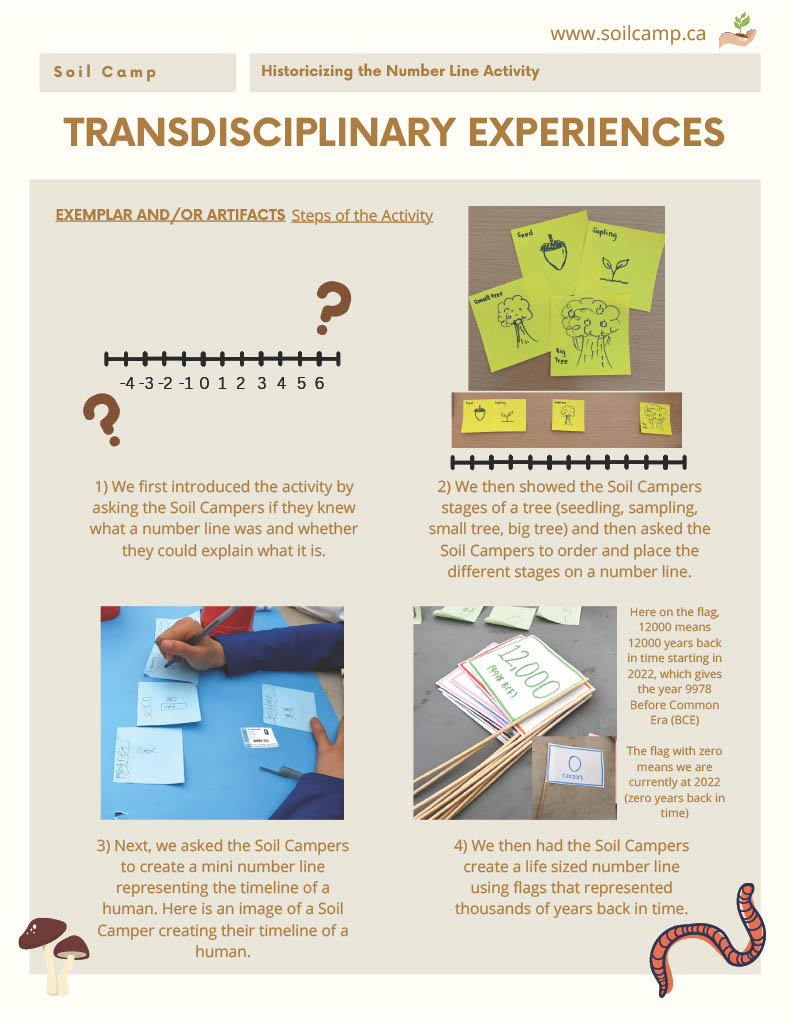
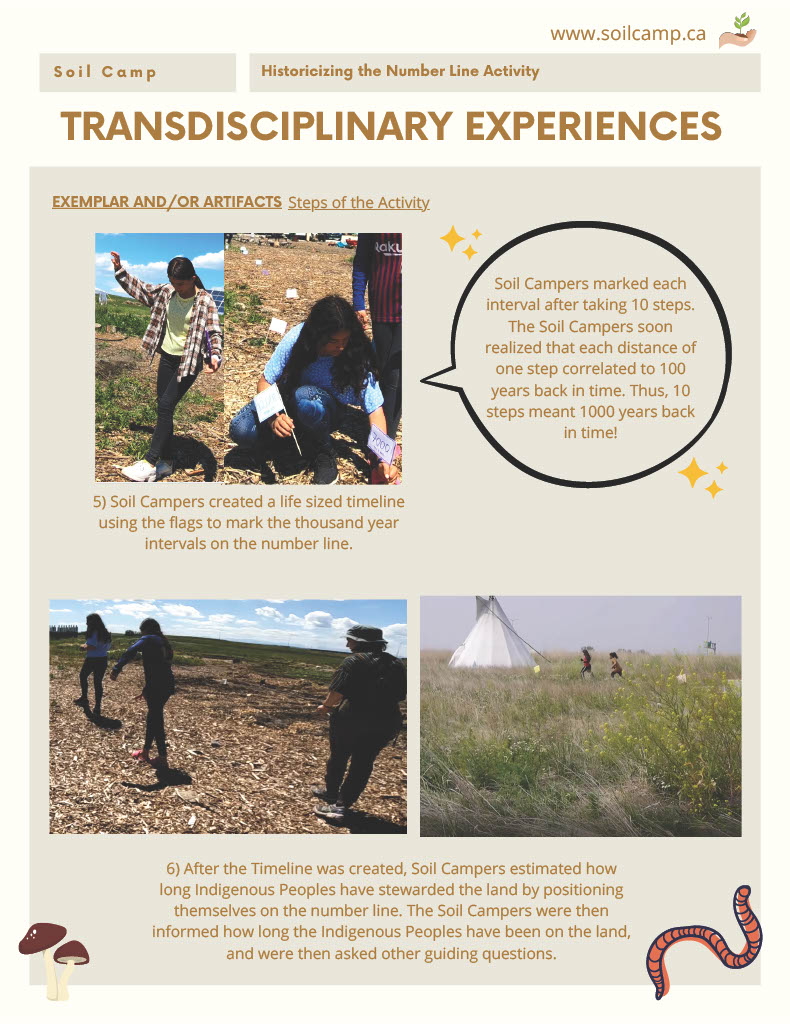
Prior to the beginning of summer programs, the Land of Dreams invited members of a local Indigenous community to the land to build a tipi (of Cree tradition) that was graciously gifted by the community to the people who gathered on the land. The tipi provided a comfortable shelter and shaded space for those on the land to avoid the heat as summer 2021 was exceptionally hot due to climate change. One of the Indigenous members who built the tipi left a beautiful message to gatherers on the land, saying, “Buffalo bones are sleeping deep inside the soil. With the care of regenerating the soil, buffalo might come back.” On the first day at the camp, soil campers were invited into the tipi and engaged in curious conversations regarding the engineering of tipi building. Soil campers also partook in an activity to honor the history of land stewardship, in which a number line was set up starting from the tipi to conceptualize the duration of Indigenous people’s stewardship of the land in an embodied manner.
Dr. Kori Cuzy took the youth and children soil campers into a compelling journey to explore the significance and meanings of plants (sage, tobacco, sweetgrass, cedar) through a series of enchanting stories. The storytelling session was hosted inside a tipi where Dr. Cuzy touched on the history of the land (Land of Dreams) that was primarily used for industrial mono-culture farming, followed by the story of kinship between the three sisters (known as bean, squash, and corn) that encouraged the listeners to ponder upon the strength of diversity for a more sustainable present and future. This story also highlighted the importance of regenerating diversity for not only those on the land but also inside the soil to build a future based on kindness to our ‘more than human’ kins. Dr. Cuzy’s stories centred messages of gratitude and reciprocity, inviting listeners to reflect on acknowledging the land through collective and individual actions.

Photo above:
(COPYRIGHT OF THE PHOTO: UNIVERSITY OF CALGARY/FRITZ TOLENTINO)
Soil Painting
Listening to the Voice of Plants
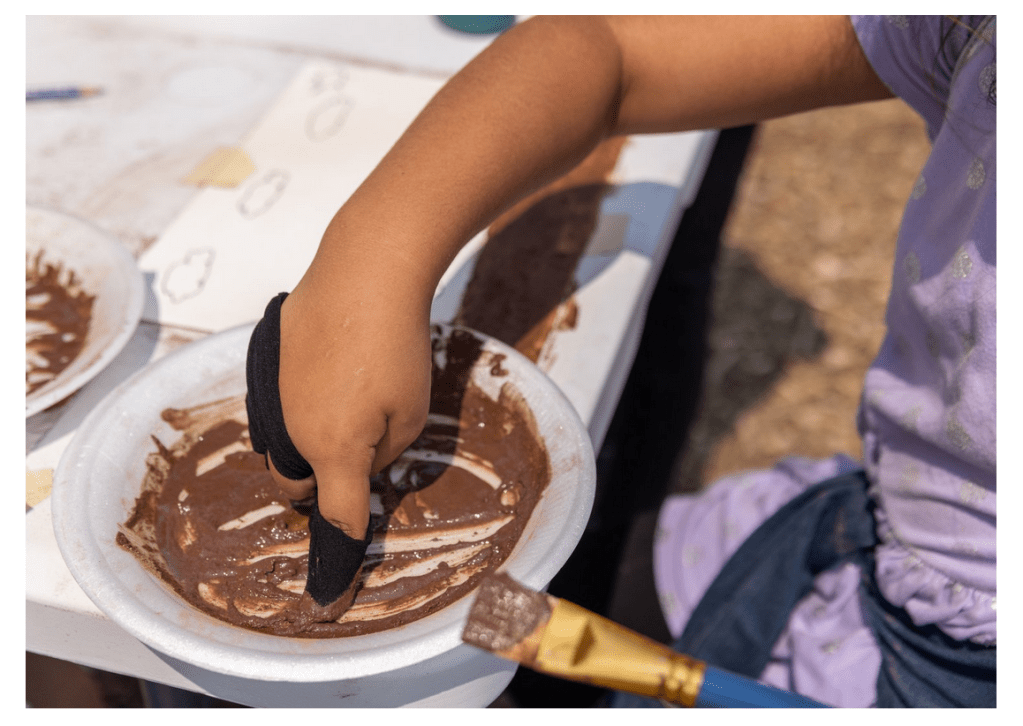
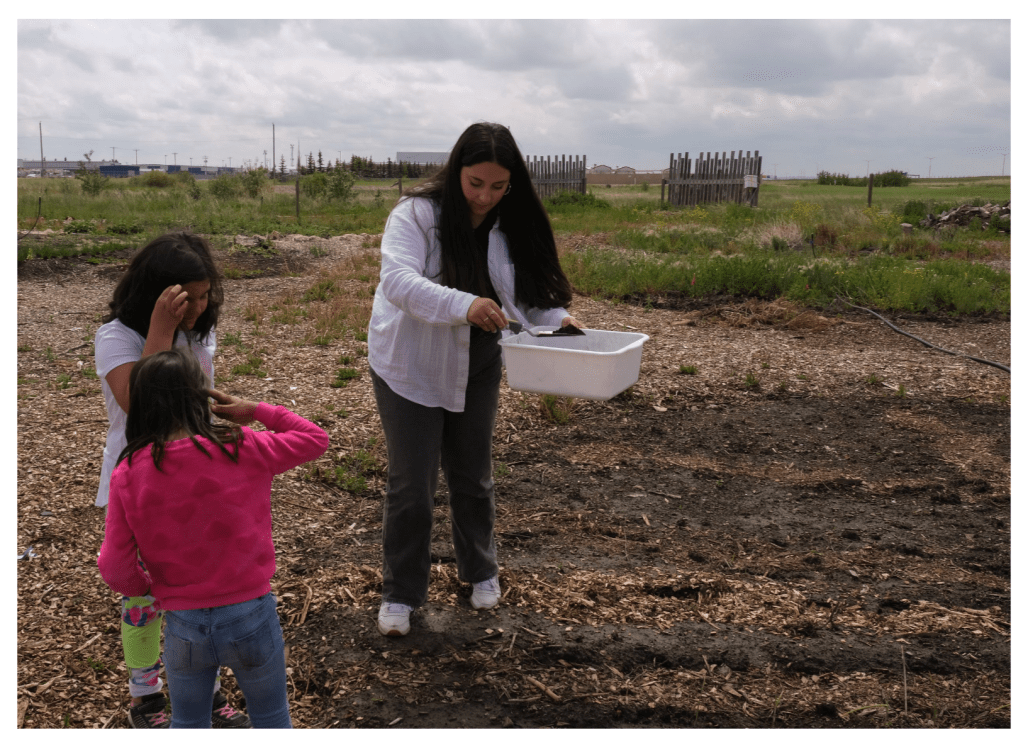
The soil painting activity attempted to stir a sense of curiosity in soil campers by establishing a connection to the Earth’s one of the most essential natural resources and foundation of life - Soil! This arts-integrated sensory based activity stimulated soil campers to get their hands dirty to “dig deeper” to understand the importance of soil, the marvel and miracle of the soil ecosystem, and to develop a profound appreciation for soil as a life support system. Soil campers began the activity by placing their hands deep into the soil to connect to the soft, warm, and moist earth followed by channeling their creative imagination through paintings smeared with different shades of soil - black, brown, red, grey, and white - that changed their perception of soil as just dirt and replaced it with a new found awe and admiration for the beauty and abundance of soil.

Photo above:
(COPYRIGHT OF THE PHOTO: UNIVERSITY OF CALGARY/FRITZ TOLENTINO)
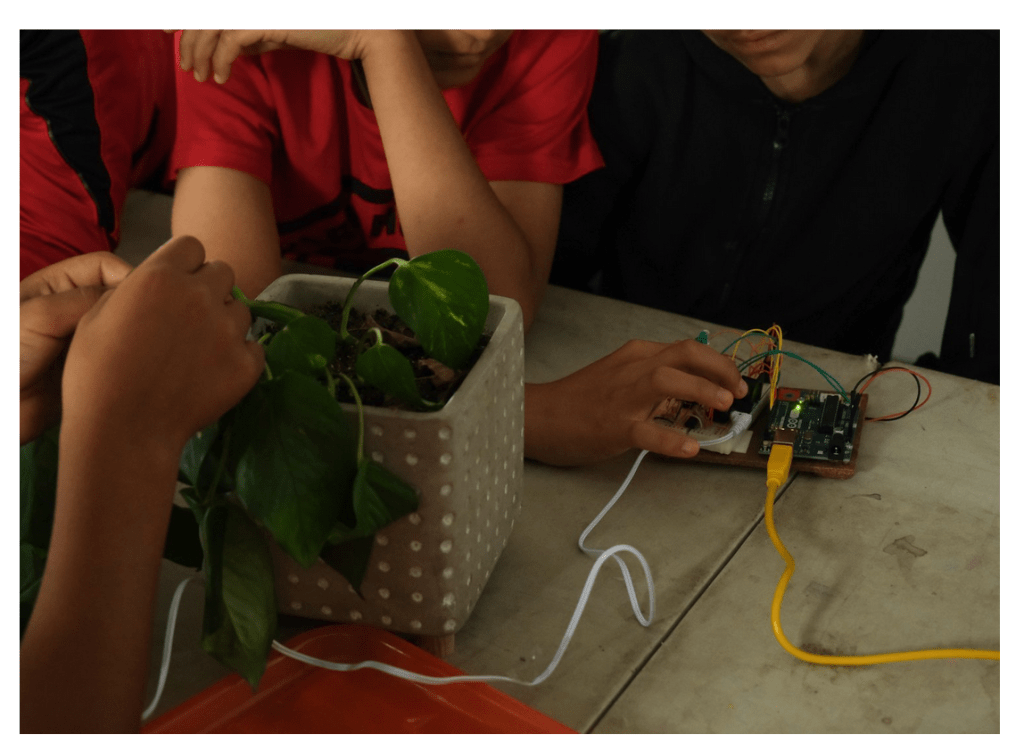
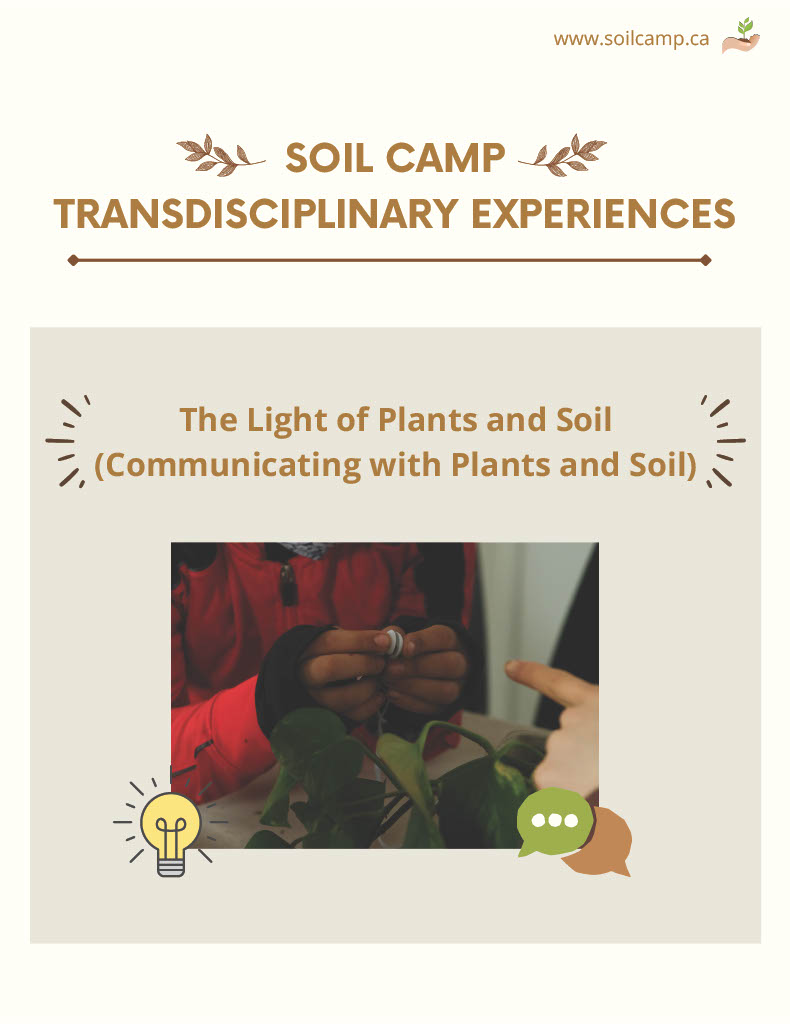
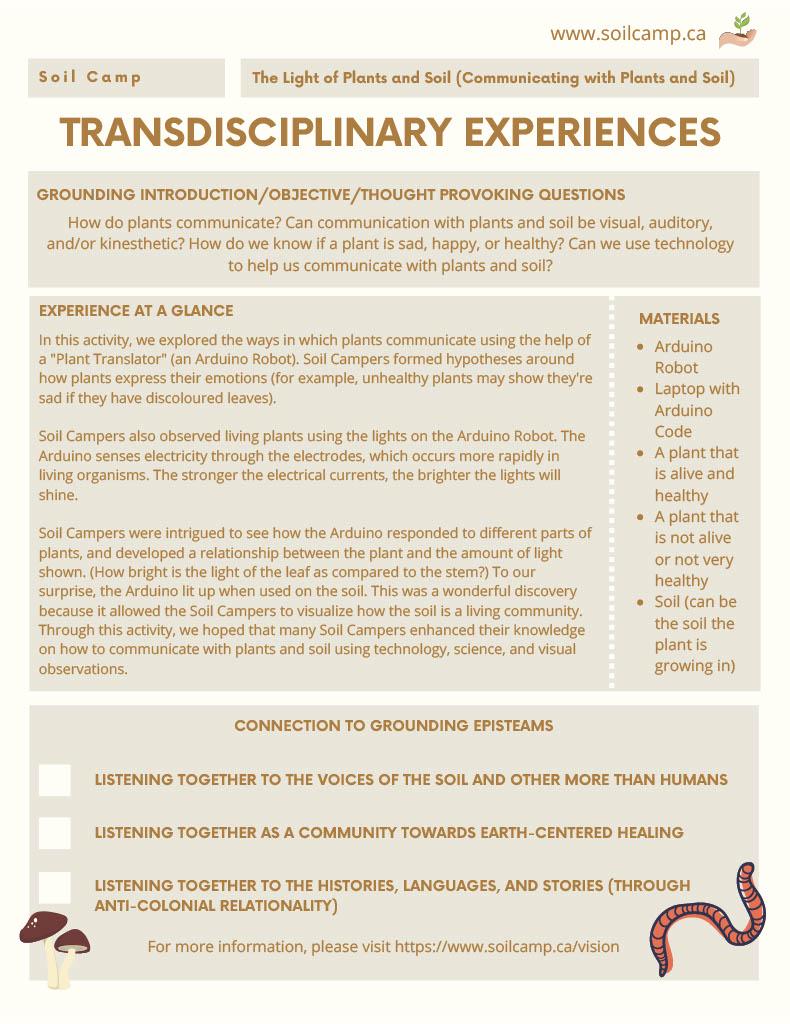
This activity invited soil campers to engage in imaginative and intentional listening to hear the language of the plants as translated through music on speakers. Soil campers initiated creative and contemplative conversations regarding the music source and interacted with the plants by singing in different languages to observe the changes in music generated by the plants. This reciprocal interaction allowed soil campers to build an intimate connection to the plants without the need to speak verbally but rather communicating in a language beyond words and listening to what our ears otherwise cannot hear. Soil campers also further explored plant communication through the wondrous world of robots and coding by placing electrodes on leaves of the plants that translated electromagnetic waves from the leaves into musical notes through a connected device - shifting soil campers’ view of plants from just a passive element of nature to an empathetic, emotional, and intelligent life form that needs to be treated respectfully and tend with care.
Red Cabbage Chemistry Experiment to Test the pH Level of Soil
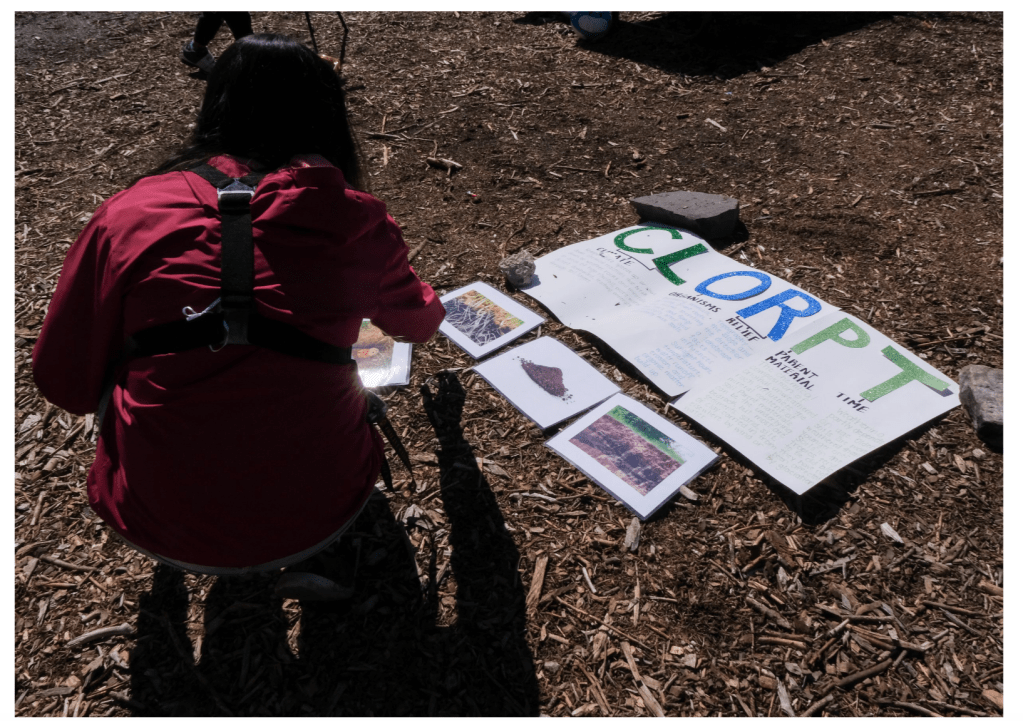
Understanding the Roles of Decomposers for Soil Regeneration
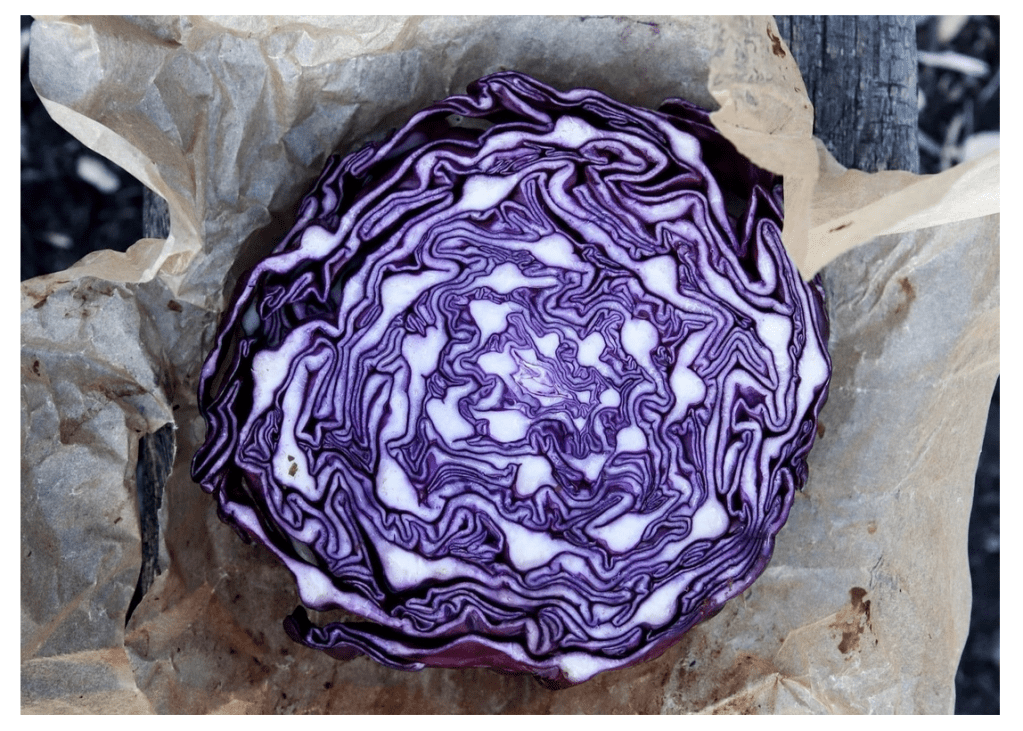
Soil campers engaged in a chemistry experiment to test naturally occurring acid base indicators found in red cabbage leaves to understand anthocyanins or water-soluble pigments that change color depending on a specific pH level. The mixing of different solutions provided the opportunity to test a variety of substances in the red cabbage pH indicator that allowed soil campers to witness how transitional phases and spectrums of color change occur. This inquiry-based learning process piqued soil campers’ curiosities to make connections between the red cabbage and the vegetation found at the Land of Dreams, such as berries and kale, that are also high in anthocyanin, containing similar phenol compounds. Soil campers were fascinated by the color changes that led to further questions and reflections, making this activity a highly engaging and full of inquiry rich investigation.
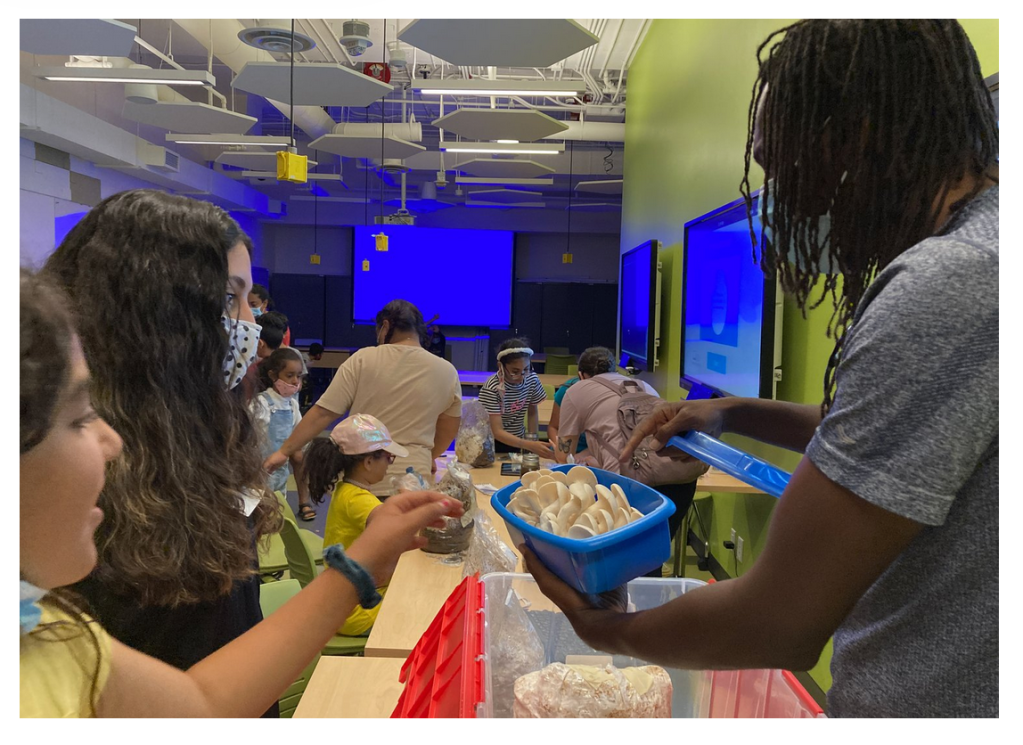
Soil campers discovered that soil is alive and home to diverse living organisms as they traversed the world of worms, fungi, and microbes to understand the roles these ‘more than human’ organisms play in the creation and maintenance of soil health. The sensory based hands-on worm station immersed soil campers to use their all five senses to engage with the critters, which aimed to display the symbiotic relationship between soil and worms. This activity developed a sense of empathy and compassion in soil campers to care for the soil ecosystem that provides habitat for the worms through a reciprocal relationship of mutual collaboration. Soil campers also took the roles of curious scientists to further investigate fungi and microbes by using tools, such as magnifying glasses and microscopes, to examine and learn our relationship based on interconnection to these ‘more than human’ kins.
Planning and Reflection Documents
These resources have been created by the community of Soil Camp researchers, teacher candidates, and community partners and the experiences were facilitated collectively by our team of teacher collaborators, facilitators, and community partners.

One of the main purposes to create these planning and reflection documents are to provide educators with a brief Illustration and immersive look into how teachers and educators can incorporate land-based learning and transdisciplinary experiences into their pedagogy. These resources are meant to help educators to understand the transdisciplinary nature of our activities, essential questions to ask both in planning and practice, and ways to continue sparking curiosity and STEM learning for socio-environmental justice in a multimodal manner.

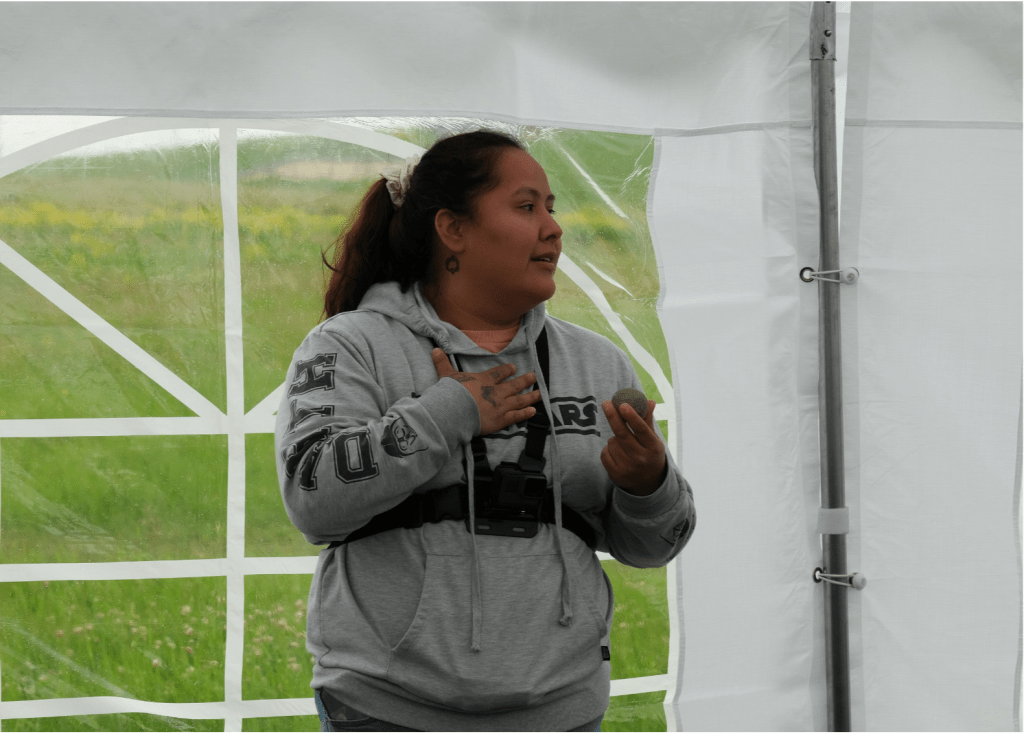
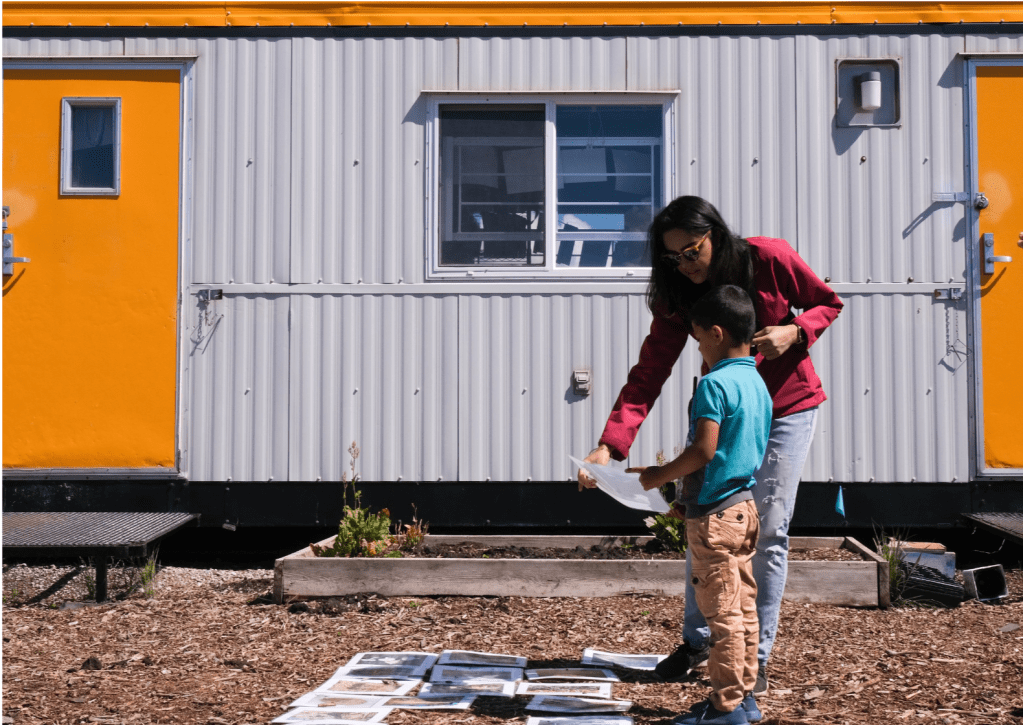
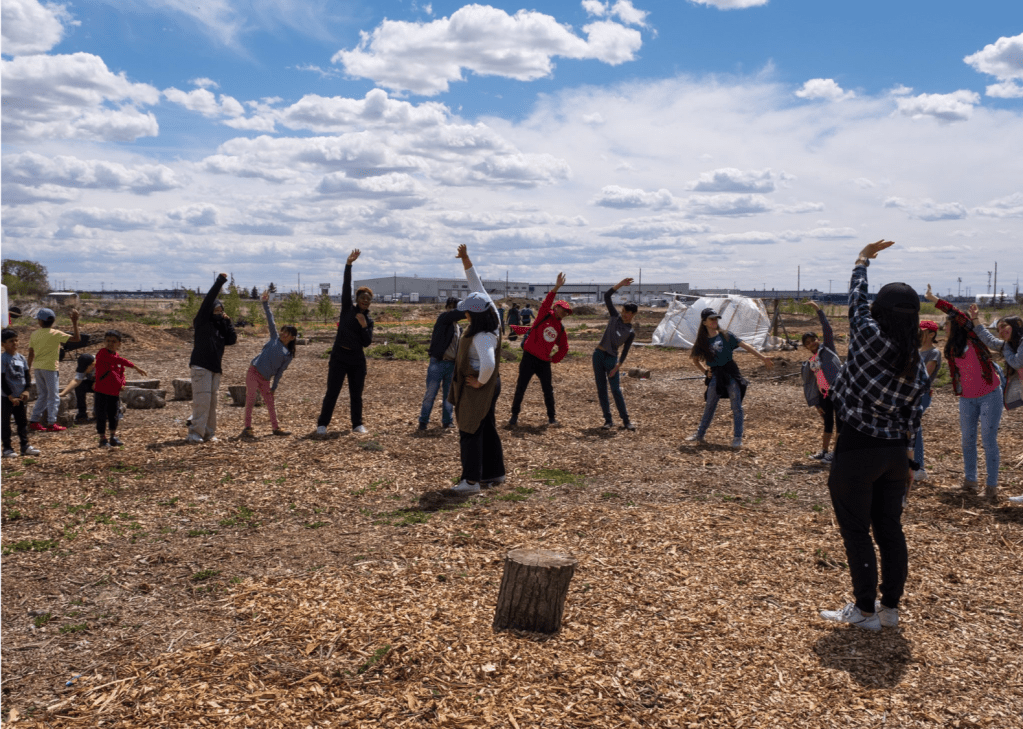
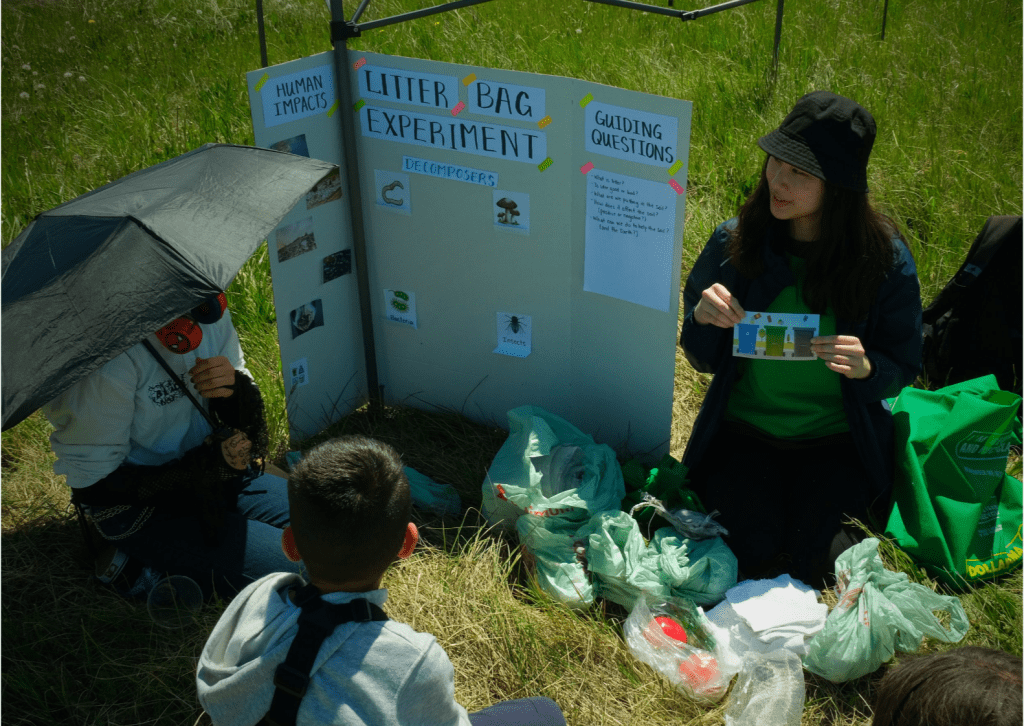
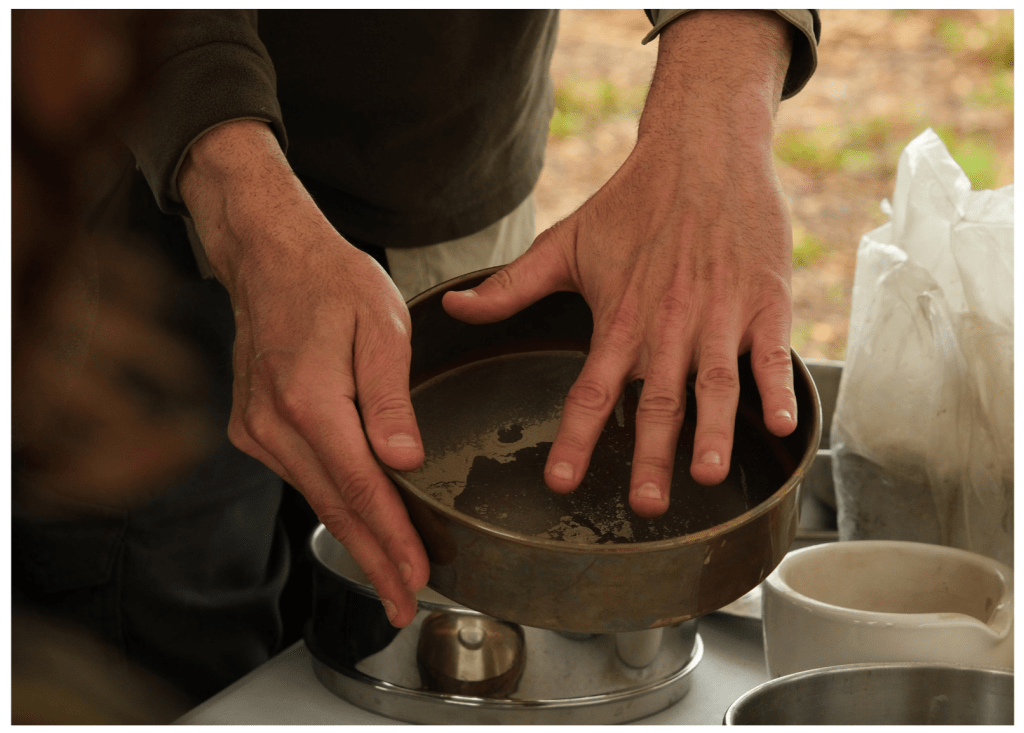
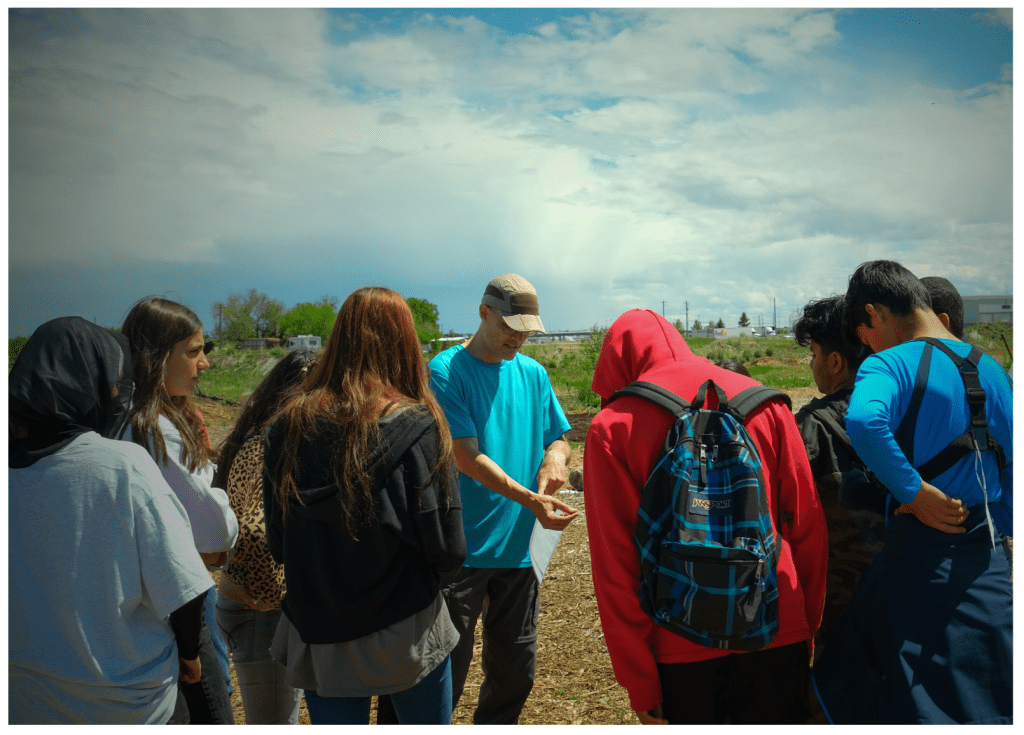
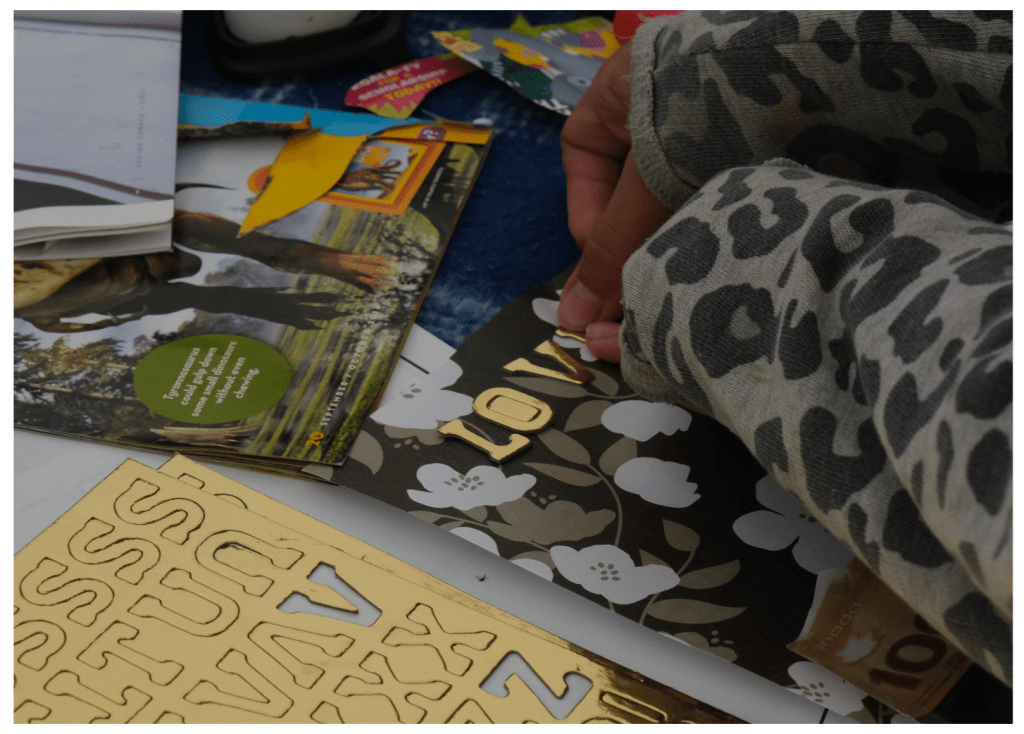
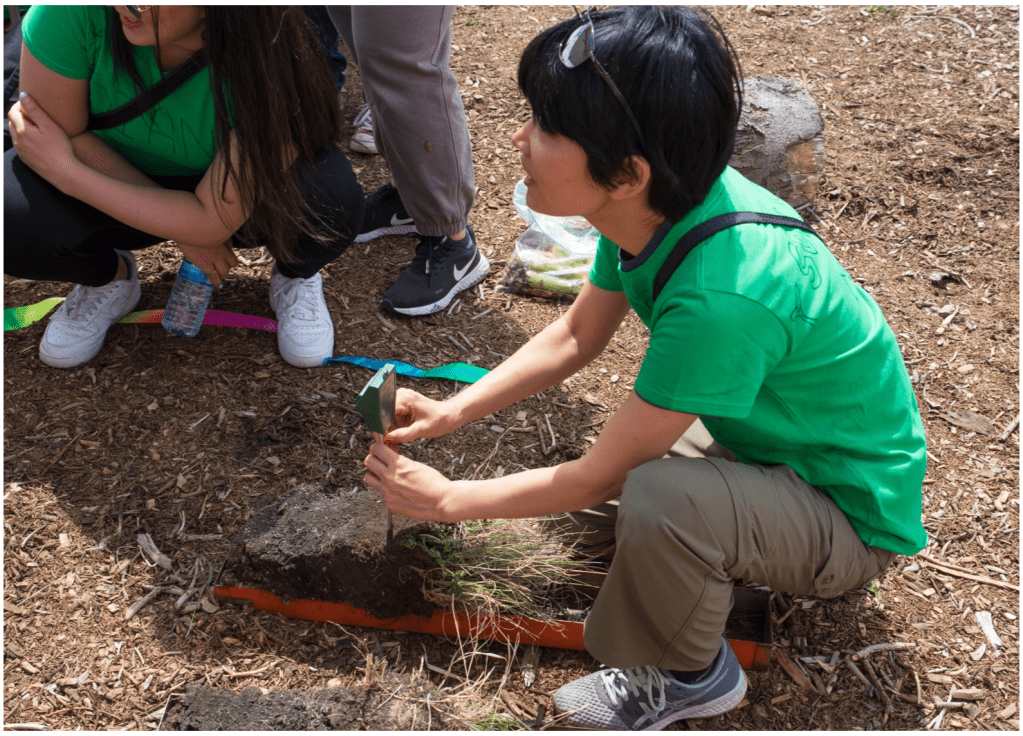
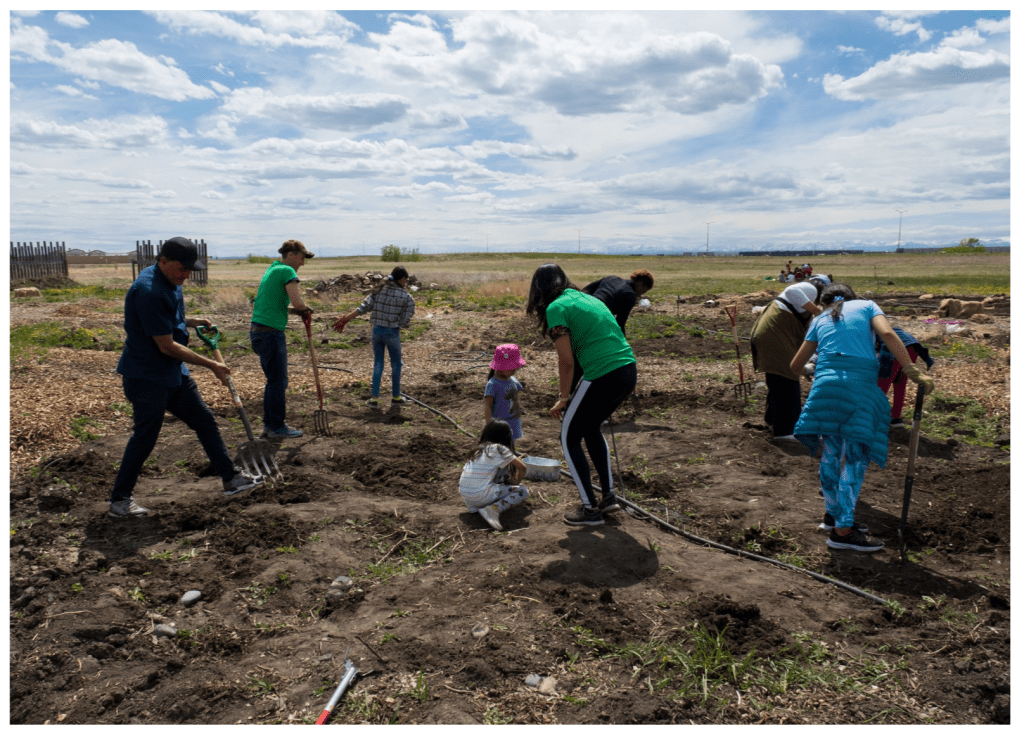
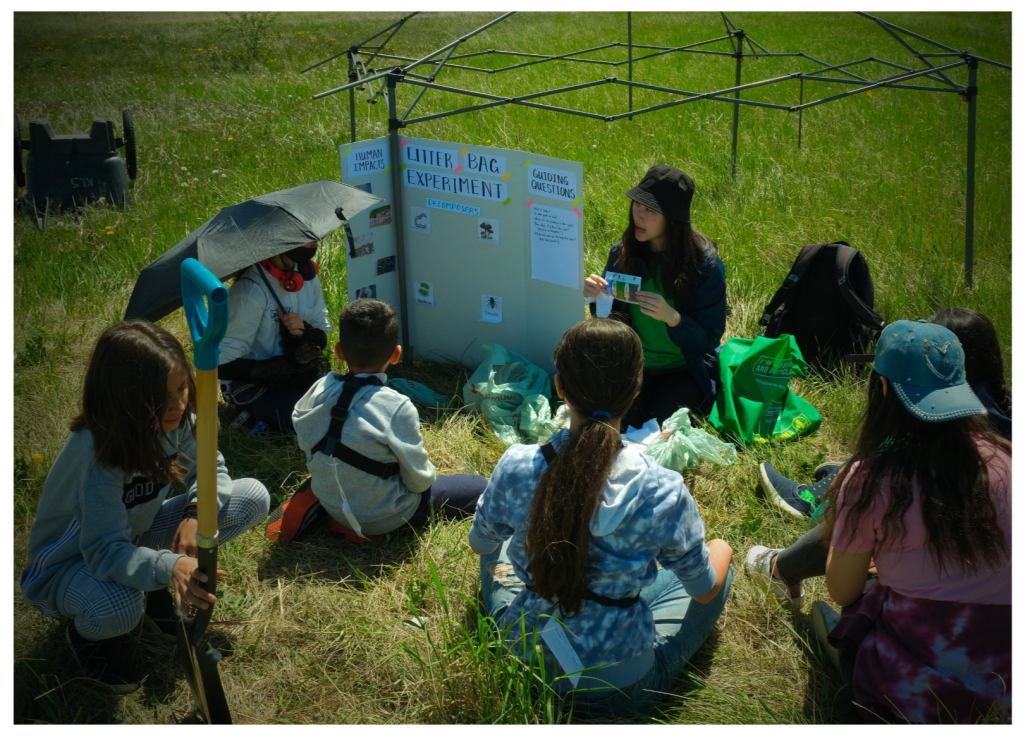
Please click on the slideshow below to see our wonderful facilitators planning, reflecting, facilitating, and collaborating on the land.

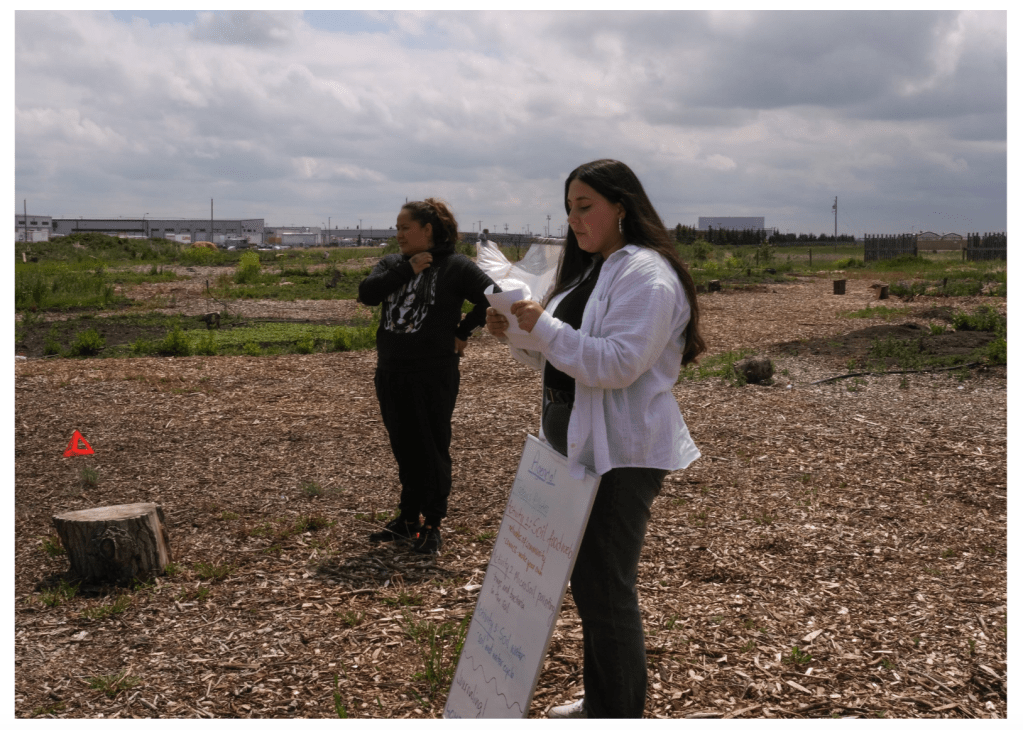
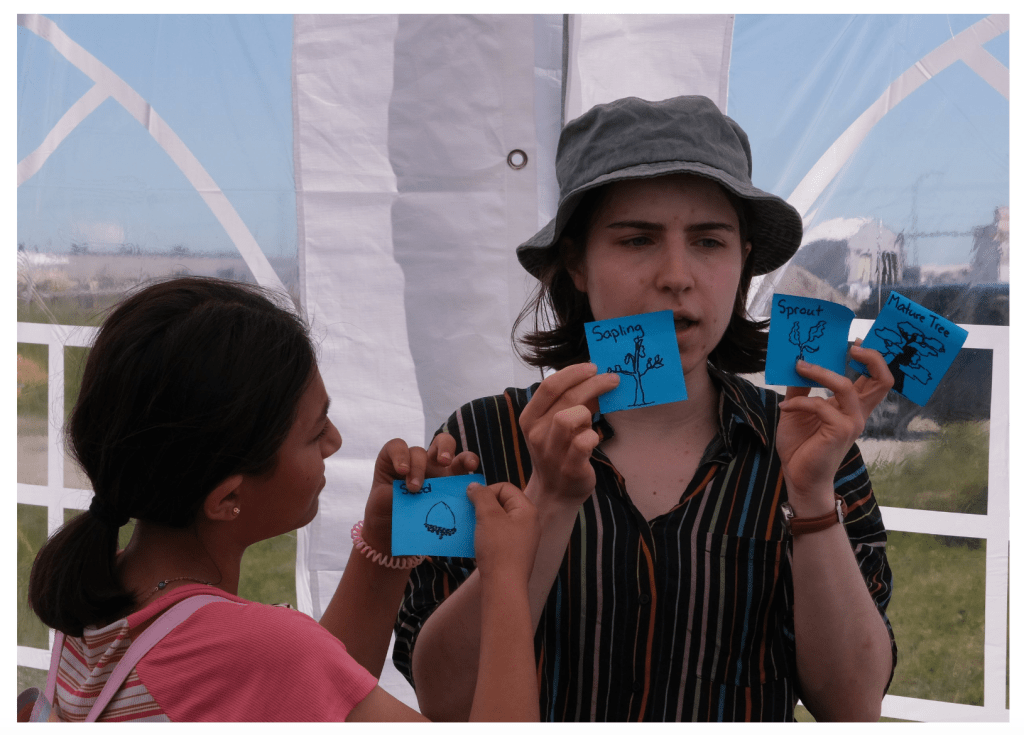
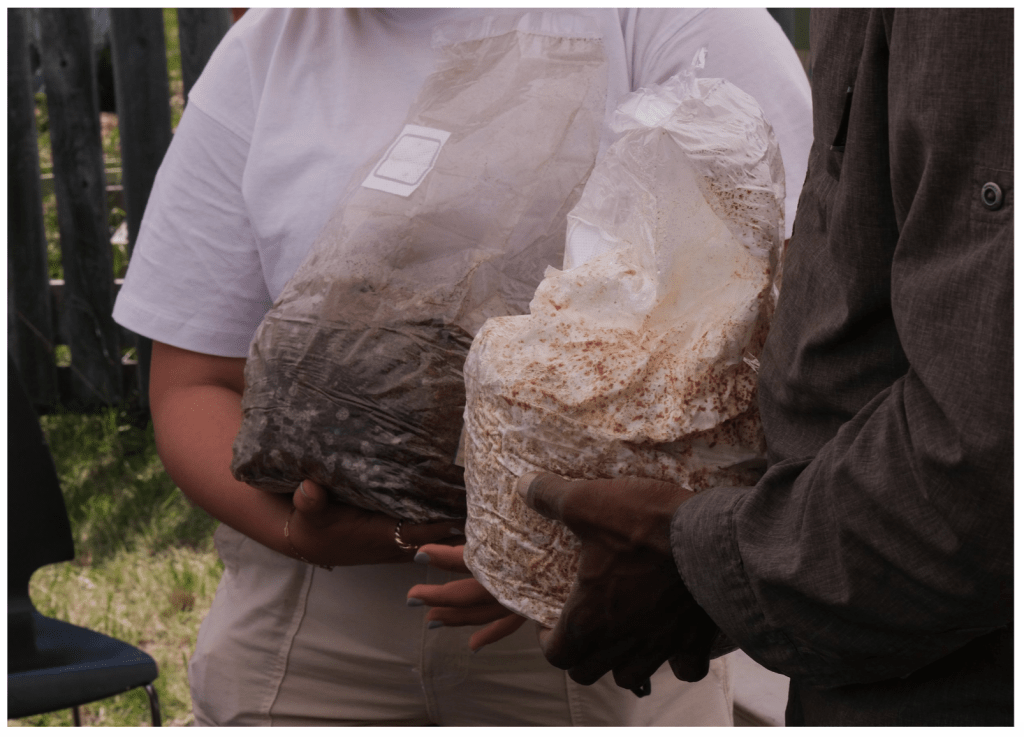
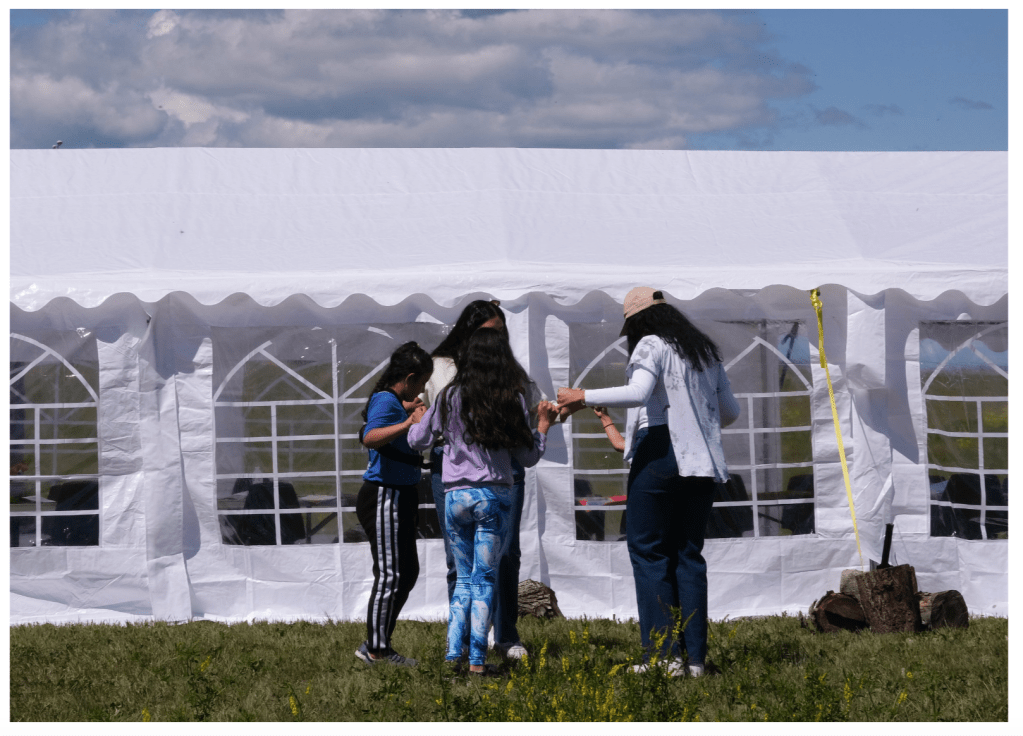
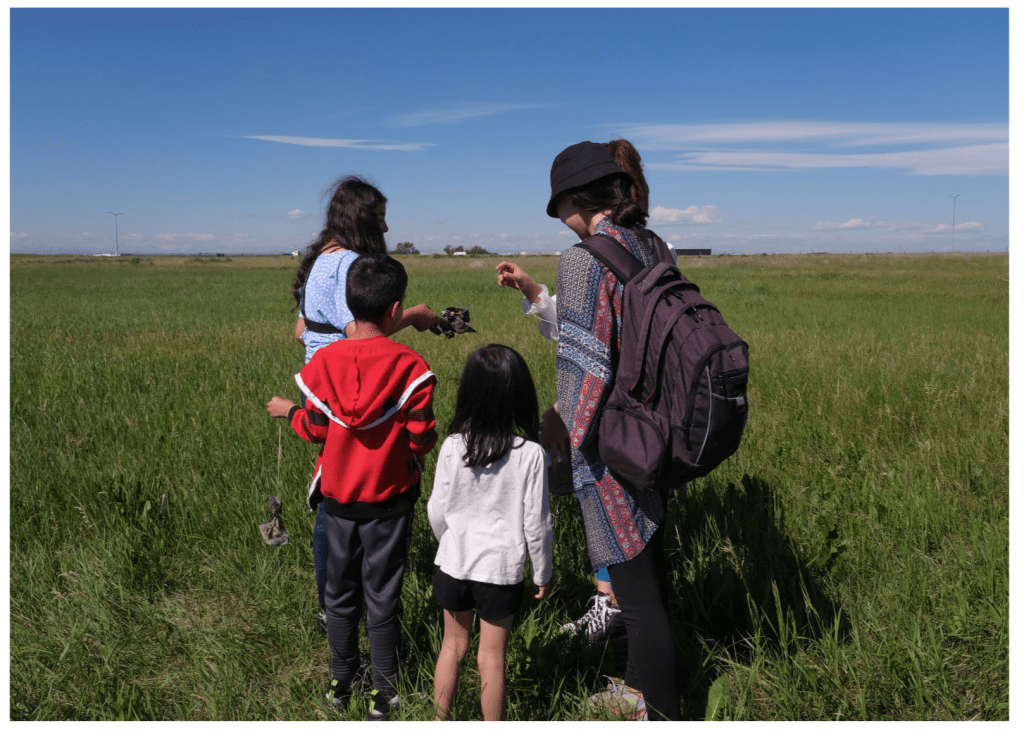
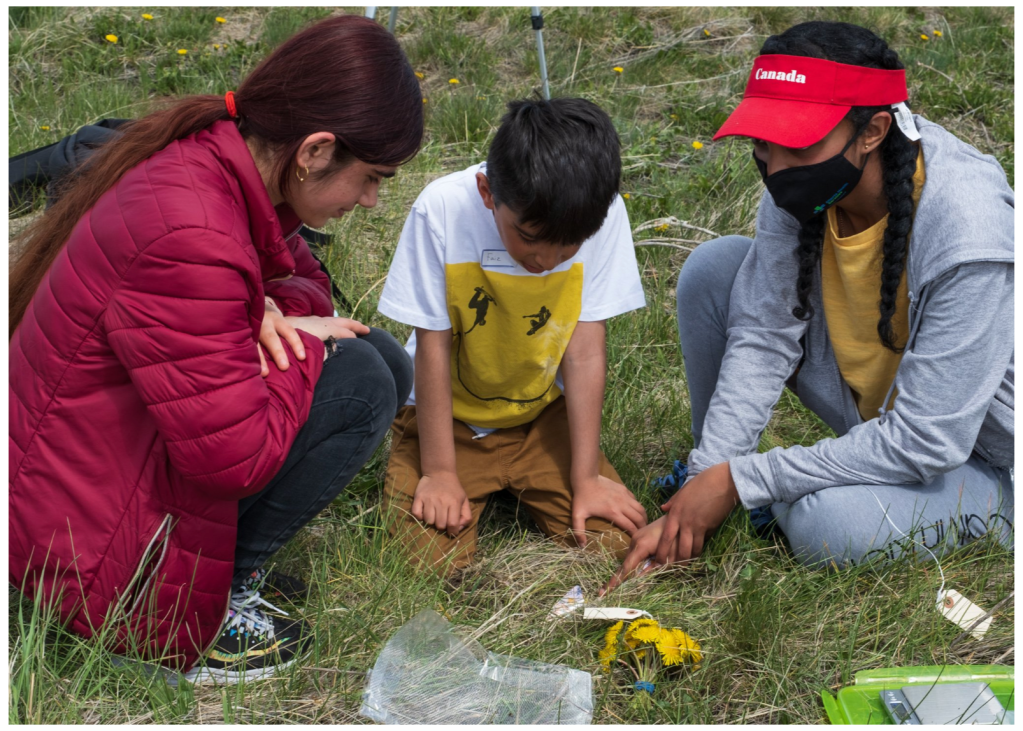
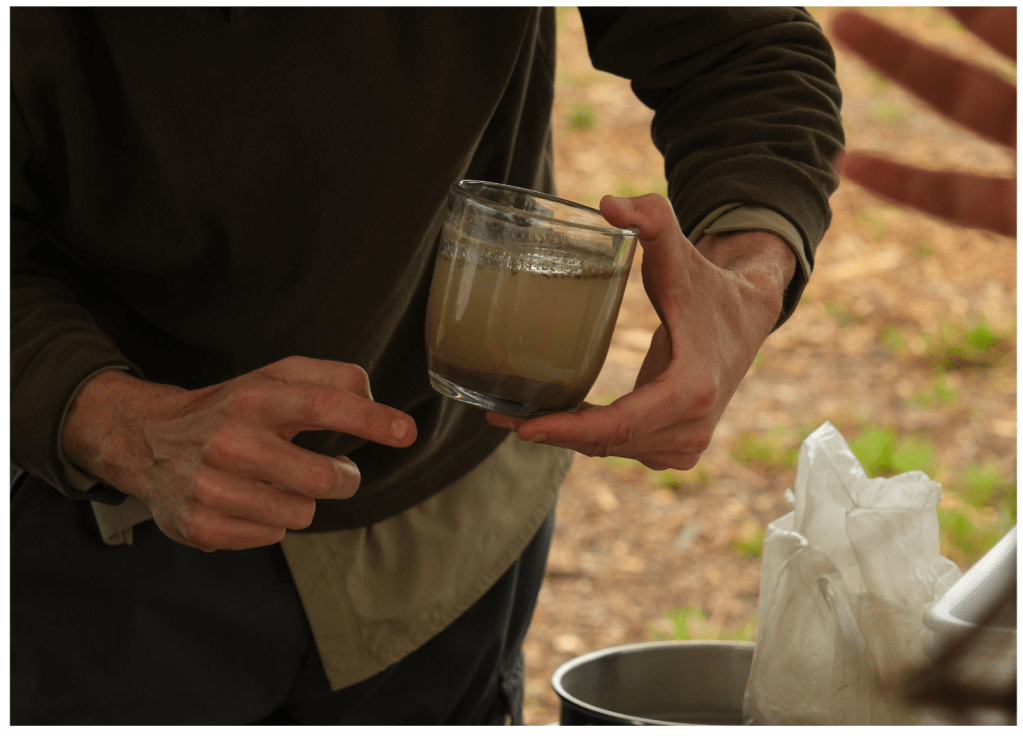
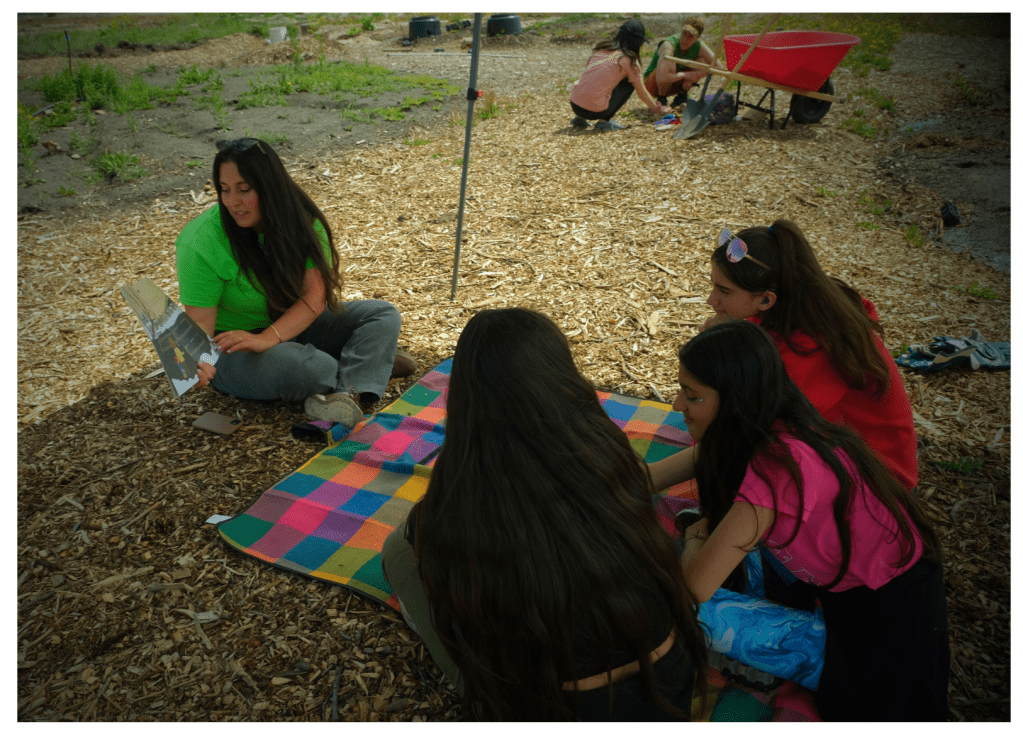

We would also like to clarify that these transdisciplinary experiences are not directly derived from the current provincial curriculum (e.g. Alberta Programs of Study) as these experiences have direct connections to, and have roots in, community-oriented learning and are meant to be learned and experienced with the land. Our pedagogical design is therefore not explicitly tied to curriculum outcomes because we value emergent learning with our various community partners, Indigenous Elders, Knowledge Keepers, parents, seniors, and those who we share the land with. Together we hope to influence the future directions of curriculum design through our collective learning at the land.

Please click on the title of the activities below for a downloadable PDF version.
The Light Of Plants And Soil
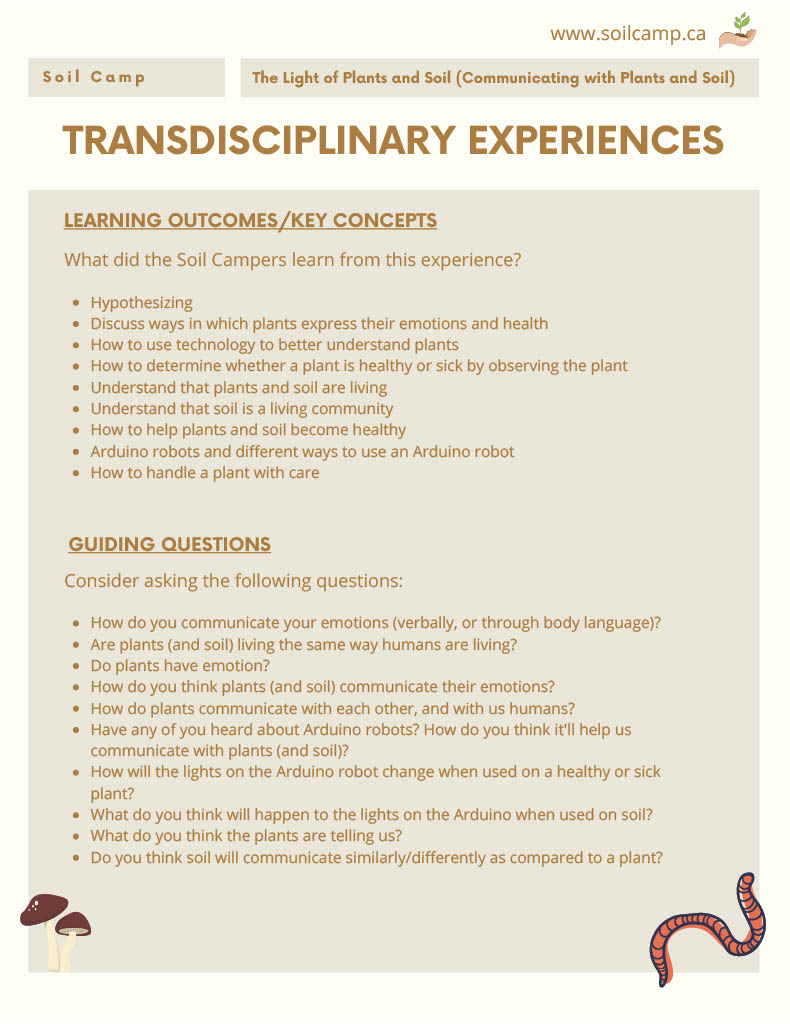
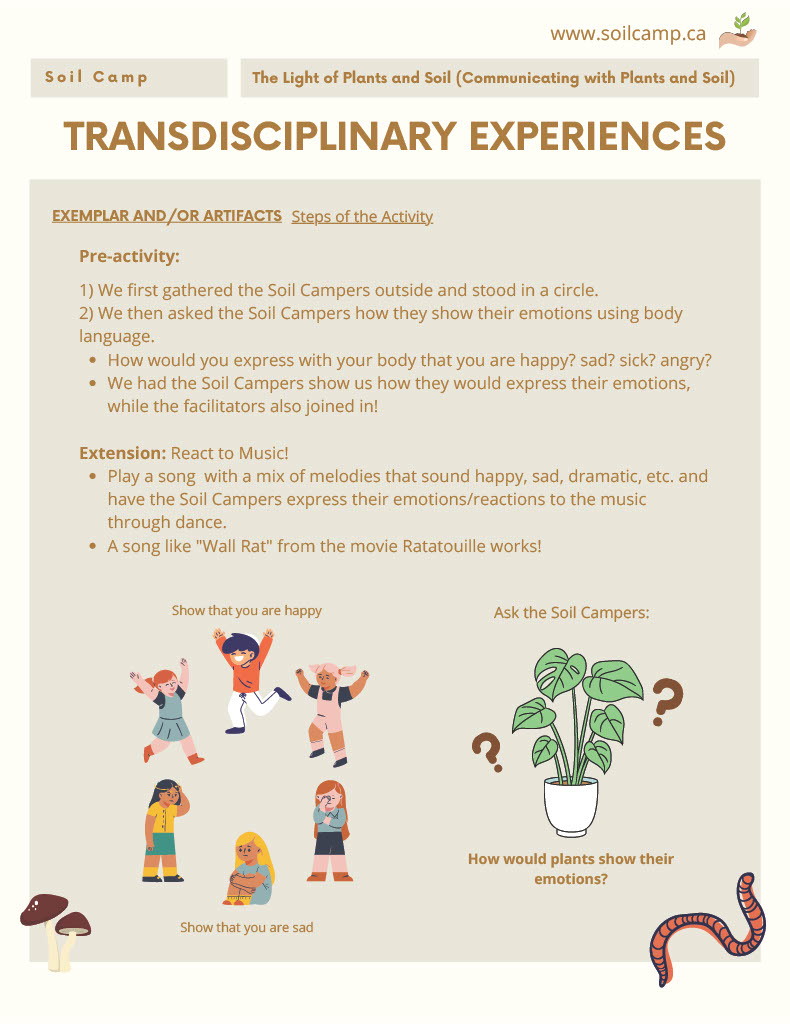
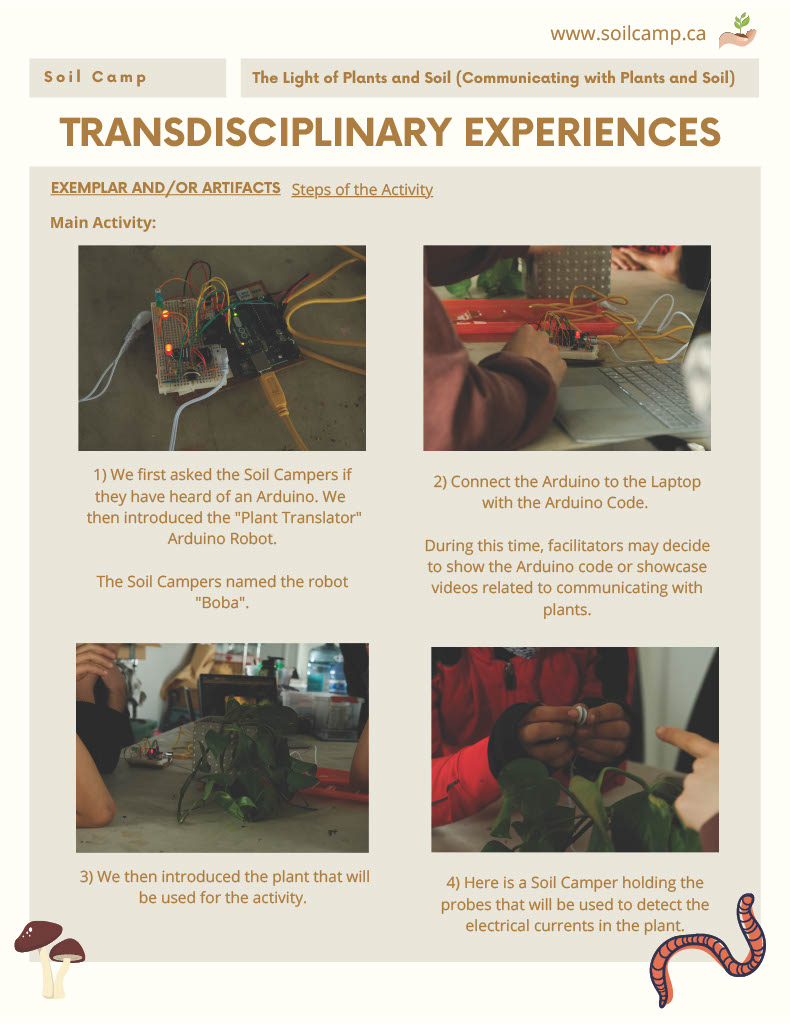
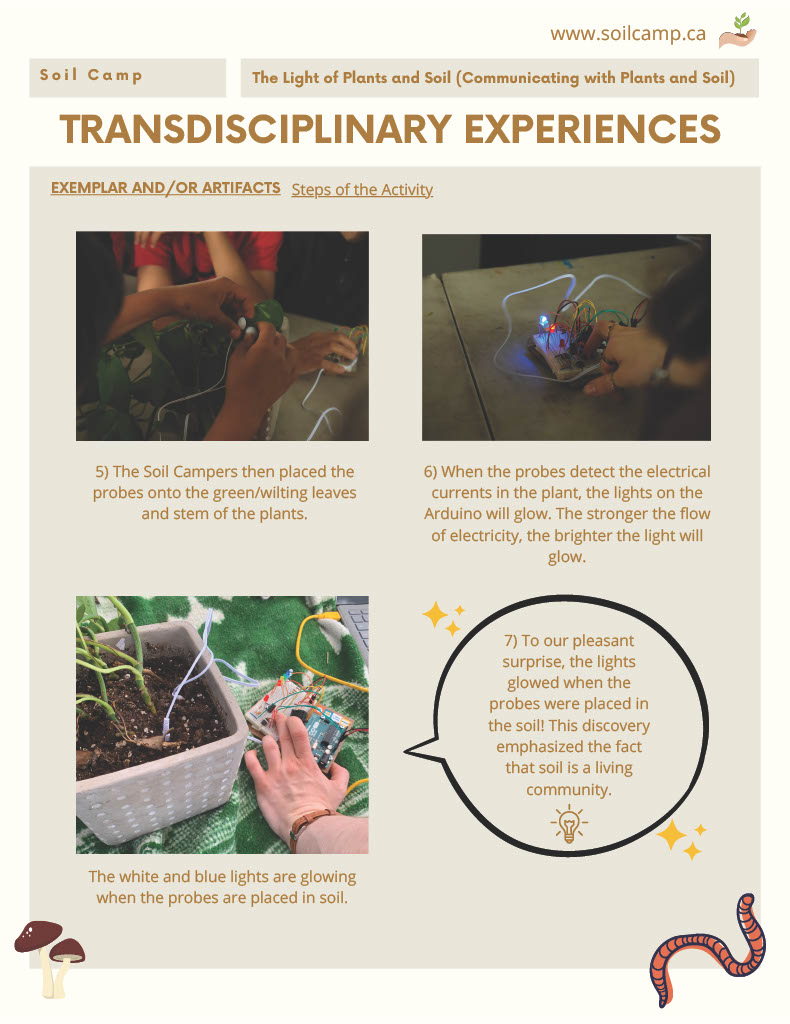
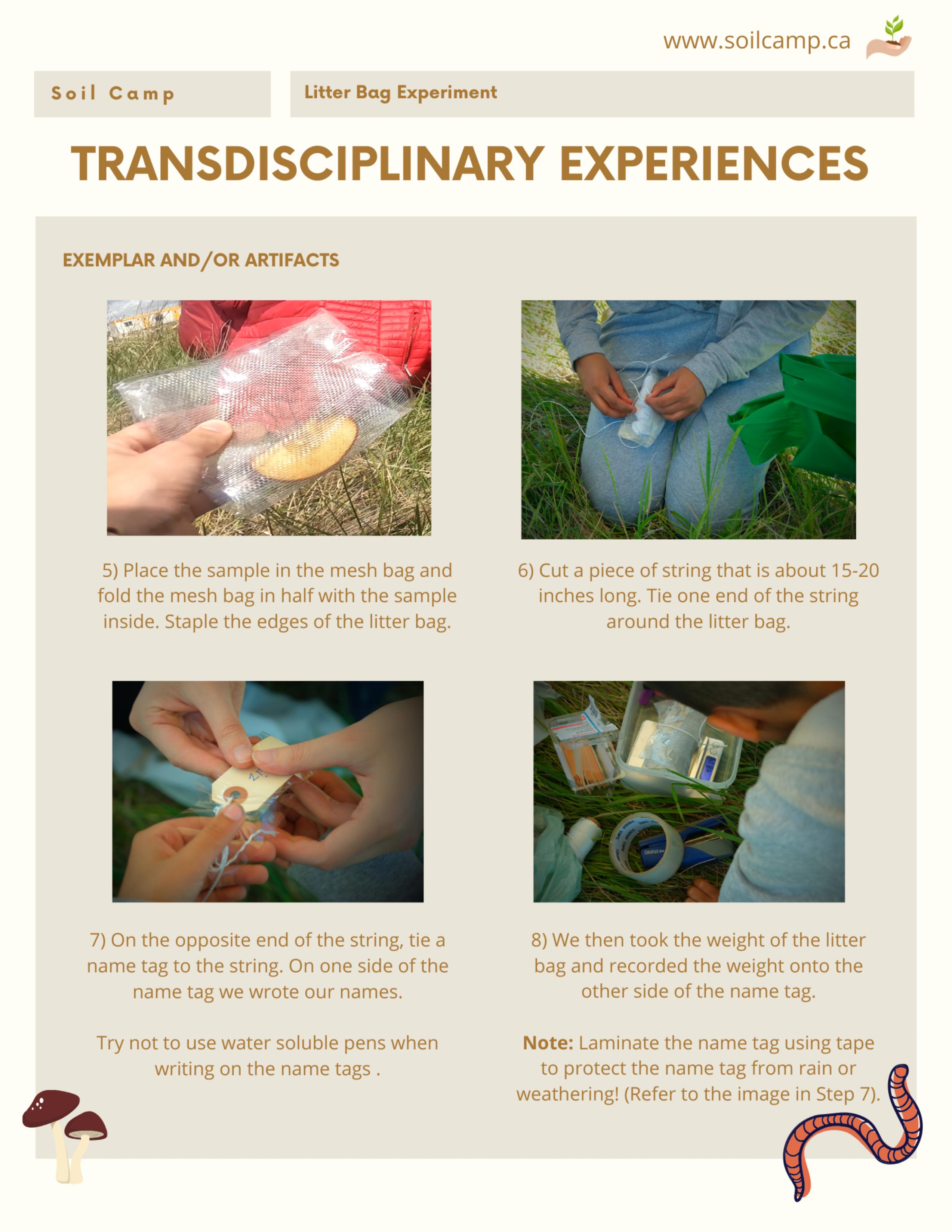
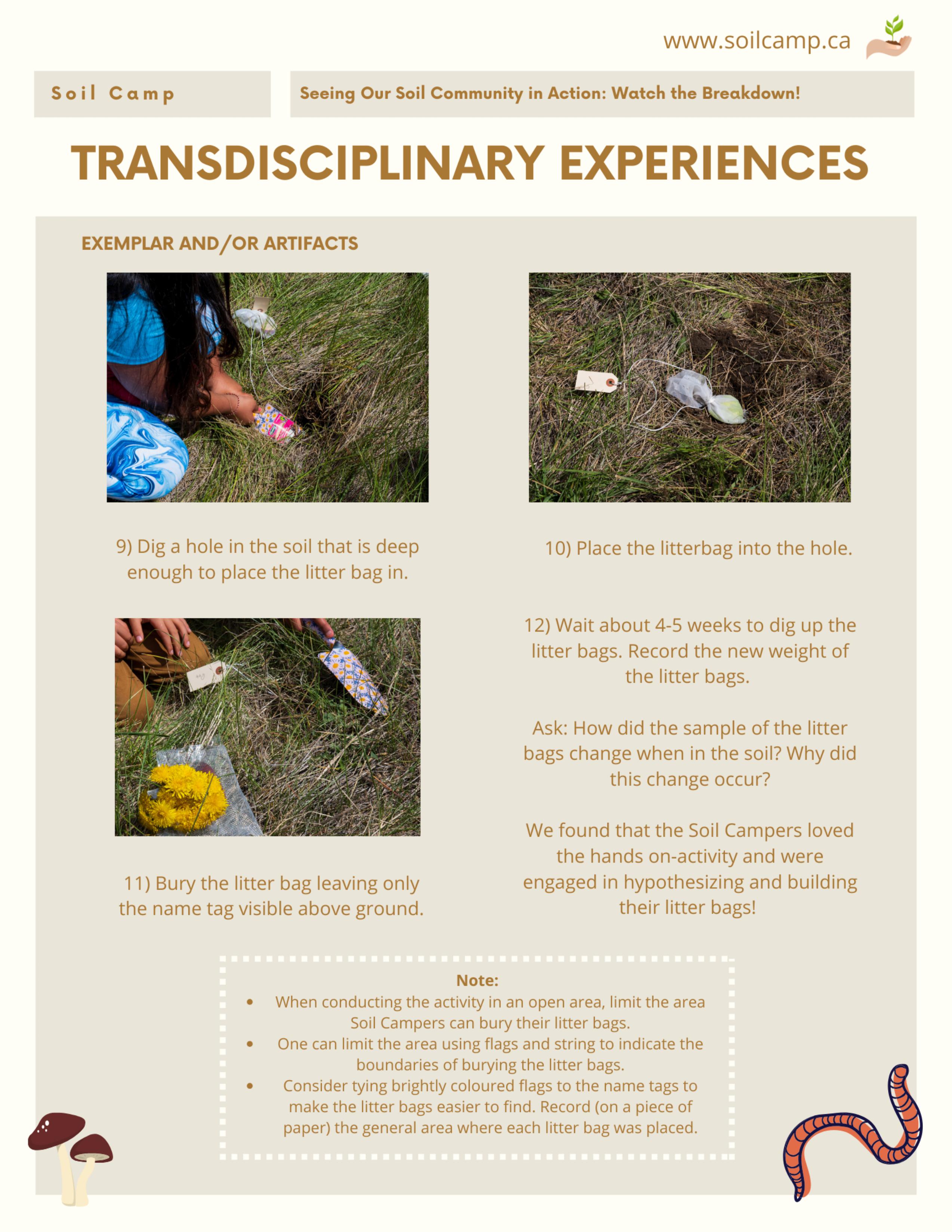
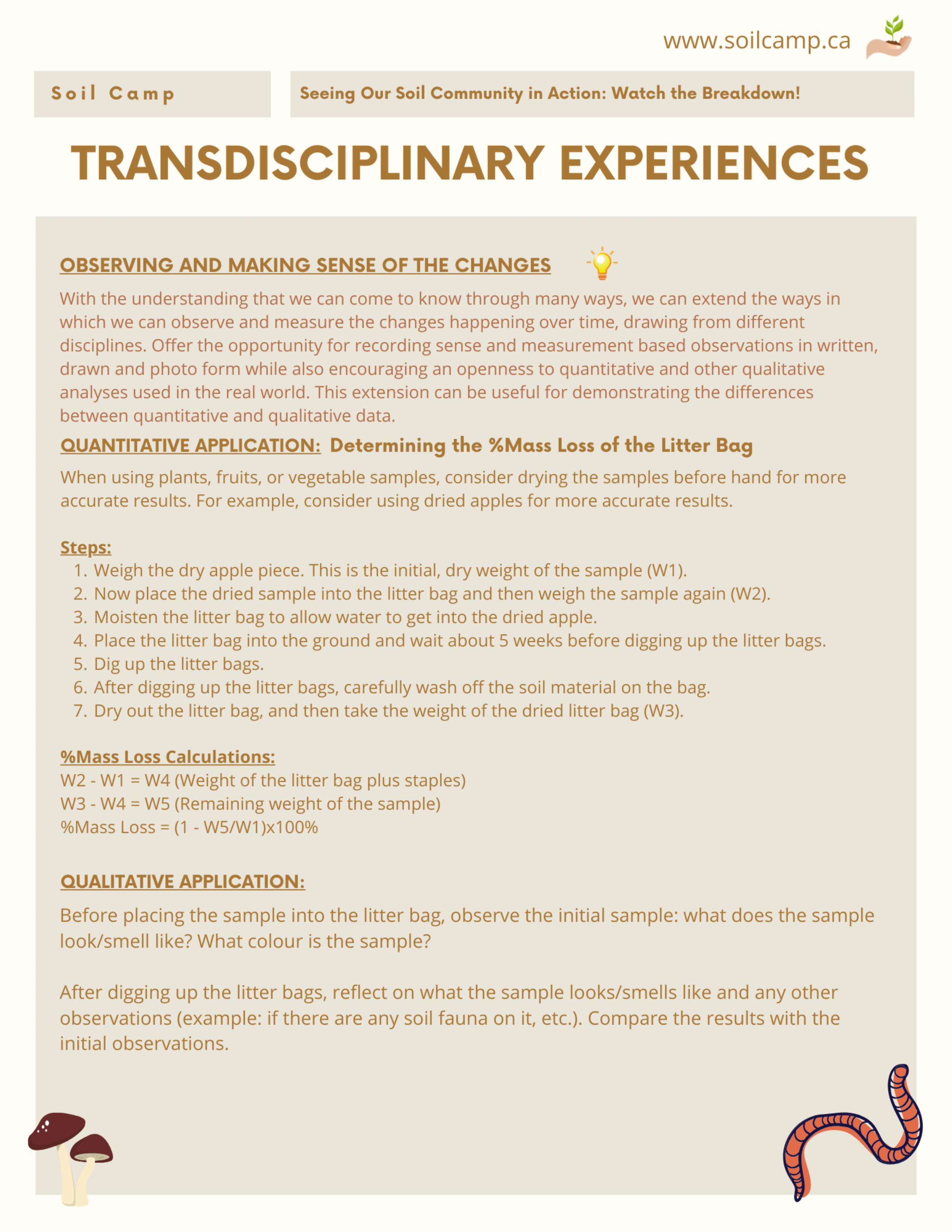
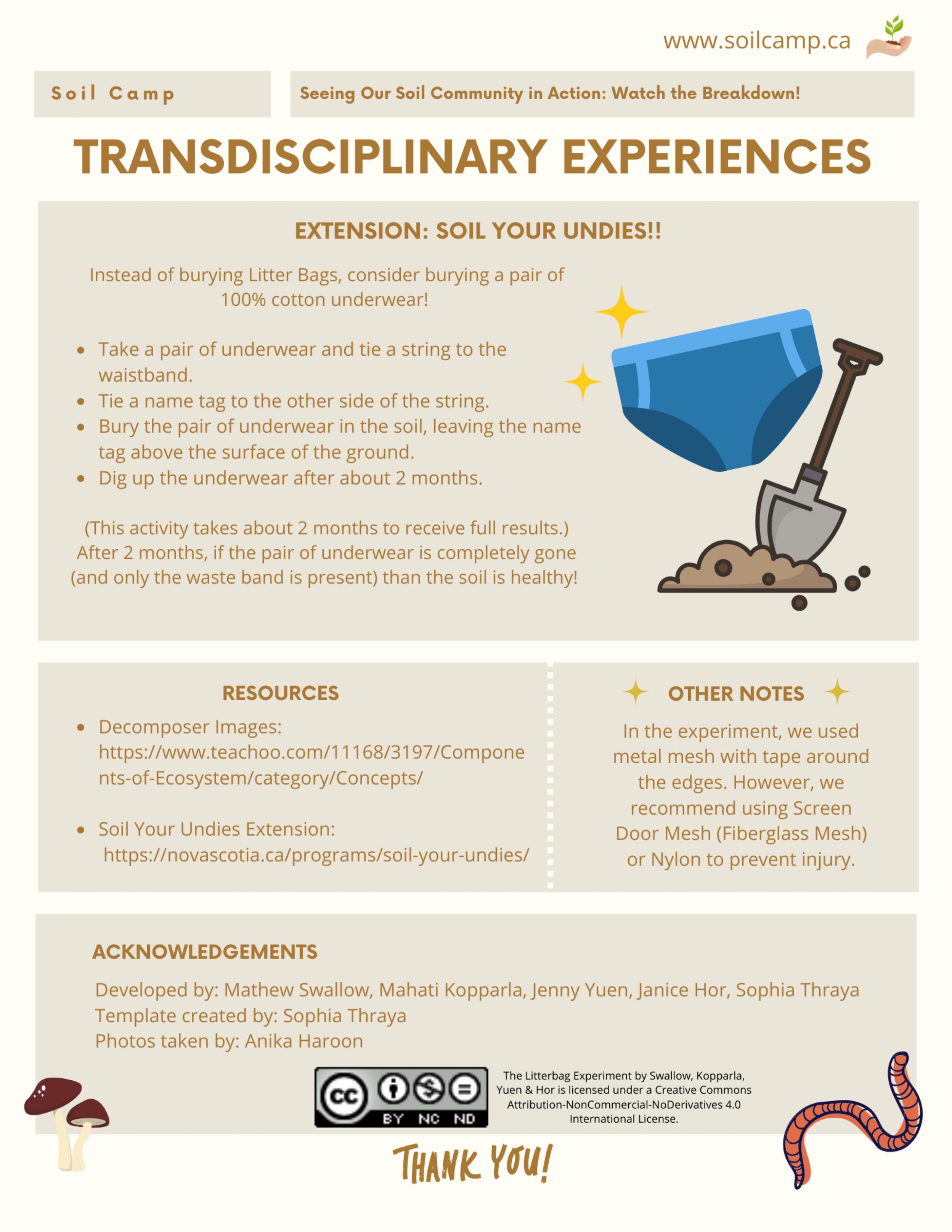
Seeing Our Soil Community In Action
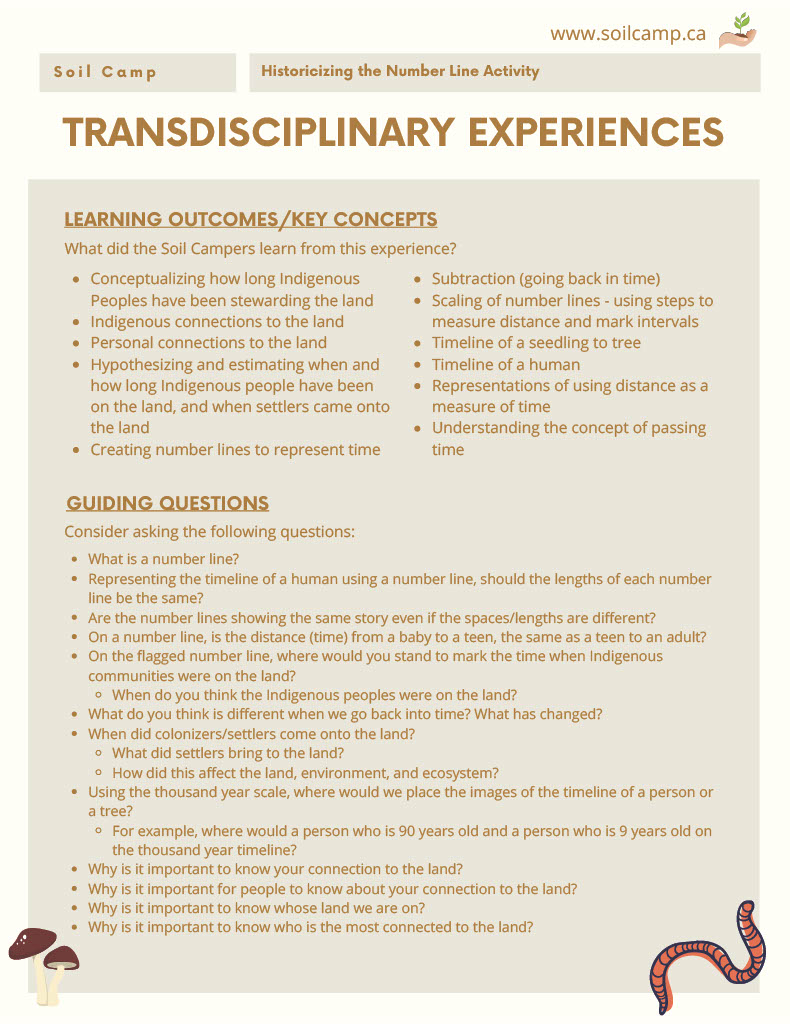
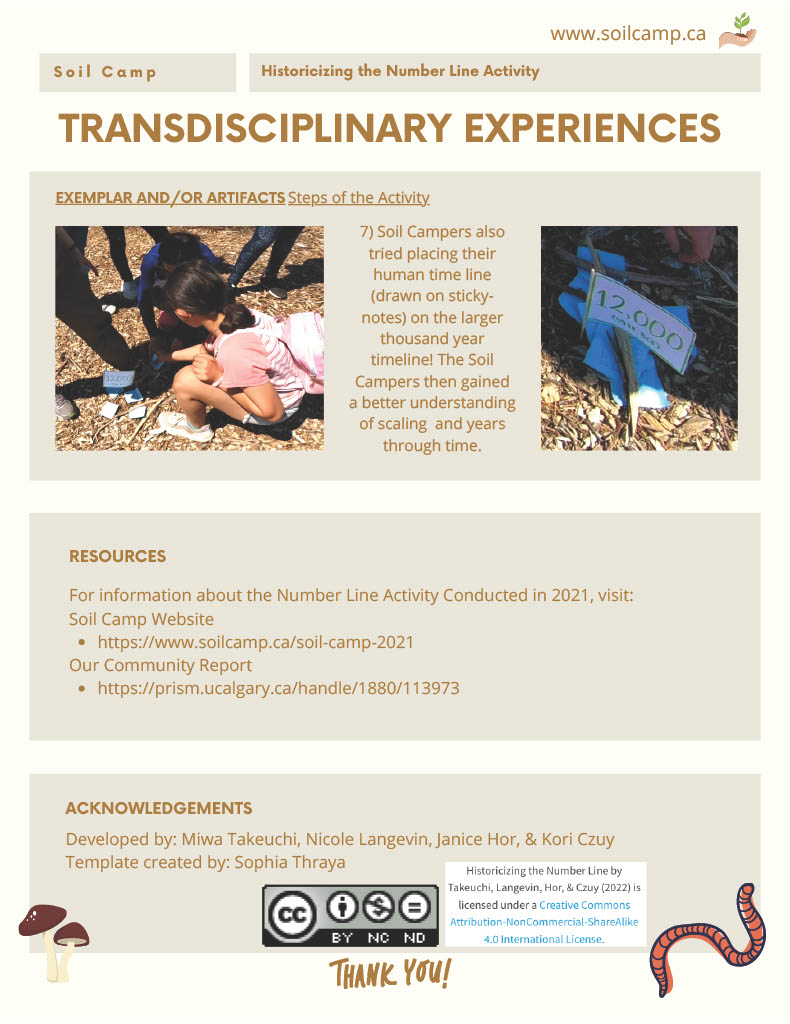
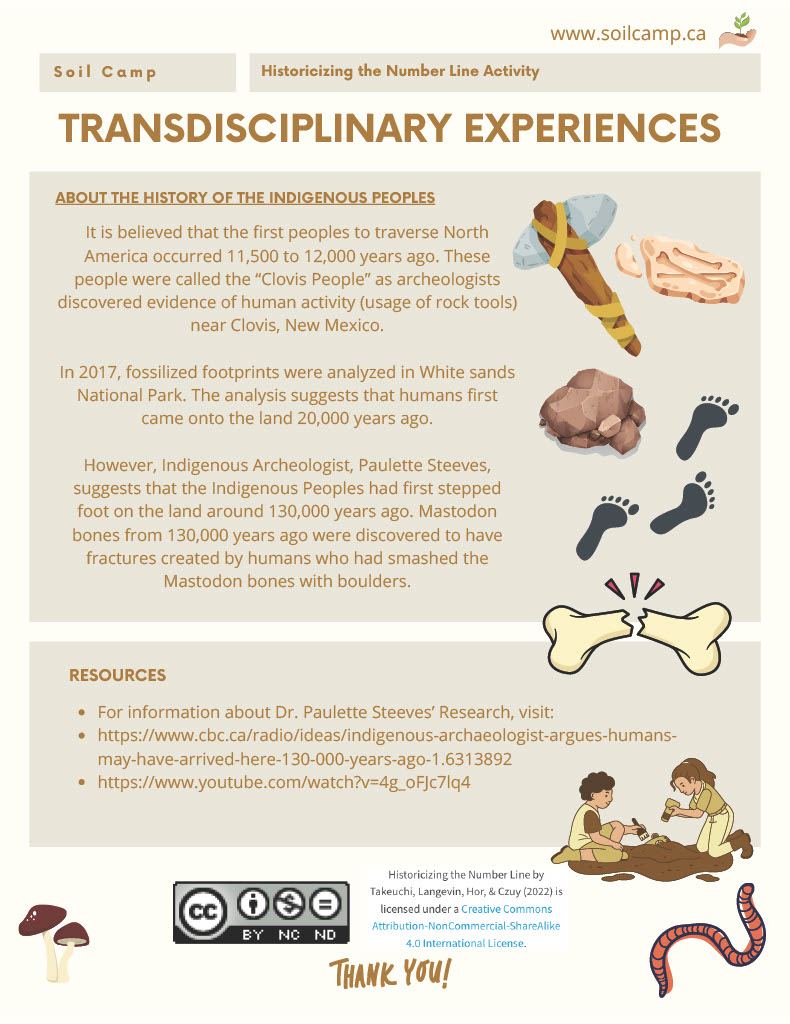
Historicizing The Number Line
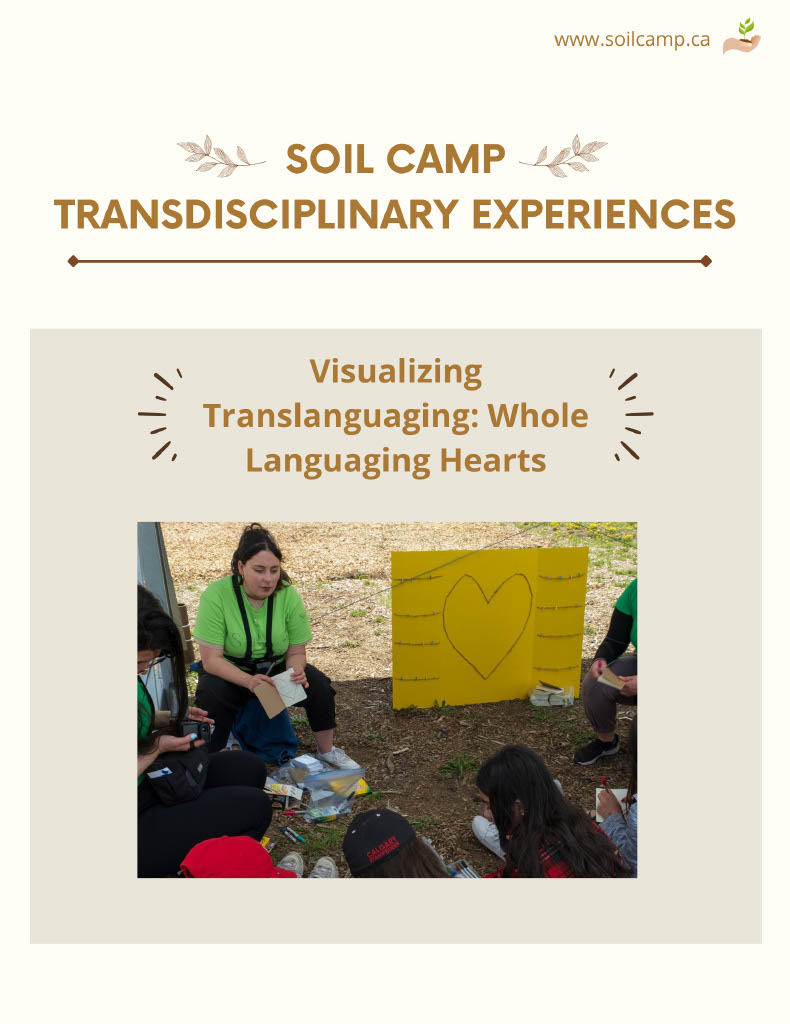
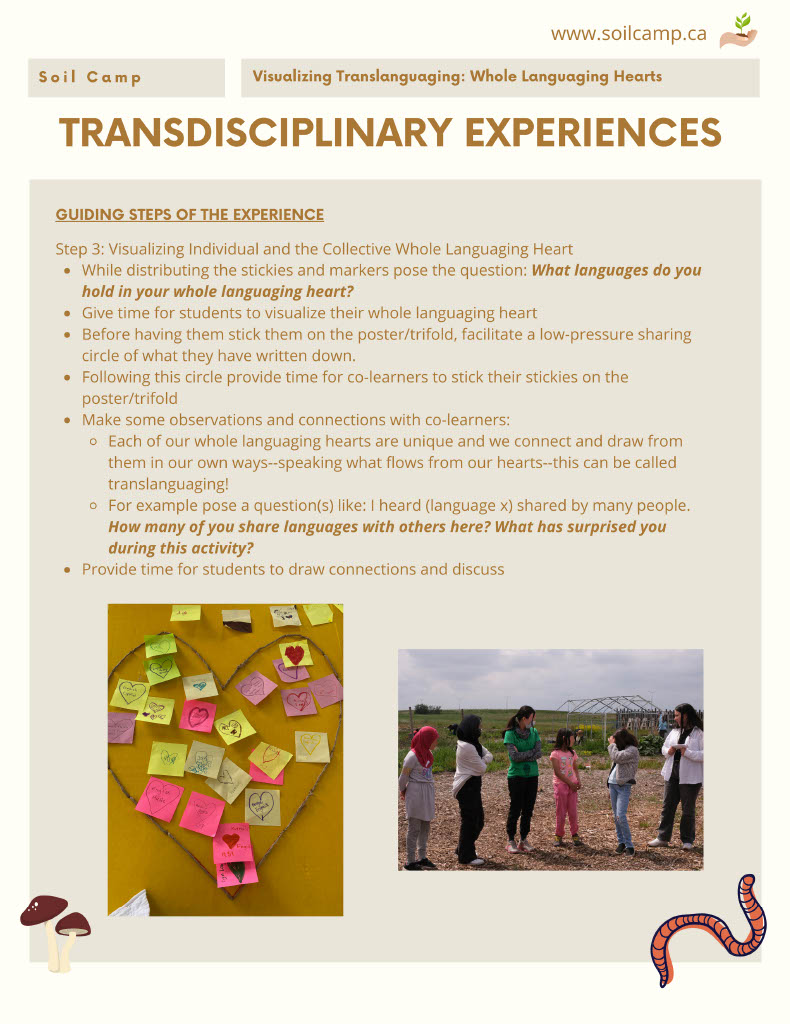
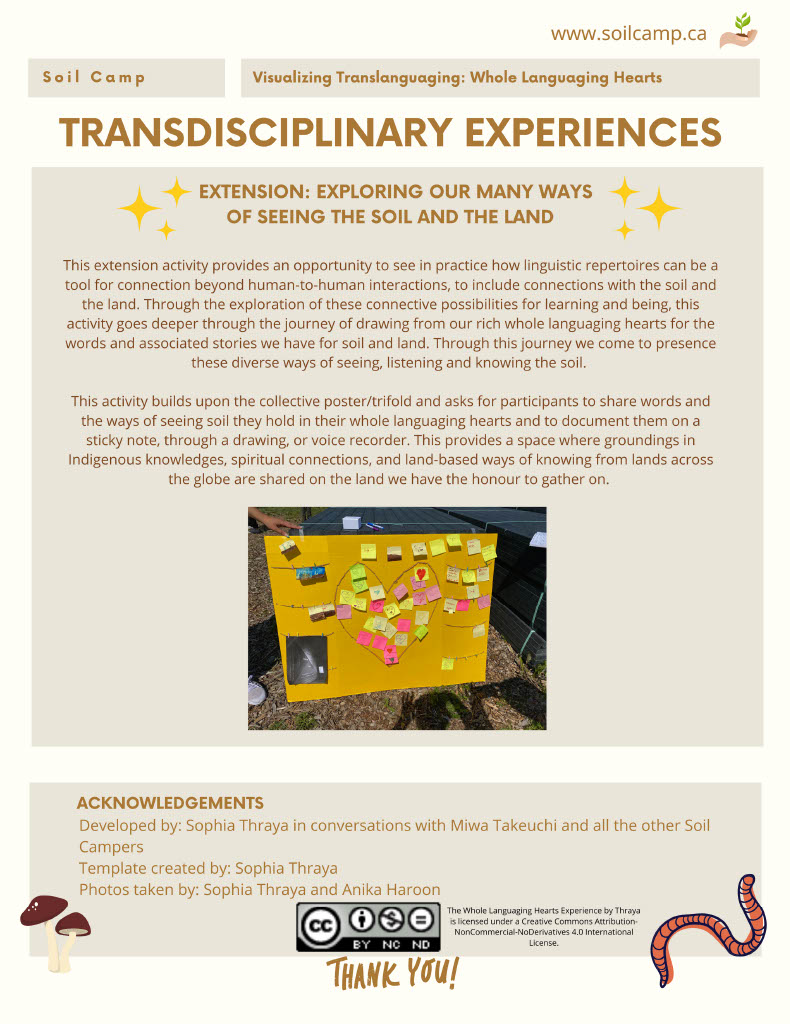
Visualizing Translanguaging
Spark Medicine Garden Activities
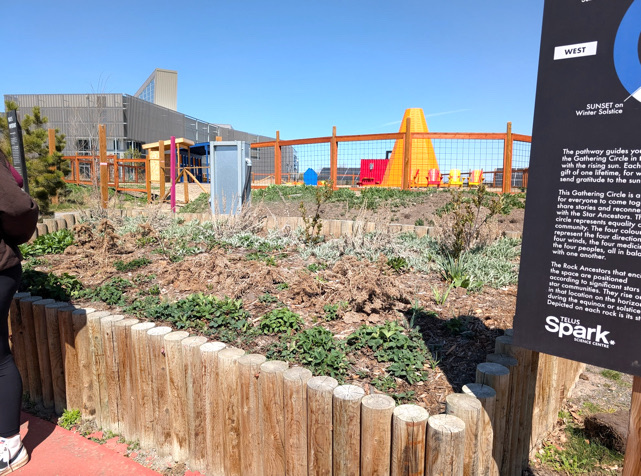
Visit the Medicine Garden at Spark Science Centre!
– Miwa Takeuchi
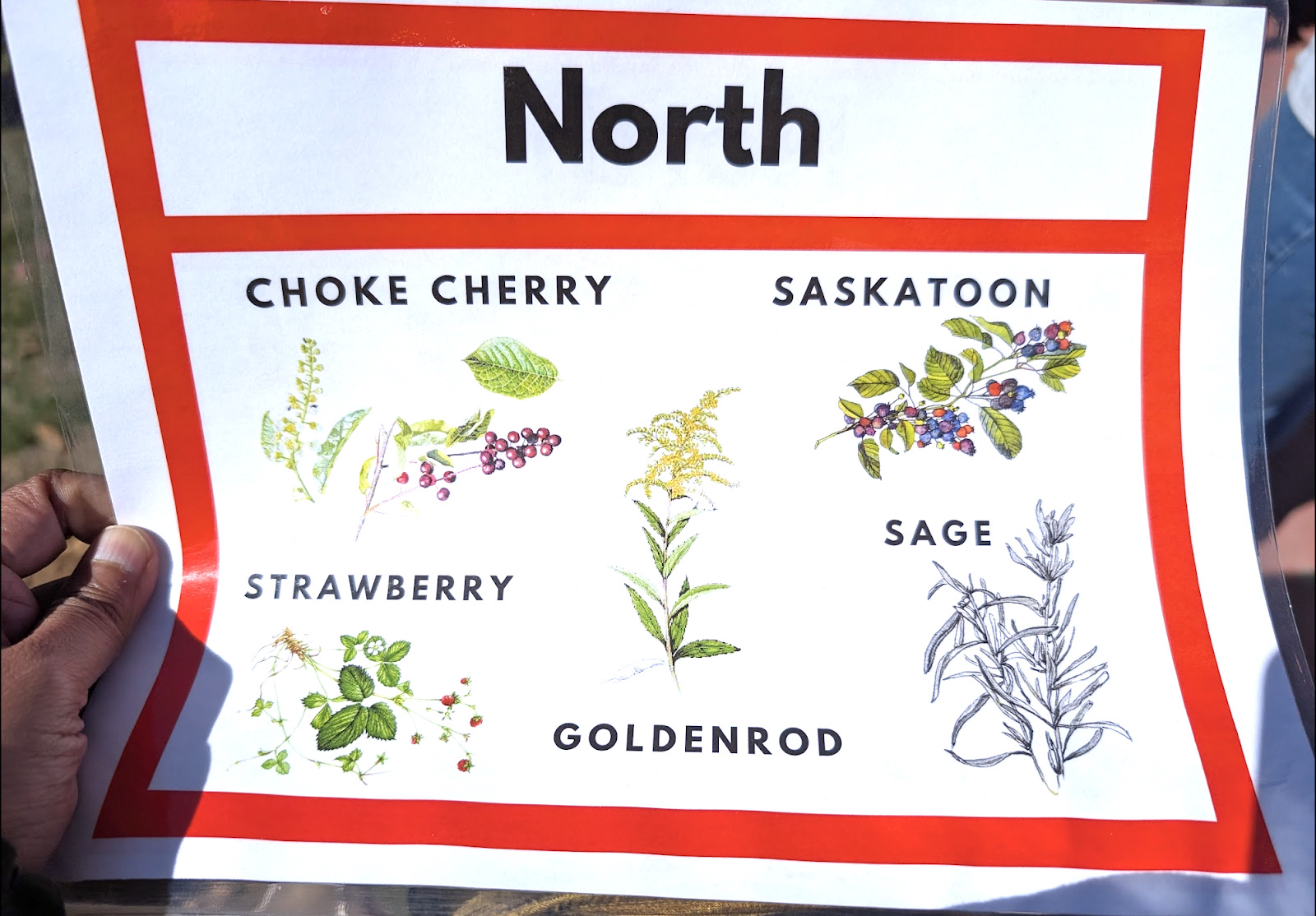
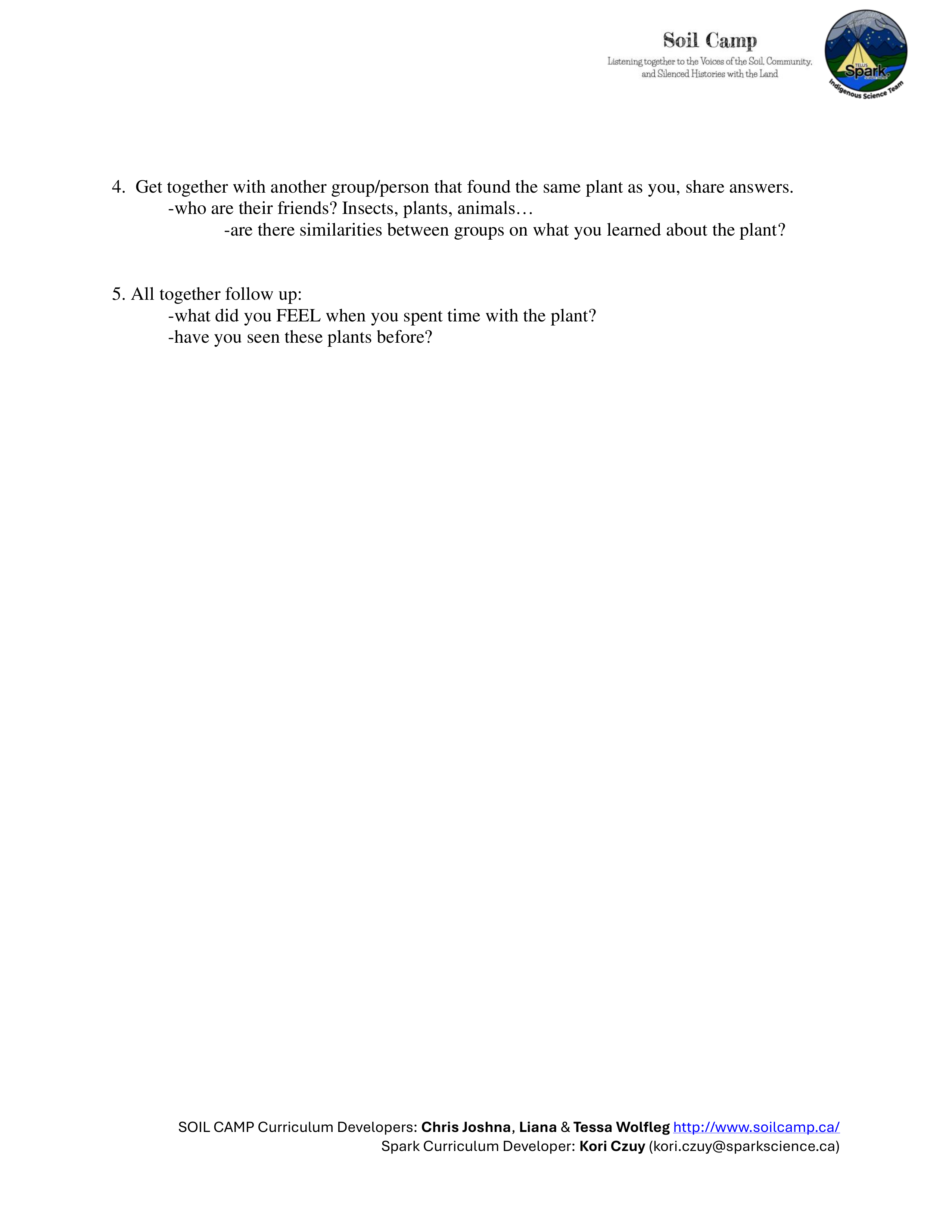
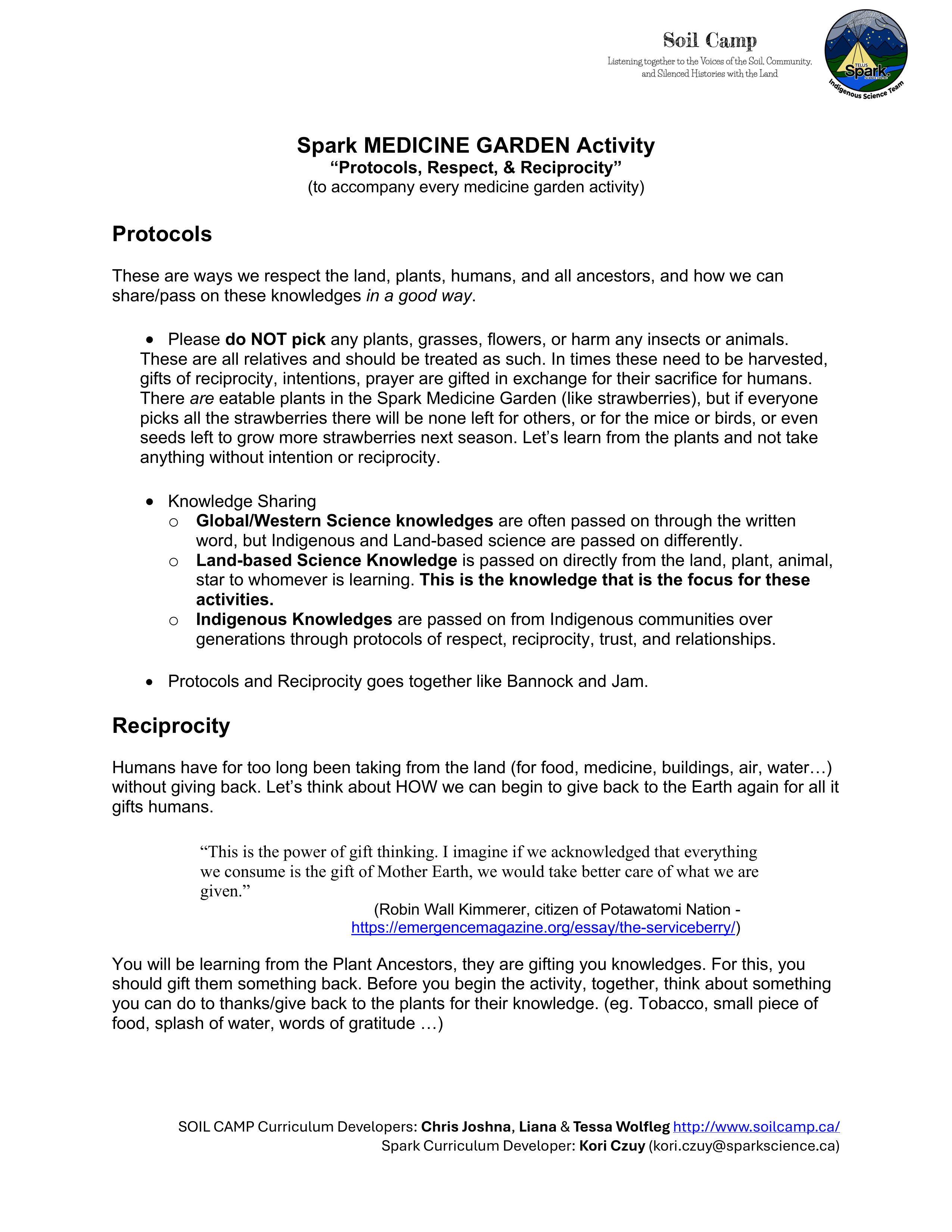
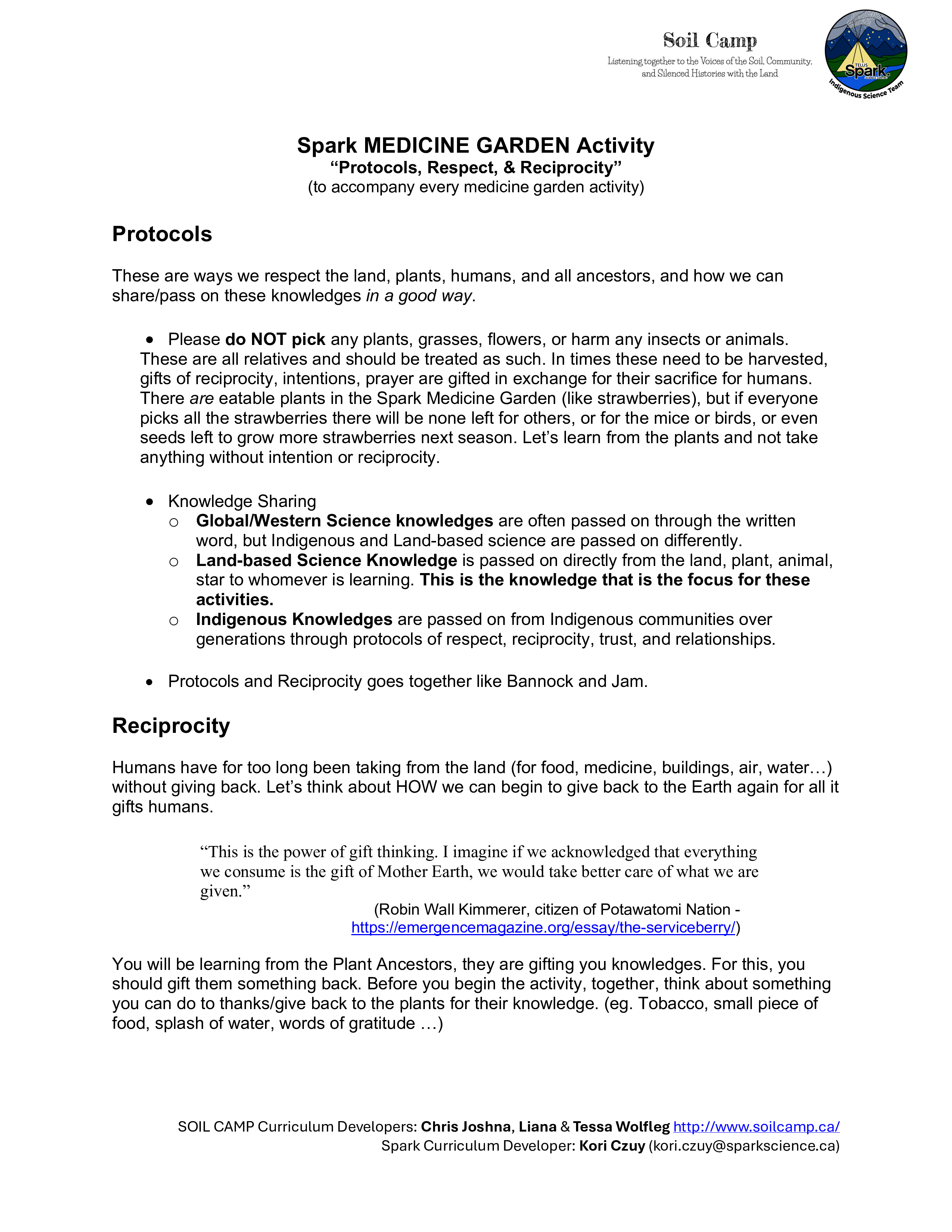
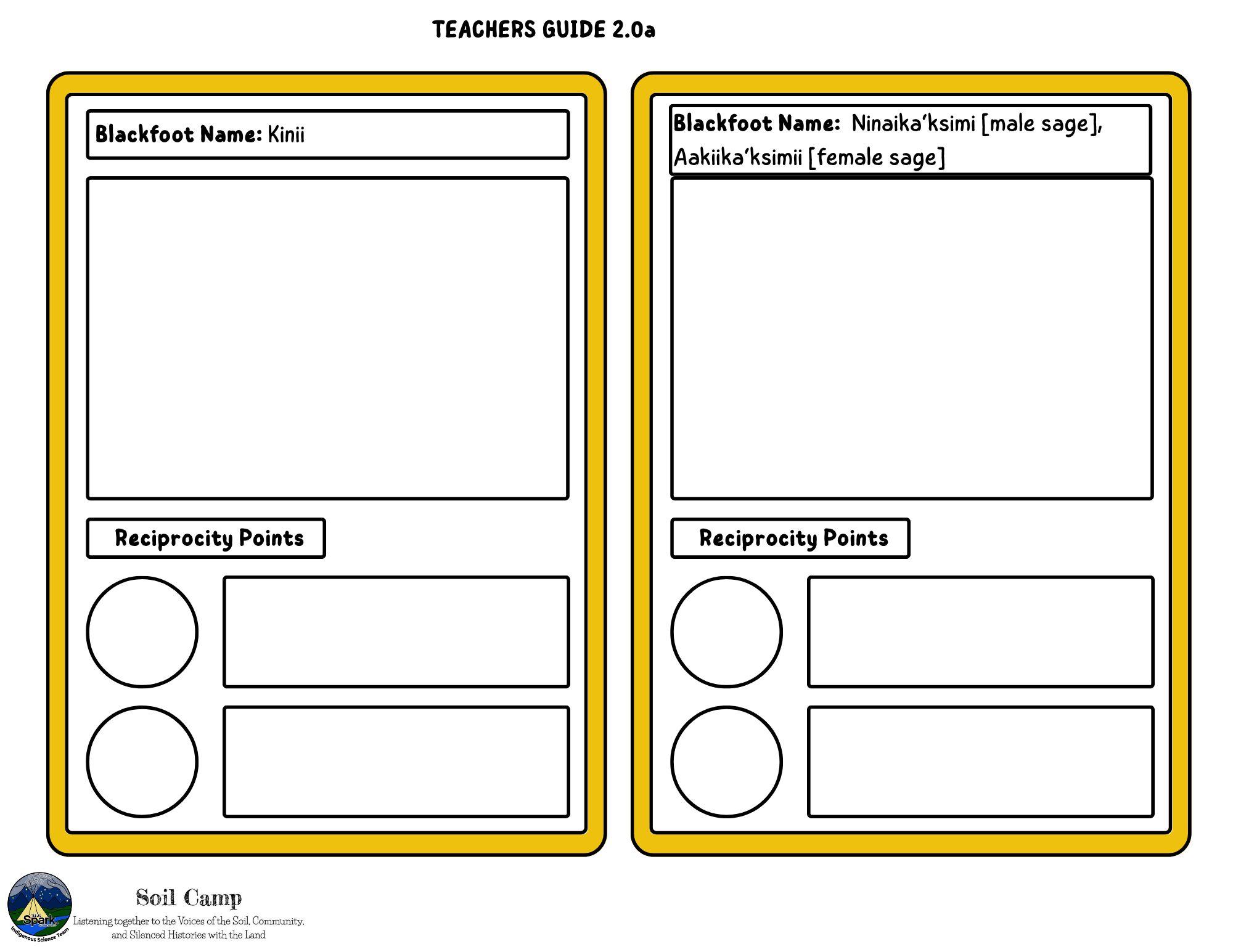
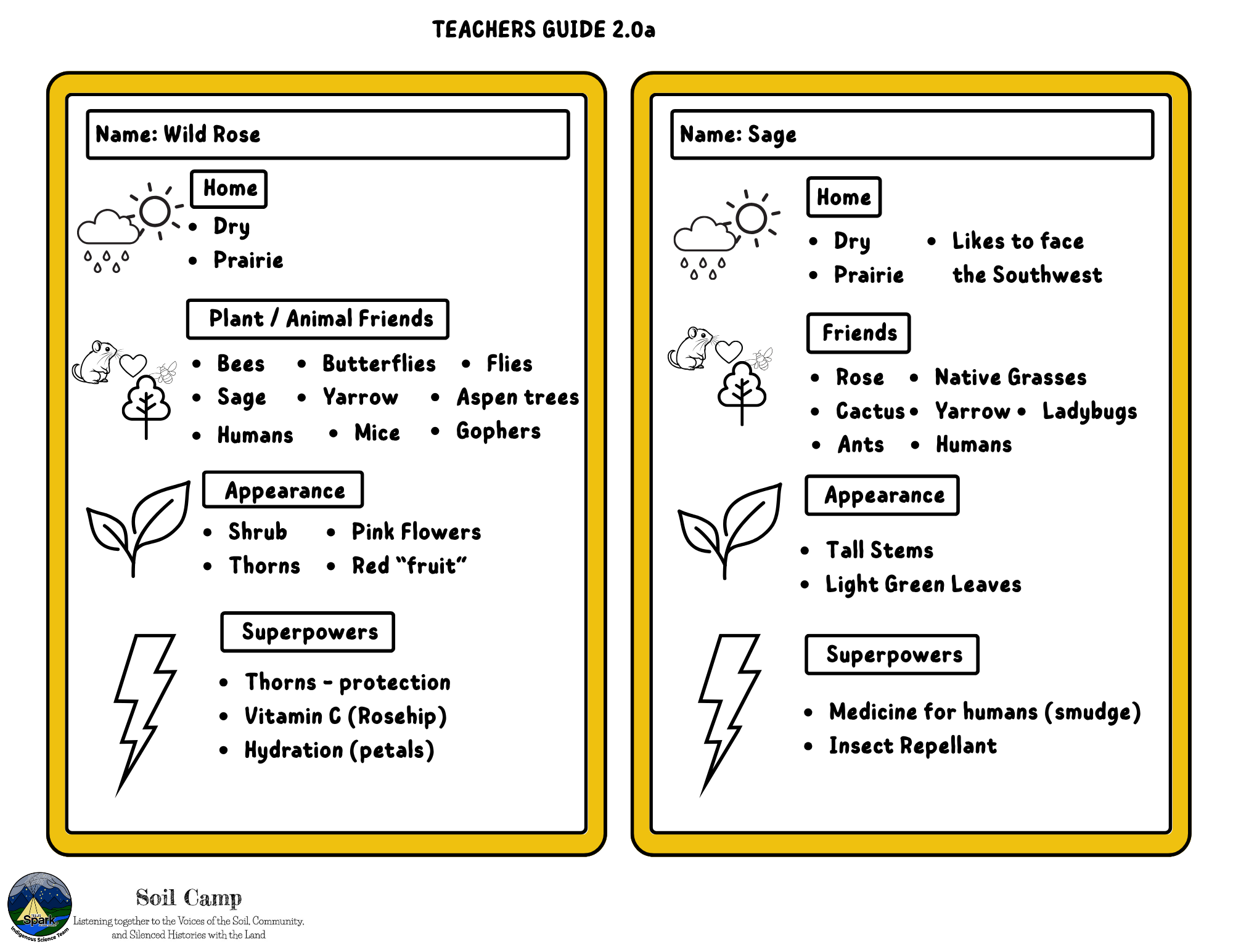
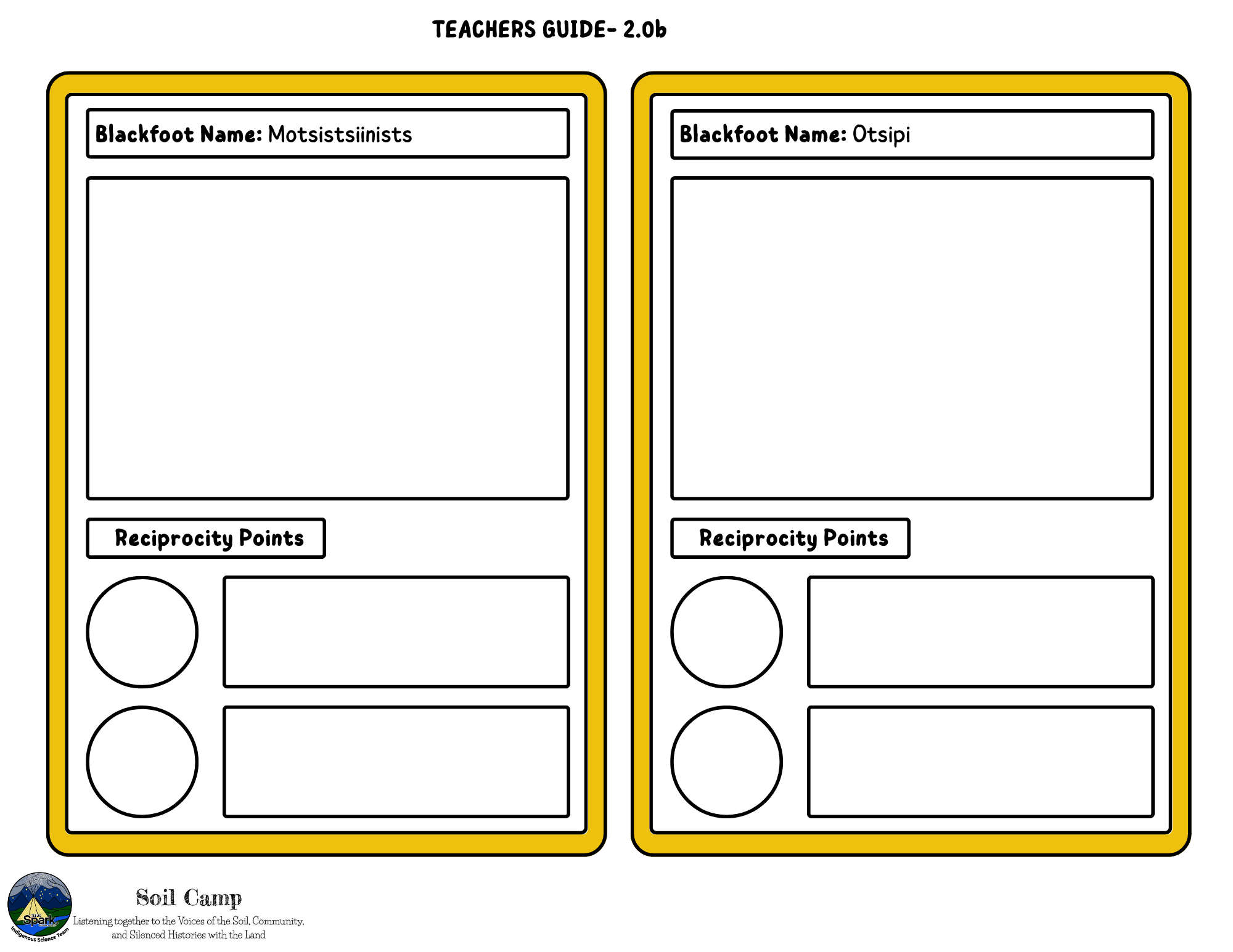
Soil Camp collaborated with Spark’s Indigenous Science Connections team—Dr. Kori Czuy and Alex Flett—to co-design the series of activities below, grounded in the teachings of the on-site medicine garden. These activities explore human-plant relationships and can be adapted to various learning contexts.
A special thank you to the core design team: Dr. Kori Czuy, Tessa Wolf Leg, Liana Wolf Leg, and Chris Joshna, whose leadership brought these ideas to life.
On June 18, 2025, students from Niitsitapi Learning Centre visited the garden and engaged with these activities firsthand—connecting with the Land, the plants, and each other.
I. Plant Scavenger Hunt
II. Who Is An Ancestor?
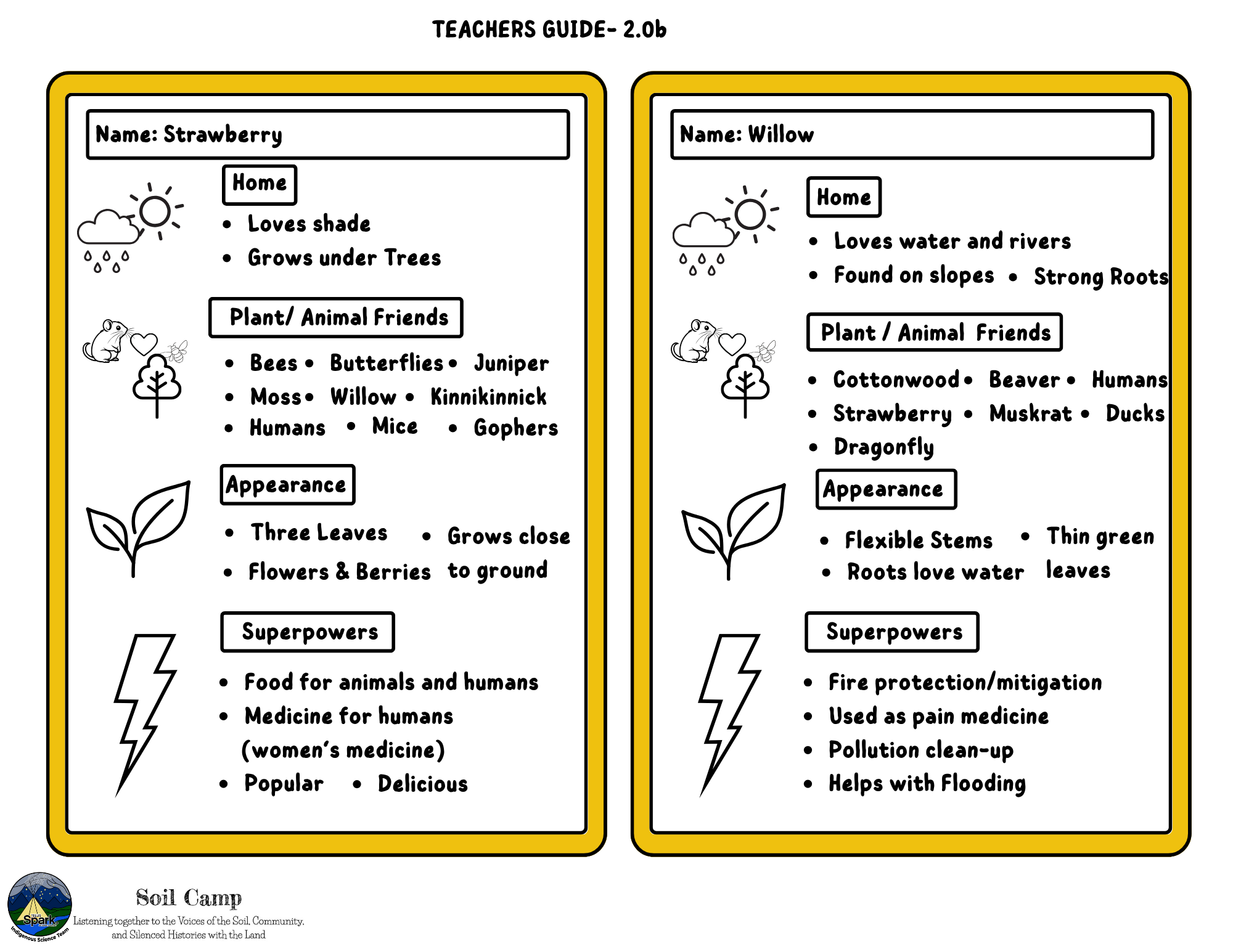
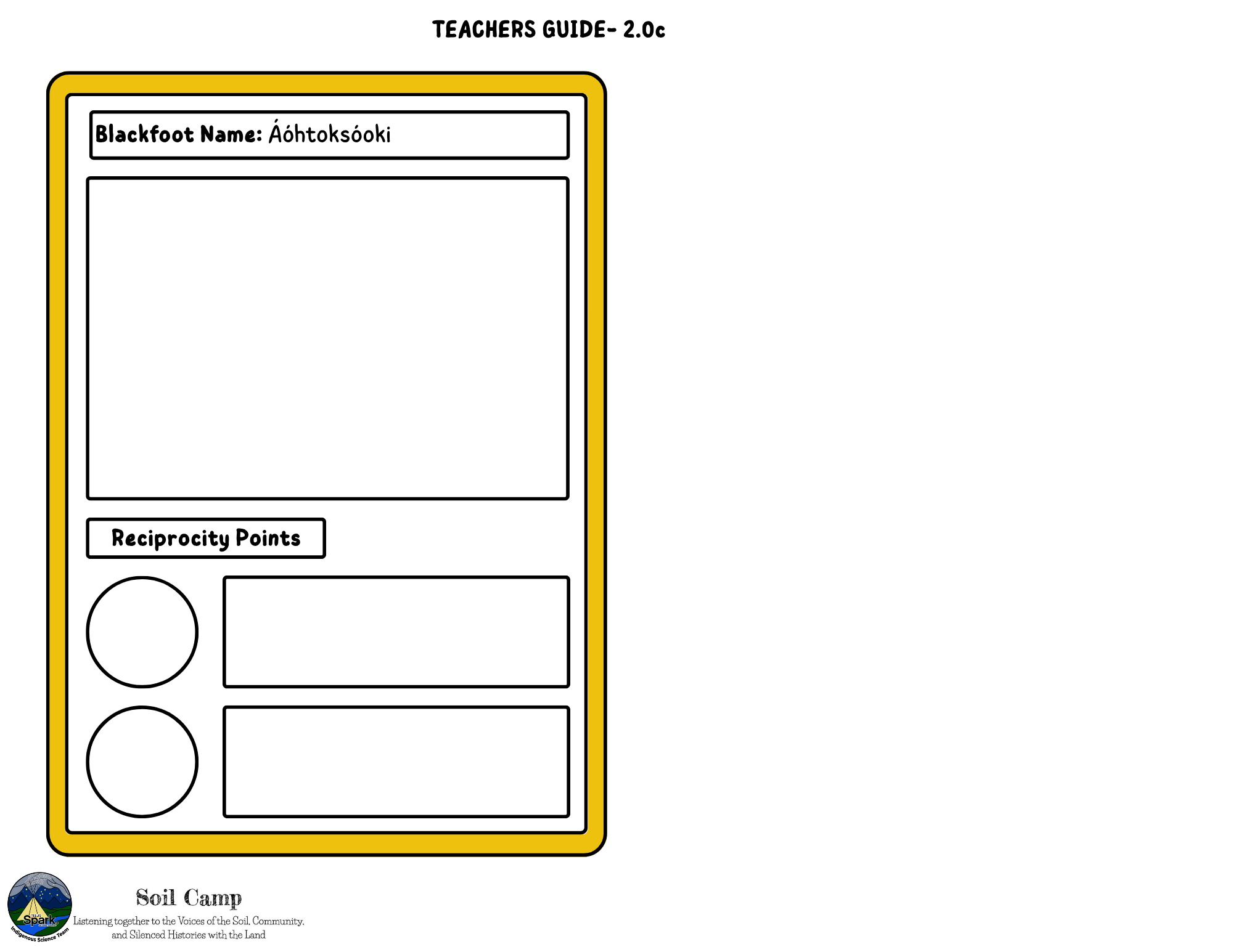
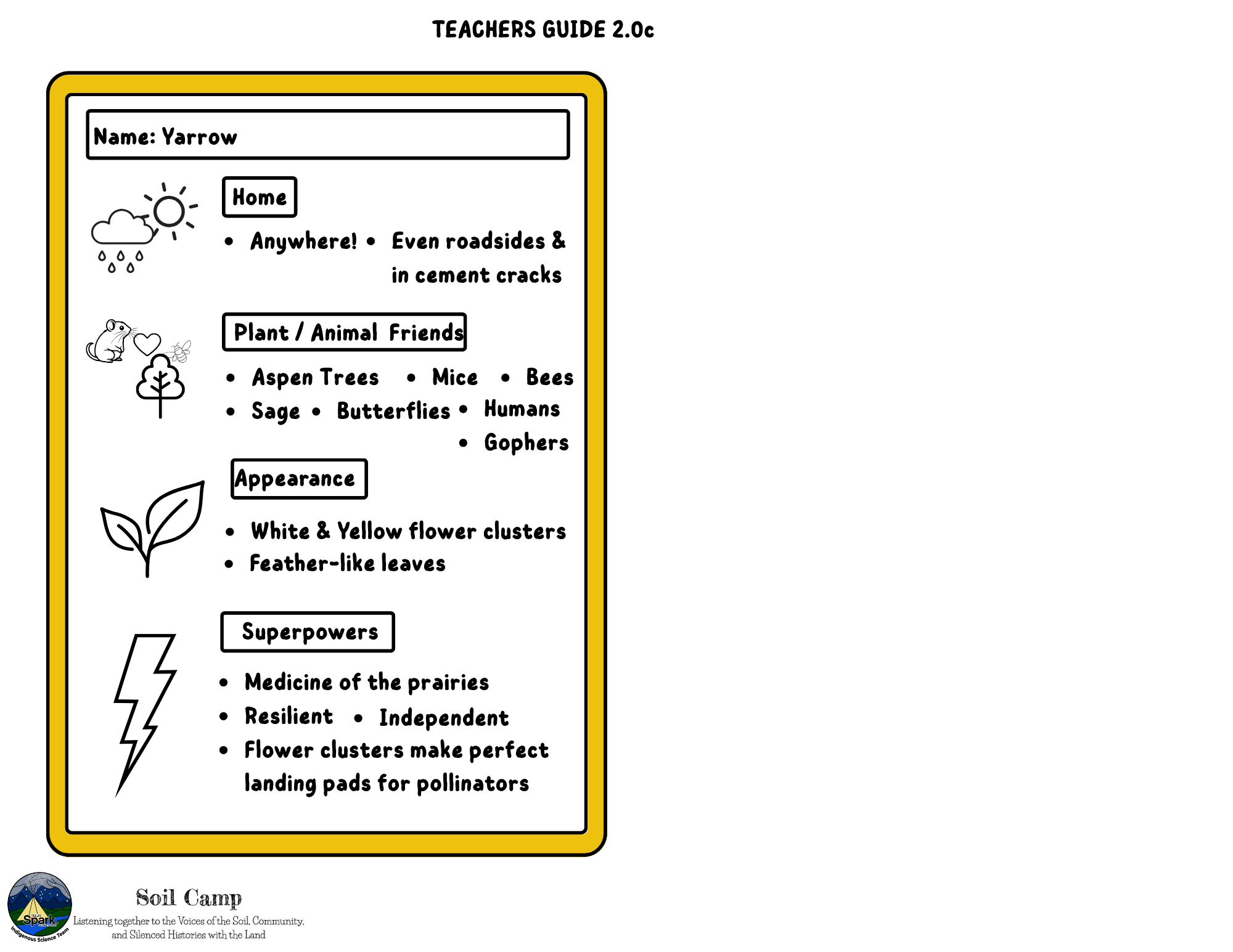
III. Plant Personality Test
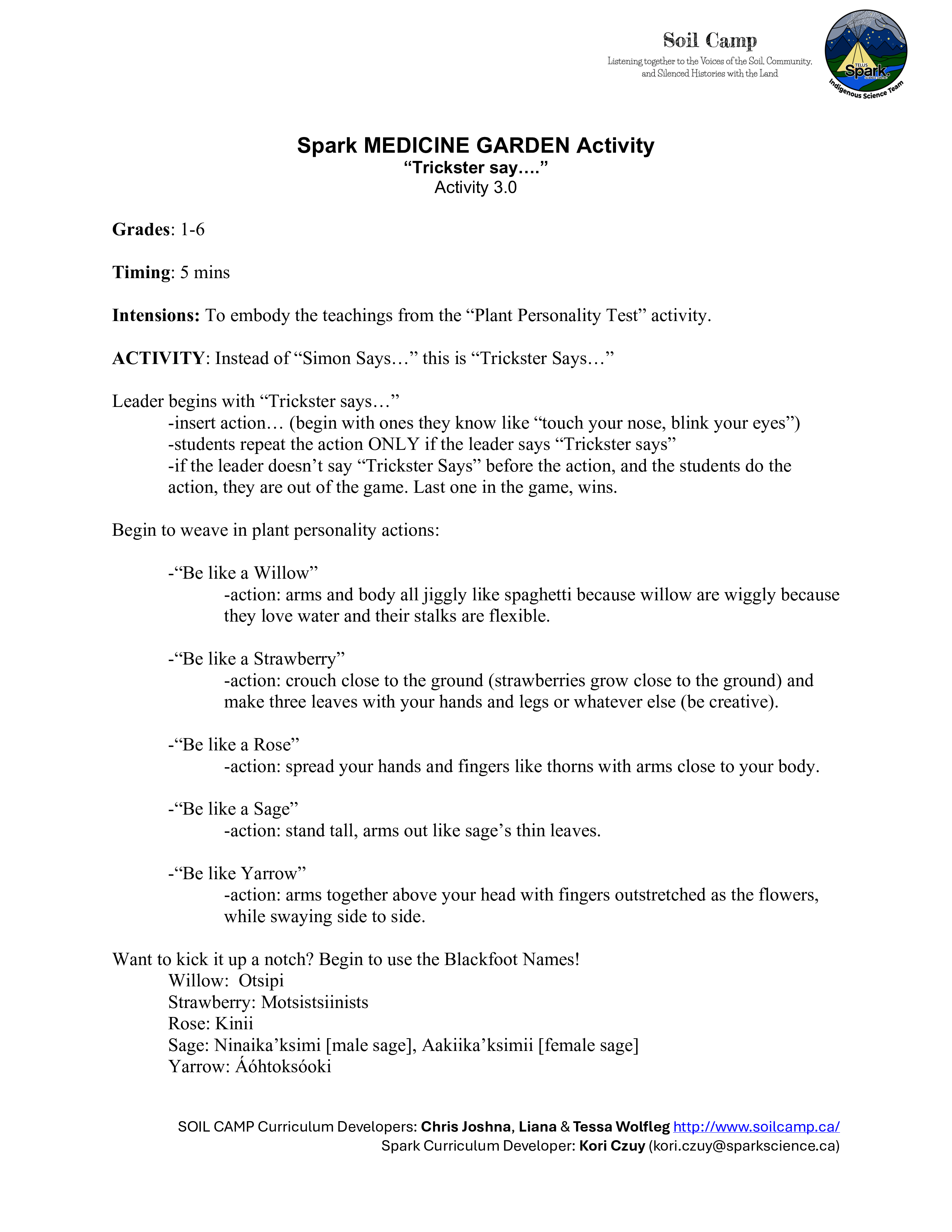
IV. Trickster Says…
 Soil Camp