

A Reflection by Farhana Islam
Imagine putting together mushroom compost, coffee grounds, green weeds, and wood chips and creating something that can eventually nourish a medicinal garden. At first, these materials may appear to have very little in common. Some may even be considered waste. However, when they are combined under the right conditions, microorganisms can transform these materials into nutrient-rich compost.
This is what I learned during the Soil Camp hot composting workshop on August 21, 2026, at the TELUS Spark Science Centre. The workshop focused on learning how to make hot compost while thinking about how composting can extend care to medicinal gardens. What made this experience particularly meaningful to me was the opportunity to understand composting not only as a gardening practice, but also as a scientific process involving microorganisms, temperature, energy, oxygen, moisture, carbon, nitrogen, and decomposition. As a pre-service teacher with a background in chemistry, I found myself thinking about how an experience like this could also become a science-learning opportunity for students.
Before participating in this workshop, I understood composting mainly as a way of recycling organic materials. I knew that organic matter could decompose and eventually become compost, but I had not thought deeply about what was happening chemically and biologically inside a compost pile. The hot composting experience changed that understanding.
Background
I learned that hot composting is a temperature-driven process. Microorganisms feed on organic materials and release energy as they grow and reproduce. Some of this energy is released as heat, causing the temperature of the compost pile to rise. As the available food changes, the temperature also changes, creating a general cool–hot–cool cycle. The process begins in the mesophilic stage, generally around 20 – 45 °C. As microbial activity increases, the pile can enter the thermophilic stage, approximately 45 – 65 °C. Eventually, as the easily available food is used up and the compost matures, the pile cools toward the ambient temperature. Learning about these temperature stages helped me realize that a compost thermometer can tell us much more than whether a pile is “hot.” It can provide evidence of what is happening inside the pile.
My Experience in the Workshop
The compost workshop was facilitated by Dr. Tatenda Mambo (Soil Camp team member and a policy analyst at the Farmers for Climate Solutions). I attended this workshop with Professor Miwa A. Takeuchi and along with staff members from the TELUS Spark Science Centre, including Alex Flett and Brendon Many Bears (Indigenous Science Team). The workshop began with an introduction by Dr. Mambo to the purpose of hot composting and its connection to caring for medicinal gardens. Rather than thinking about compost as simply a collection of discarded organic materials, we were encouraged to consider it as part of a larger ecological cycle. One idea that particularly stayed with me was Dr. Kori Czuy’s reframing of weeds as “non-consensually displaced plant ancestors.” I found this way of thinking about weeds meaningful because it challenged the common assumption that weeds are simply unwanted plants that need to be removed. Instead, the plants we remove from one place can become part of another process. They can contribute organic matter to compost and eventually return to the soil. This perspective made me think about how the language we use influences the way we understand and relate to the natural world. A “weed” can be viewed as a problem, but it can also be understood as a living part of a larger ecological cycle. Through composting, materials that might otherwise be considered waste can be transformed and returned to the soil, where they can support new growth. For me, the experience therefore became about much more than learning how to make compost. It was also an opportunity to reflect on relationships, transformation, and care, and on how scientific practices such as composting can help us better understand our connection with the living world.
Preparing the Compost
During the workshop, we worked with several different materials to build the compost systems, including mushroom compost, used coffee grounds, weeds, and wood chips. Each material played a different role in the composting process. Green materials generally provide more nitrogen, while brown materials, such as wood chips, provide more carbon. Maintaining an appropriate balance between carbon and nitrogen is important because microorganisms require both nutrients for their growth and activity. We learned that a practical starting guideline is approximately two to three parts brown material to one-part green material, with an overall carbon-to-nitrogen ratio of approximately 25-30:1.
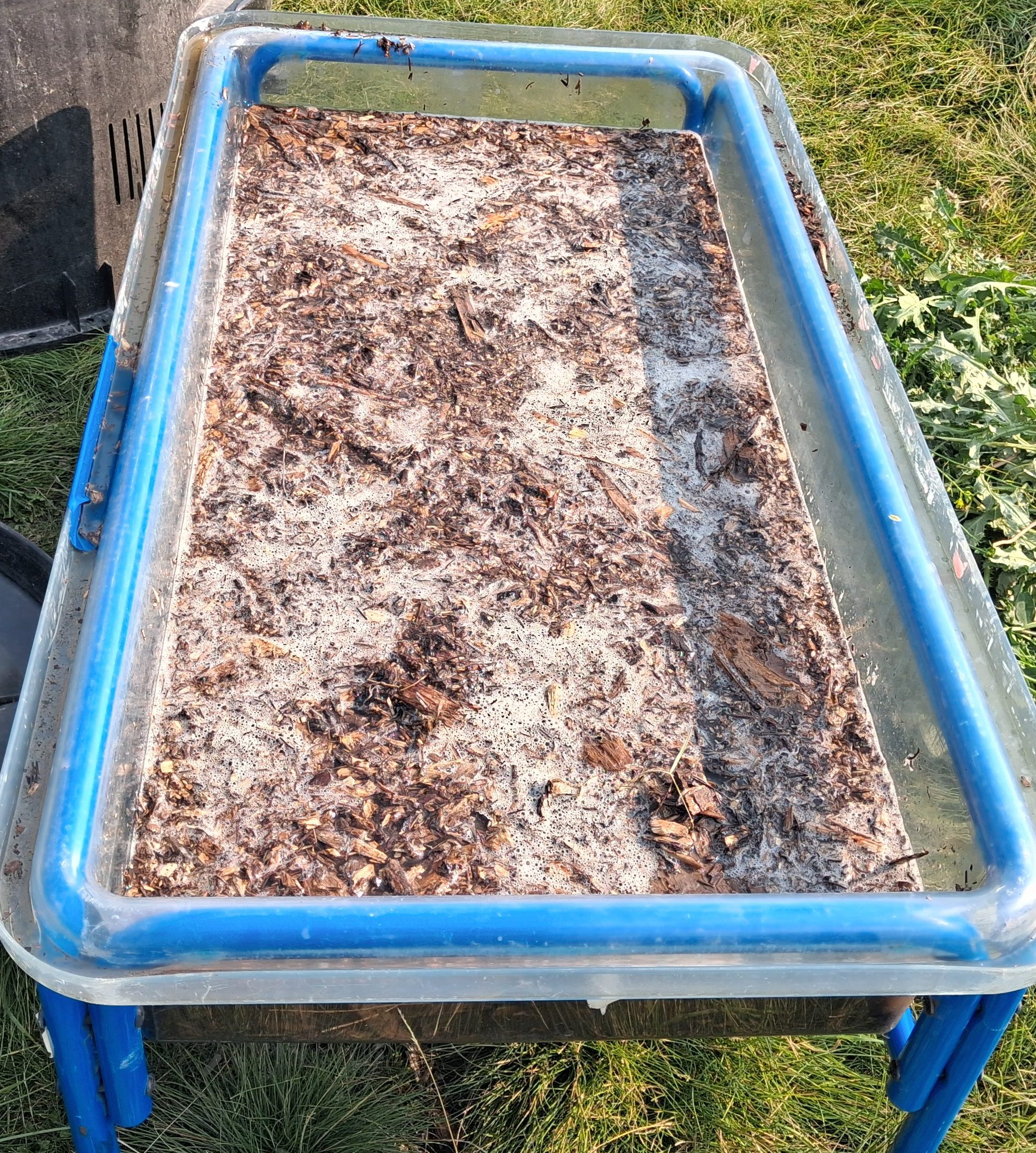
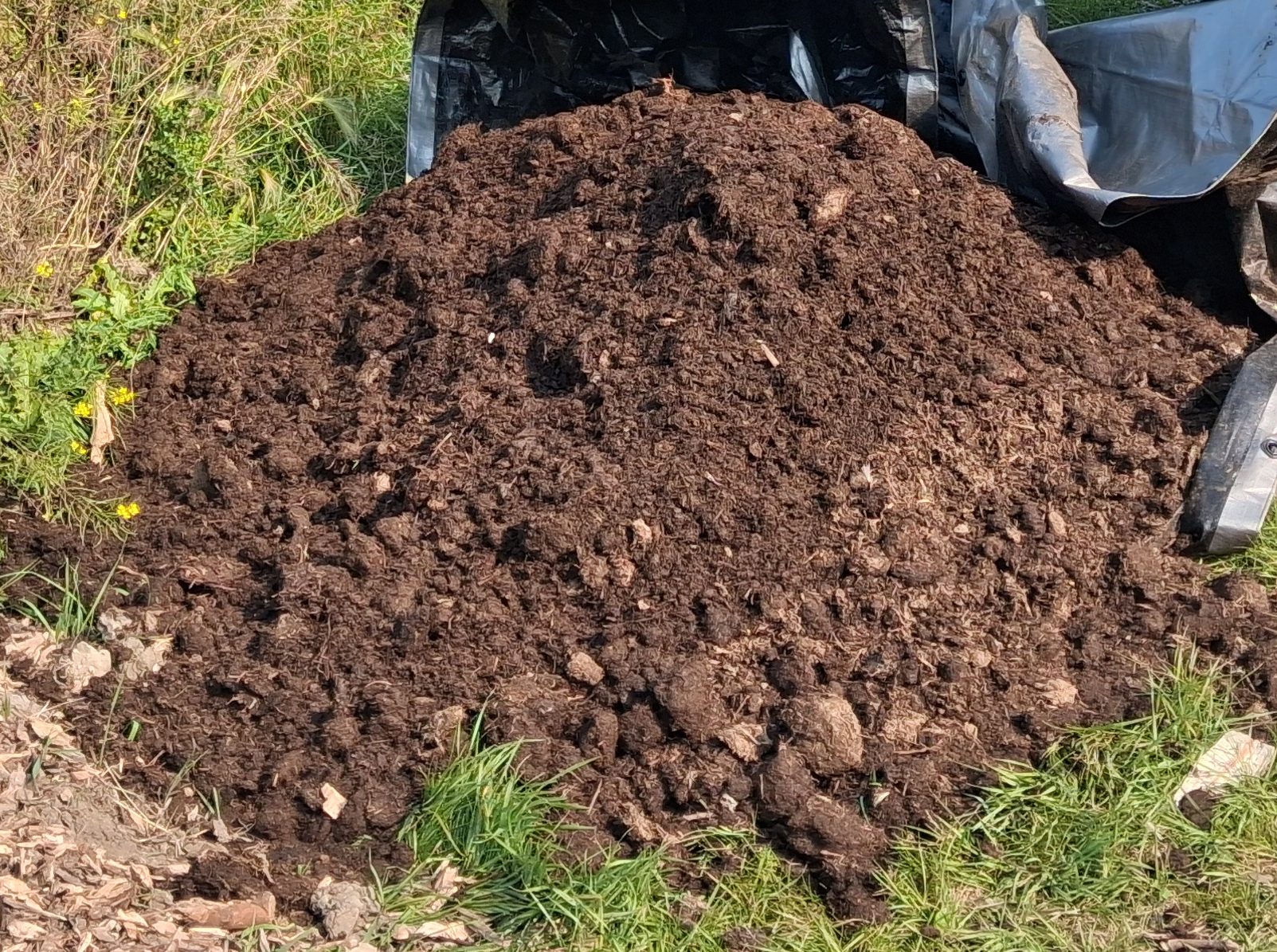
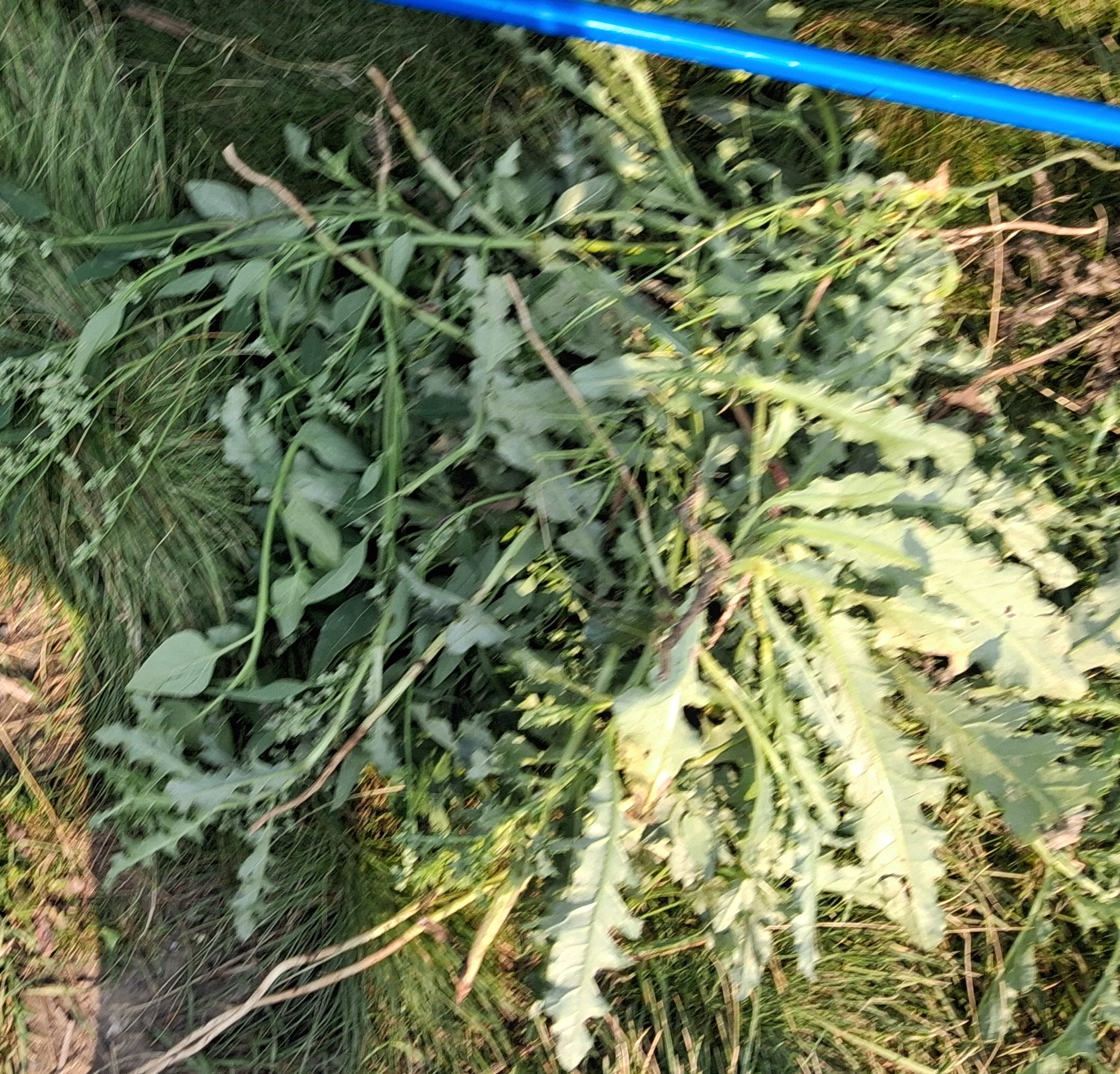
Picture: Raw materials (wet wood chips, mushroom compost, green leaves)
We also learned that the physical characteristics of the materials can influence the composting process. Chopping materials into smaller pieces increases their surface area, allowing microorganisms greater access to the organic matter. Moisture is another important factor. The compost should have approximately the moisture level of a wrung-out sponge. If the pile is too dry, microbial activity can slow down. If it is too wet, water can fill the spaces between the materials and reduce the oxygen available to microorganisms. These observations made me realize that composting is not simply a matter of mixing different materials together. It requires creating and maintaining the right conditions for microorganisms to thrive. The balance of carbon, nitrogen, moisture, oxygen, particle size, and material composition all contributes to the transformation of organic materials into nutrient-rich compost.
Preparing Two Compost Bins
During the workshop, we built two compost bins using brown – mushroom compost (chicken manure), coffee grounds, green leaves, and brown wood chips Although both bins contained similar materials, the order in which the materials were layered was different which made me curious about whether their composting processes might develop differently. This immediately reminded me of experimental design in science. Instead of simply asking students to follow a recipe for making compost, a teacher could encourage them to develop predictions and investigate what happens.
For example:
- What do you predict will happen in each bin?
- Will both bins reach the same temperature?
- Will one bin heat up faster than the other?
- How will we know?
These questions could transform a practical gardening activity into an inquiry-based science investigation, allowing students to make predictions, collect evidence, compare results, and develop explanations.
The Science Behind the Heat
The most interesting part of the workshop for me was learning about the relationship between microorganisms and temperature. As microorganisms feed on organic matter, they carry out metabolic processes that release energy. Under aerobic conditions, microbial respiration can be represented conceptually as:
Organic matter + O₂ → CO₂ + H₂O + energy
Some of this energy is released as heat, which explains why an active compost pile can become surprisingly hot. The temperature therefore provides visible evidence of microbial activity, even though we cannot see most of the microorganisms working inside the pile.
The composting process can be understood through three broad stages.
Mesophilic Stage (20-45 °C)
At the beginning of the process, moderate-temperature microorganisms become active and begin consuming readily available organic materials. During this stage, mesophilic bacteria and brown-rot fungi contribute to breaking down sugars, starches, simple carbohydrates, and amino acids.
Thermophilic Stage (45–65 °C)
As microbial activity increases, the temperature rises and thermophilic microorganisms become active. This is the hot stage of the composting process. Thermophilic bacteria, fungi, and actinomycetes contribute to breaking down more complex materials, including cellulose, hemicellulose, fats, and complex proteins. A significant amount of volume loss can occur during this stage as organic materials are transformed.
Cooling and Maturation
Eventually, much of the easily available food has been consumed, and the compost begins to cool toward the ambient temperature. Mesophilic microorganisms return, along with organisms such as worms, mites, and springtails. During this stage, the compost continues to mature as stable humus forms and compounds such as acids and ammonia break down.
The finished compost should be dark and crumbly, have an earthy smell, and no longer significantly reheat after turning. I found this temperature cycle fascinating because it transformed composting into something I could understand through both chemistry and biology, rather than simply seeing it as a gardening practice.
The Importance of Oxygen, Moisture, and Turning
Another important lesson from the workshop was that microorganisms need the right environmental conditions to remain active. Oxygen is particularly important for aerobic composting. Turning the pile introduces air and redistributes the materials, while also helping to manage temperature and moisture.
Moisture is equally important. The compost should be damp but not saturated. This created an interesting connection to chemistry for me because changing one condition can influence several other parts of the system. For example, adding water increases moisture, but too much water can reduce the availability of oxygen. Similarly, turning the pile introduces oxygen but can also temporarily lower its temperature.
The major factors that stood out to me were carbon and nitrogen, oxygen, moisture, mass, and particle size. What I found particularly interesting was that these factors interact with one another rather than working independently. A change in one condition can affect microbial activity and, consequently, the entire composting process.
Why Size Matters
I was also interested in the importance of building a sufficiently large compost pile. Hot composting requires enough mass to retain heat. A target of approximately 1 m³ provides sufficient bulk for the pile to potentially reach the thermophilic stage, whereas a smaller pile may lose heat too quickly. This concept could easily become a classroom inquiry. Students could compare the temperature of a small compost container with that of a larger compost pile and investigate why their temperatures might differ. Through this activity, students could explore concepts such as heat transfer, surface area, mass, microbial activity, and reaction conditions. As a future chemistry teacher, I see an opportunity here to connect an everyday environmental practice with scientific concepts. Instead of simply telling students that a larger pile retains heat better, I could encourage them to collect temperature data, compare results, and develop their own explanations based on evidence.
When Is the Compost Finished?
One of the interesting things about composting is that the process takes time. Compost is not finished simply because the temperature has decreased. Even after the hot stage, the material continues to mature.
We learned that compost is considered ready when:
- The original materials can no longer be recognized.
- The compost becomes dark and crumbly and develops an earthy smell.
- It does not significantly reheat after turning.
- Its temperature has returned to approximately ambient temperature.
At this point, the material can be returned to the garden.
The cycle can therefore be represented as:
Plant material → Compost → Soil → Plants
This cycle helped me think about composting as a form of ecological renewal rather than simply waste management. Materials that might initially be considered waste can be transformed through microbial activity and eventually return to the soil, contributing to new growth. For me, this was one of the most meaningful lessons of the workshop because it connected the scientific process of decomposition with a broader idea of renewal, sustainability, and care for the living world.
 Soil Camp