

Written by Afoke Oyibocha, with contributions from the Soil Camp Team
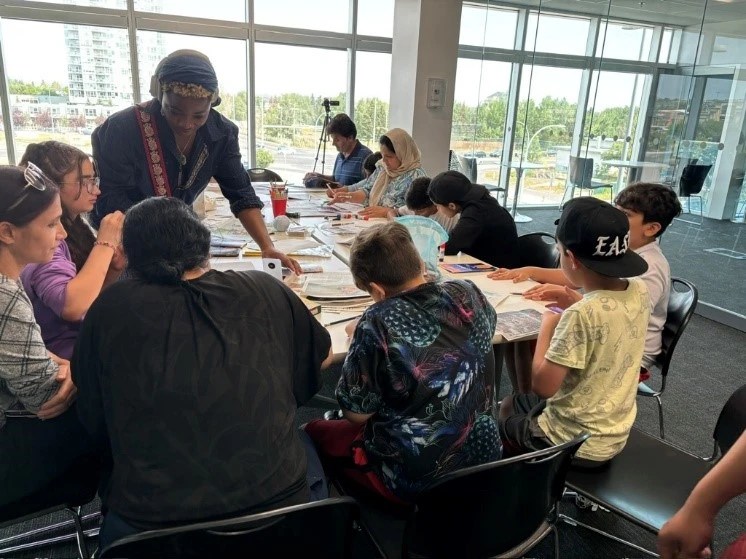

In late July and early August, a few other soil camp facilitators and I hosted two workshops on the art of zine-making. Both sessions took place in a cozy Calgary library, easily accessible by public transit. The first thing that caught my eye as I climbed the winding stairs to the reserved room, was the large window; it filled the space with sunlight. Second, was the cozy set-up with participants seated within arm’s reach of one another. During both sessions, parents and children gathered in the room as I explained our objectives. Earlier, we had all visited Head-Smashed-In Buffalo Jump (HSIBJ) (Estipah-skikikini-kots), a UNESCO site that explores the history of the jump and the relationship between the buffalo (Wild Bison) and the Blackfoot people who relied on the animal for survival. As educators, it can be challenging to determine what key messages to convey to the children, as the story encompasses so much more than just buffalo. Interwoven are narratives of colonisation, community, food knowledge systems, and the enduring perseverance of the Indigenous people.
While facilitating the zine sessions, I am taken back to the day of the trip, walking arm in arm with my partner. It is a bright day, much like the days of the workshop, and the experience of walking there is different from the more familiar suburban landscape and infrastructure. I remember it being unusually hot, but filled with a deep feeling of serenity. While crafting the zine draft, I used that same feeling to bring the front pages to life with Miwa’s image of a cartoon-like figure sprawled over the brown soil. At HSIBJ, apart from the museum, there are no buildings in sight, just spread-out patches of land, grasses, and many flowers in bloom. These flowers are plentiful, unlike the ones I find in the city, which are few and far between. I mentioned this to Miwa, and she commented that it is likely due to the use of herbicides on the city landscape, and that answer seemed to be the most plausible, so I concurred.

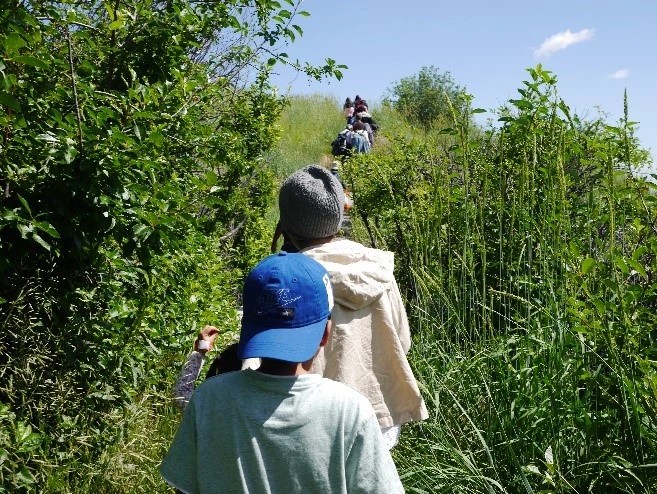
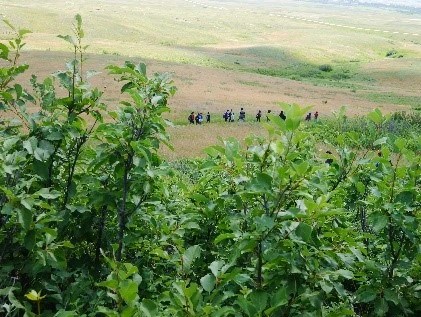


Back in the library, I caught sight of Sophia working on a piece. She carefully cut out a brown mountain and placed it on a scenic green background. Centre left was a cutout of a buffalo, and above and below the scene, the words read: “There for a long time has actually been people being present, being a part.” If that doesn’t capture all that Head-Smashed-In represents, I don’t know what will. In crafting the magazine, I felt this was fitting for the front page, and I tied it in with planets and galaxies because, to me, they represent all that is and all that exists. Then, I added photos to the following page, and as I did, I remembered our first session where a child participant was cutting out an animation. On the page, a puffin comes to life as a little lever, fashioned out of scrap paper, is pulled through an incision on the page. The bird reaches down and pecks at the sketched food: cheeses, fry bread, fruit, and notably, the menakesh that was brought in as a snack for the activity.


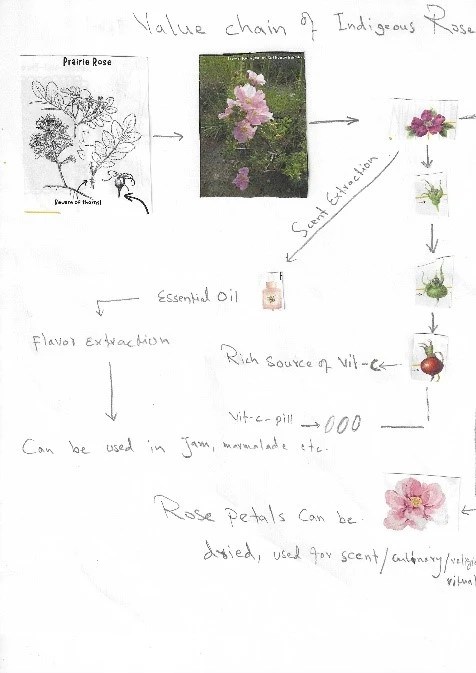
There were many elements I thought would enhance the zine. For instance, it features a Blackfoot guide and a QR code linking to the Indigenous names of various landmarks. Estipah-skikikini-kots is the name for Head-Smashed-In. During the zine session, Iqbal presented a diagram of the Indigenous rose, sharing anecdotes about its uses and significance. He also mentioned how the flower is common in Afghanistan, his place of origin. I was amazed by the sketches and wanted to incorporate a similar drawing of the diagram, using elements of his original piece, into the zine.
I also remember being within the museum walls, listening to our tour guide tell the story of a figure in Indigenous myths known as Napi. She described Napi taking back a coat he had given to a rock and how the rock desperately pursued him. I could almost hear his breath as he sprinted, and I imagined the chaos of the onlooking animals refusing to help. Our guide made a little joke, saying the reason beaver tails are flat is that they tried to stop the rock’s pursuit of Napi, and their tails were crushed in the rock’s furious stampede.
Those stories transported me back to my childhood, to parables that emphasized the necessity of balance in life, such as “all work and no play makes Johnny a dull boy.” I felt like a child again, sitting in the middle of our modestly furnished condo, listening to Fela Kuti’s soulful notes in “Water No Get Enemy.” In his song, he narrates the tale of a woman who loses her child to drowning, yet the next day, she must still use water to bathe, to drink, to live. Water, in this context, transcends enmity; it embodies the essential elements of life that remain indispensable, even when they bring sorrow.
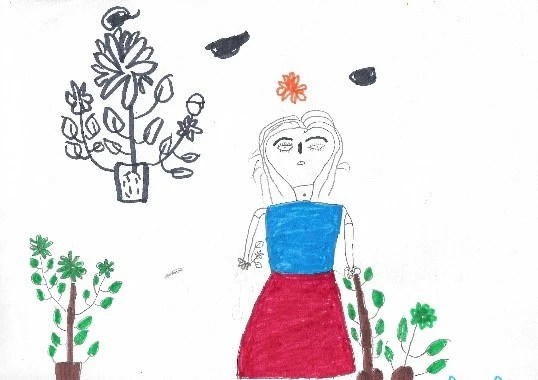
In the second Zine session, I took on more of an observing role, asking participants about their drawings. I noticed that two Yazidi mothers had drawn similar images of women within nature. Kamo had depicted a woman in a purple dress holding a watering can over a bushel, with potted plants scattered across the page. When I asked about the drawing, she explained it represented her in Iraq. She struggled to translate a specific word into English, and I didn’t know the Kurdish term. Fortunately, Sophia, who was observing, recognised the word as “Zaytoon” in Arabic, meaning olives.

As we wrapped up, there was a profound sense of gratitude expressed towards the Indigenous community for inviting us to HSIBJ to share in the experience. Iqbal, a parent, reflected on how the trip prompted valuable conversations about Newcomer-Indigenous connections, medicines, and the ecology of the space. It reinforced the importance of connecting with growers both on and off-site at Land of Dreams. Nicole Boere from CCIS/Land of Dreams expressed her thanks to the Soil Camp team for leading the visit and to Elder Herman-Many Guns for inviting us to this abundant land:
“Having participants from Land of Dreams participate in the trip to Head Smashed In, prompted valuable conversations with growers around Newcomer-Indigenous connections, and medicines, curiosity in the ecology of the space and, personally, reinstated the importance of connecting on and off-site at Land of Dreams with growers. Thank you, Soil Camp team, for leading this visit! Elder Herman, thank you for inviting us to visit Head Smashed In. This land is so abundant! Thank you for inviting us!”
– Nicole Boere, CCIS/Land of Dreams
The collective sentiment was one of deep appreciation for the opportunity to learn and connect.
Reflecting on these sessions, it’s clear that the zine is more than just a collection of drawings and stories. It embodies the diverse experiences and cultural narratives of everyone involved. From the intricate drawings of buffalo and plants, to the heartfelt memories of places and traditions, each page tells a unique story. The zine serves as a vibrant artifact, capturing the essence of our community’s creativity, and resilience. It is a beautiful mosaic of our collective voices, bound together in a celebration of art, history, and connection.
 Soil Camp