

A Reflection by Afoke Oyibocha, with contributions from the soil team
As I approached the pickup site, I saw the light buzz of children and parents anticipating the journey ahead, ready to board the bus. The bus ride was long but manageable, with a stop along the way for restroom breaks and to stretch our legs. Sophia passed around conversation cards with fun facts about buffalo, keeping everyone entertained. The trip aimed to connect with families who cultivate the ‘Land of Dreams’(LoD) and to integrate Indigenous culture and history into our collective understanding.
Several teachers from the Soil Camp team had previously visited the Head Smashed In Buffalo Jump site, at the invitation of Elder Herman Many Guns to discuss potential changes to Soil Camp’s layout and programming. This visit was based on the Elder’s suggestion that newcomers to Land of Dreams (that have been stewarded by the Niitsitapi (Blackfoot Confederacy)) and other Treaty 7 Lands – should learn about the history of the Blackfoot People on those ancestral Lands.
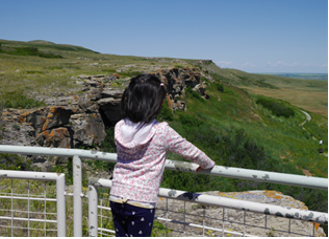
Head-Smashed-In Buffalo Jump (HSIBJ) is a site of great cultural significance. It features a gathering basin where buffalo were corralled before being driven towards the jump. Narrow lanes marked by cairns (piles of stones) funnelled the buffalo towards their fate. There is a balcony overlooking the cliff where the buffalo were driven over, and just across from there is the campsite where the community processed the buffalo.


Reflections walking the trail
As part of Head-Smashed-In museum-led initiatives, tours are often undertaken by young Indigenous people, typically of Blackfoot descent. Our tour began outside, where we embraced the expansive atmosphere and landscape.

The initial segment took us from the museum to the buffalo jump site. Along the trail, a variety of plants thrived, and we were reminded to stay on the path to preserve the surrounding environment.
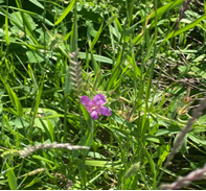
The area was rich with small shrubs, flowers, and grasses piercing through the soil’s surface. Fields of golden-brown wheat stretched across the entire perimeter, offering a picturesque view. Prairie roses bloomed with a vibrant pink colour, each adorned with five petals and a cluster of yellow stamens at the centre. White sage, significant to Indigenous peoples for smudging and ceremonial purposes, was also flourishing along the path. The plant is less abundant in other regions however, due to the rise of New-Age spirituality and often uninformed harvesting.
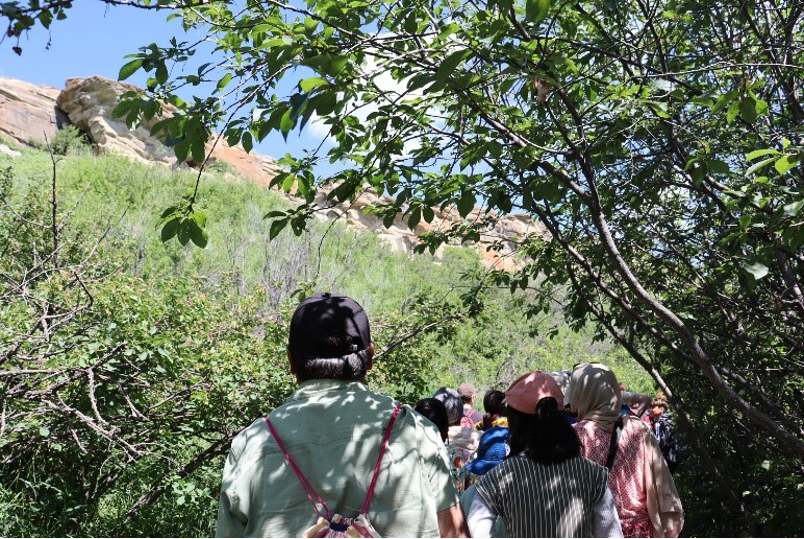
As we proceeded, our tour guide explained that the buffalo jump was a tactical hunting method employed by Indigenous peoples to harvest large numbers of buffalo once a year before the long winter and was thus, vital to their survival. Ambling along the path’s length caused our group to naturally divide into smaller clusters, as can be seen in the photograph above.
Lunch and Learning at HSIBJ
After our outdoor exploration, we headed inside for lunch. The menu featured fry bread, vegetarian chili, vegetables, and chicken. Also, dessert was a cheesecake topped with Saskatoon berries. YUM! The fry bread was particularly delightful, with a golden-brown hue and a subtle aroma.


After lunch, we proceeded to the theatre to view a video on the history of the jump. The audience gasped and shook their heads during the scene where buffaloes leaped over the cliff.
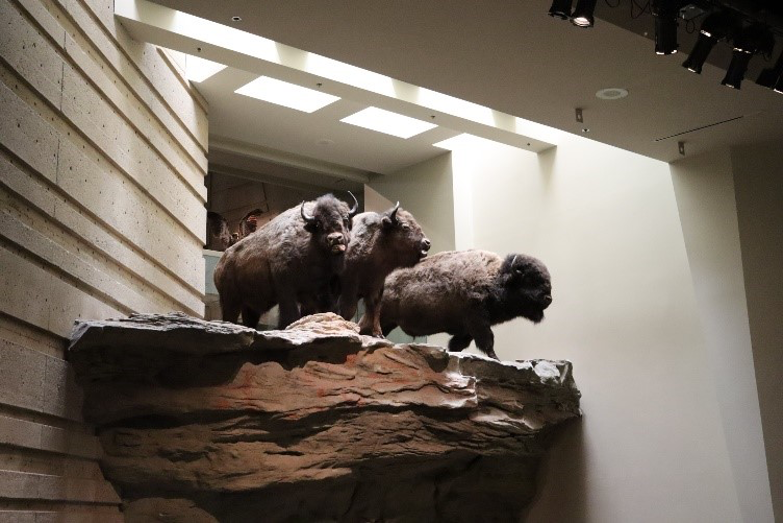
Along the way to the theatre presentation, the taxidermy displays of buffaloes and mountain goats captivated several attendees, who paused to take pictures with the exhibits. Kirshenblatt-Gimblett’s “agency of display” concept examines the way in which presenting objects and individuals confers upon them importance and meaning. This concept highlights how exhibitions influence the perceived value of displayed objects and individuals. Items in museums, galleries, or heritage sites are not just shown; they are interpreted and given importance through their description, arrangement, and setting.
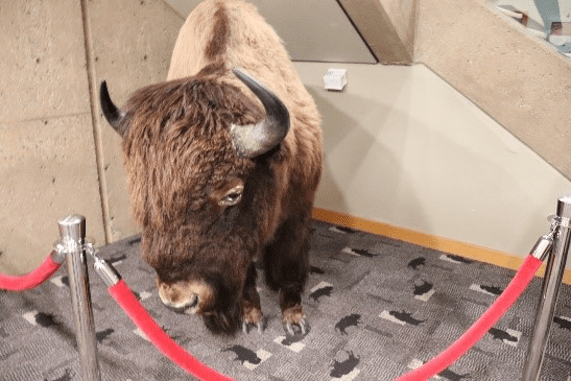
This is relevant to Eileen, a taxidermied young calf at HSIBJ, symbolizing the role of bison in Indigenous cultures. Named “Eileen” because she’s leaning. She represents the importance of female buffalo, which are shorter, broader, and have more fat, crucial for survival during harsh winters. Pemmican, a mix of fat and berries, was a winter treat. We saw a buffalo hide food cache bag. Our guide explained the bag would be coated with crushed buffalo eyeballs and buried in shallow pits to deter animals from eating the food inside.
Scavenger Hunt at HSIBJ
Our day at HSIBJ culminated with a treasure hunt.
We ventured out to a balcony perched on a cliff and equipped with telescopes for guests to gaze across the landscape. Here, we were split into teams for a hunt for regional flora.
For myself, differentiating certain grasses was more challenging than pinpointing the wildflowers. For instance, identifying the blue grama grass among the local varieties proved particularly tough. It was a while before the girls in my team found the blue grama, recognizable by its mascara wand-like shape. We also encountered rough fescue, spear grass, prairie rose, common yarrow, and sticky geranium. Some participants recalled seeing other items from the treasure hunt list, such as the Saskatoon berry, earlier during our hike. Moreover, we stumbled upon a striking purple and blue flower; however, I’m uncertain if we determined its identity from the listed options, which included silky lupine, larkspur, and smooth blue beardtongue. Other facilitators highlighted additional plants not included in the guide, such as ‘Pennycress,’ also known as poor man’s pepper, because its seeds have a slightly spicy and pungent flavour. Another plant, ‘Silver cinquefoil,’ recognized by its five-petalled yellow flowers and palmate leaves with a silvery underside, was along the trail. I heard stories of people encountering various animals on the trail, including marmots, deer, and brown cows; however, I personally only saw the deer.
Link to Our Plant Identification Guides (Click)

Indigenous Empowerment and Educational Engagement at HSIBJ

At Head-Smashed-In Buffalo Jump, local community engagement plays a crucial role in empowering Indigenous peoples and shaping the narratives shared at the site. However, Head-Smashed-In Buffalo Jump is largely owned and managed by the government of Alberta. Indigenous empowerment must go beyond job allocation, with management and ownership being granted to Indigenous people to reach self-autonomy. How that is to be allocated needs a more nuanced conversation. Indigenous autonomy is important to heritage, as heritage is not only an active, dynamic process, but curators and heritage managers wield considerable power over the shaping of cultural narratives.
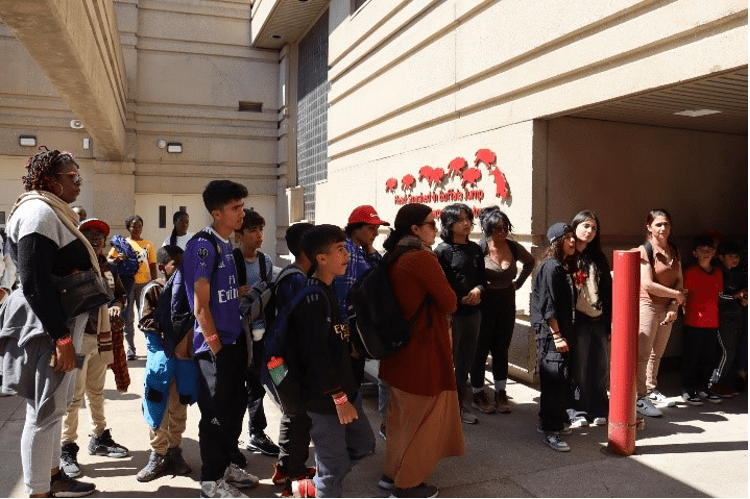
Expanding on this point, educators play a crucial role in shaping children's understanding of Indigenous cultures through the curriculum they teach and the resources they provide. Teaching remains a journey of discovery with much ground to cover. This recent trip highlighted knowledge gaps, such as some children's unawareness of Indigenous peoples' continued existence and their sustainable practices, like using every part of the buffalo. The absence of buffalo at HSIBJ was a stark reminder of colonialism's enduring impact, a reality we aim to communicate more effectively to students. But by integrating diverse viewpoints and information about Indigenous communities, educators can cultivate respect, empathy, and recognition among young learners. Inclusive representation serves as a step in recognizing and addressing the historical injustices experienced by Indigenous peoples. It aids in advancing the wider objectives of reconciliation and healing. Ultimately, collaboration between cultural institutions, educators, and Indigenous communities is essential to creating a more inclusive and accurate representation of Indigenous histories and cultures.
In Conclusion,
The bus ride back was quiet; many had dozed off, me included. It felt like being in a ‘back-to-the future’ series, driving into a known, present-reality. I gazed down and spotted a conversation card on my lap, that read…
“What stories do you think the soil holds at the base of the jump?”
 Soil Camp
